A water pump bearing talks more as the engine warms up
A growl or whine that builds as the temperature gauge climbs is worth ten minutes now. Ignore it and you're looking at a tow truck or a wrecked engine.
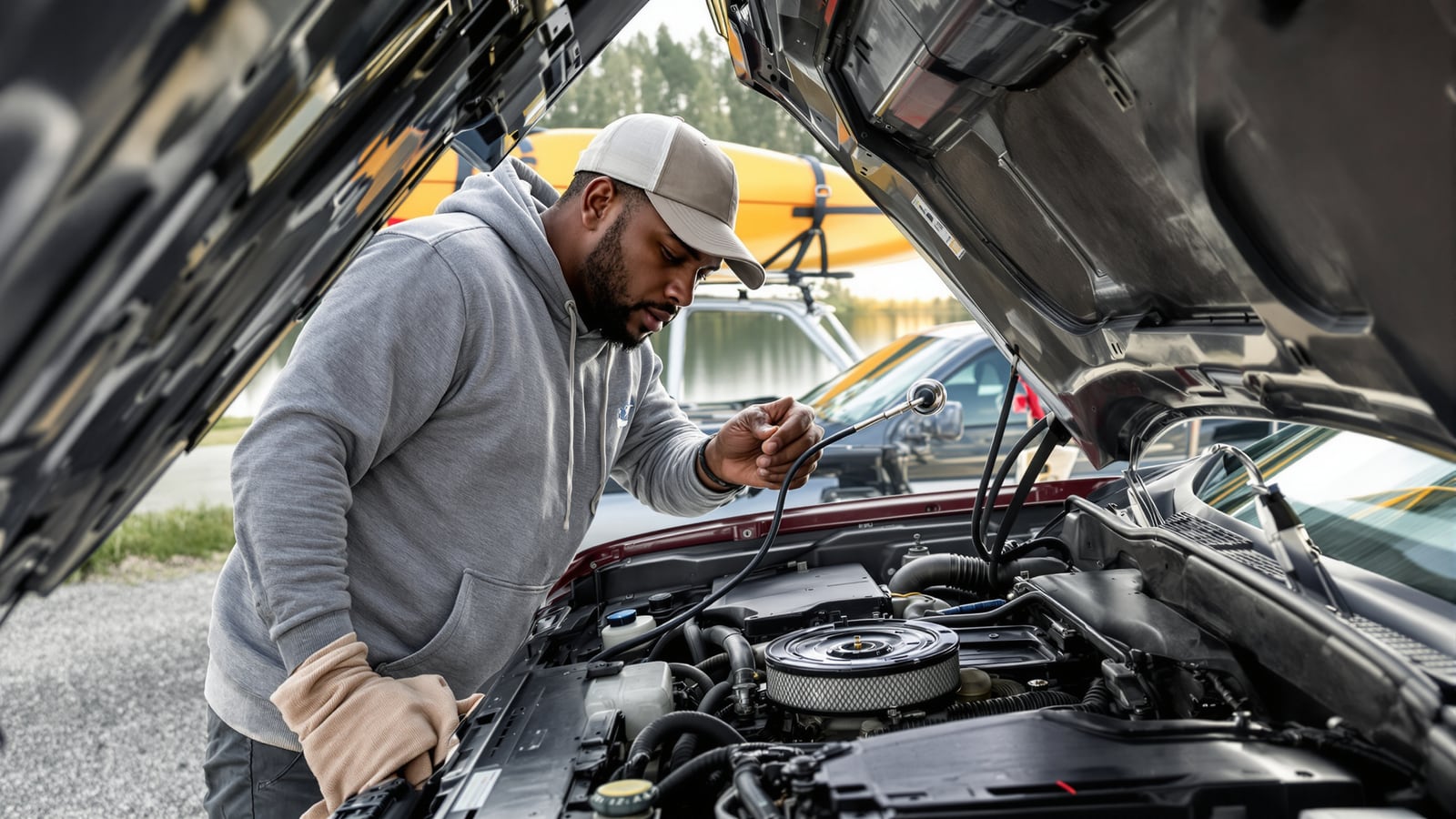
Quick answer: A rumble, whine or chirp from the front of the engine that gets louder once the car is warm is often a failing water pump bearing. Check for dried coolant crust around the pump, then feel the pulley for play with the engine off and cold. If it wobbles or grinds, replace the pump before it fails on the road.
Why heat makes it louder
A water pump is a small impeller on a shaft, riding on a sealed bearing. The bearing is packed with grease at the factory and is supposed to last the life of the pump.
When it starts to go, the damage is already done. The races are pitted, or the seal has let coolant and grit in. Cold, thick grease hides it. The shaft sits snug and the rough spots stay quiet.
Then the engine warms. Grease thins and the metal expands, so the clearances in a worn bearing open up. The shaft moves and the rough surfaces start to talk. Now you've got a noise that wasn't there on the first start of the morning.
The pump also works harder when it's hot, with more flow and more load on the shaft, and the belt is pulling on it the whole time.
That's why people say, "It only does it after twenty minutes." They're describing a bearing that's out of excuses.
Sort it from the look-alikes
The front of an engine is a crowded neighborhood, and a lot of things make noise there. Before you buy a pump, rule out the neighbors.
- Alternator bearing: A whine that changes with electrical load. Turn on the headlights, rear defrost and blower, and listen.
- Idler or tensioner pulley: A chirp or grinding that stays constant at idle and doesn't care about temperature as much.
- Power steering pump: Whining that rises when you turn the wheel, especially at a standstill.
- A/C compressor clutch: Switch the A/C off. If the noise disappears, it isn't your water pump.
- The belt itself: Squeal on startup or in rain is usually the belt, not a bearing.
The water pump has a few tells of its own. The noise follows engine speed, not road speed. Rev the engine in park and it rises and falls with the revs. It sounds like it's coming from low and deep in the front of the block, and it can feel like a faint grind through the hood.
The ten-minute check
Do this with the engine off and cool. A hot cooling system holds pressure and can spray scalding coolant. Never open the radiator or reservoir cap on a hot engine.
1. Look for the weep. Most pumps have a small weep hole or seam near the shaft. When the internal seal starts to go, coolant seeps out and dries into a crust. Depending on the coolant, it's white, green, pink or orange. A trail of dried residue under the pump is the strongest sign you'll find.
2. Check the coolant. Low level with no puddle in the driveway is a clue. So is a sweet smell after a drive. Top it off with the type your owner's manual specifies, because mixing coolant types is how you create a second problem.
3. Grab the pulley. With the belt on, push and pull the pump pulley toward you and away from you, then up and down. There should be no play. Any wobble means a worn bearing.
4. Spin it. If the belt is off or slack (a mechanic can show you how on your specific engine), turn the pulley by hand. It should be smooth and quiet. Gritty, notchy or rough means done.
5. Listen with a tool. A mechanic's stethoscope is the proper tool. A long screwdriver works in a pinch. Put the tip on the pump housing and your ear on the handle, with the engine running. Keep your hands, sleeves and hair well clear of the belt and fan. Compare the sound at the pump with the sound at the alternator and idlers. The loudest one is your suspect.
If you aren't comfortable working around a running engine, skip step five. A shop can confirm it in a few minutes. That's money well spent.
Watch the gauge and the timing belt
A noisy pump doesn't always mean overheating, but you should still watch the temperature gauge. If it climbs past normal, pull over and shut it off. A bad bearing can wear the shaft or let the impeller slip, and then the coolant stops moving. Driving on an overheated engine is how a repair of a few hundred dollars turns into a blown head gasket or a ruined engine.
Check whether your engine drives the pump with a timing belt. Many do, and on those the pump sits behind the belt cover.
This matters more than anything else in this piece. If the pump bearing seizes, it can shred or throw the timing belt. On an interference engine, the pistons and valves then collide. That's the kind of repair that ends the life of an older car. Your owner's manual or a parts counter will tell you whether your engine is interference and whether it's belt-driven.
If it is, don't wait. Tell the shop you want the pump replaced along with the timing belt, tensioner and idlers, all in one job. The labor is the big cost, and it's the same labor either way. Doing it twice is a mistake you only make once.
For the rest of the maintenance that can't wait, see the car servicing that can't wait, and the kind that can.
What to do next
Be honest about what you found.
If you see crusty residue, play in the pulley or a rough spin, replace the pump. Don't add a "stop leak" additive and hope. It doesn't fix a bearing, and it can clog the passages in your radiator and heater core.
If you can't find anything but the noise is real and rises with the heat, get a second set of ears. Ask a mechanic you trust to listen with a stethoscope. A good one will show you the pulley play or the weep rather than just quoting you a number.
When the new pump goes in, do the job properly:
- Replace the thermostat and any gaskets or O-rings that come in the kit while the system is drained.
- Flush the old coolant and refill with the right type, then bleed the air out. Trapped air makes a brand-new pump run hot.
- Replace the belt if it's cracked or glazed. It's cheap and it's already in your hands.
- Ask for the old pump back. Seeing the bearing and the seal tells you the diagnosis was right.
A pump that has done its job for a hundred thousand miles has earned a clean replacement. If you're hoping to push a car much further, what it really takes to get a car past 250,000 miles covers the habits that matter.
If you're shopping for a used car
Buying someone else's car? Pop the hood on a cold engine and look around the pump area for those dried coolant tracks. Ask whether the timing belt and pump have been done and for the receipt that proves it. A seller who says "I think so" doesn't know. Twenty minutes with the engine off tells you most of it walks through the rest of that look-over.
A bearing noise is a small warning that gets louder on purpose. Listen to it while it's still cheap.
Dean Shaw
Gear & Garage
Reads the warranty, the parts list and the long-term owner reviews before anything else. Trucks, tools, watches, and the cheap version that costs more.

Watch
Worth an hour of your evening
More from Cars.
From channels we rate. Plays on YouTube.
Read next