

A damp transmission pan is the cheapest warning you'll get
The gasket usually weeps for months before it lets go. Catch it while the fix is a gasket and a filter, not a rebuilt transmission.
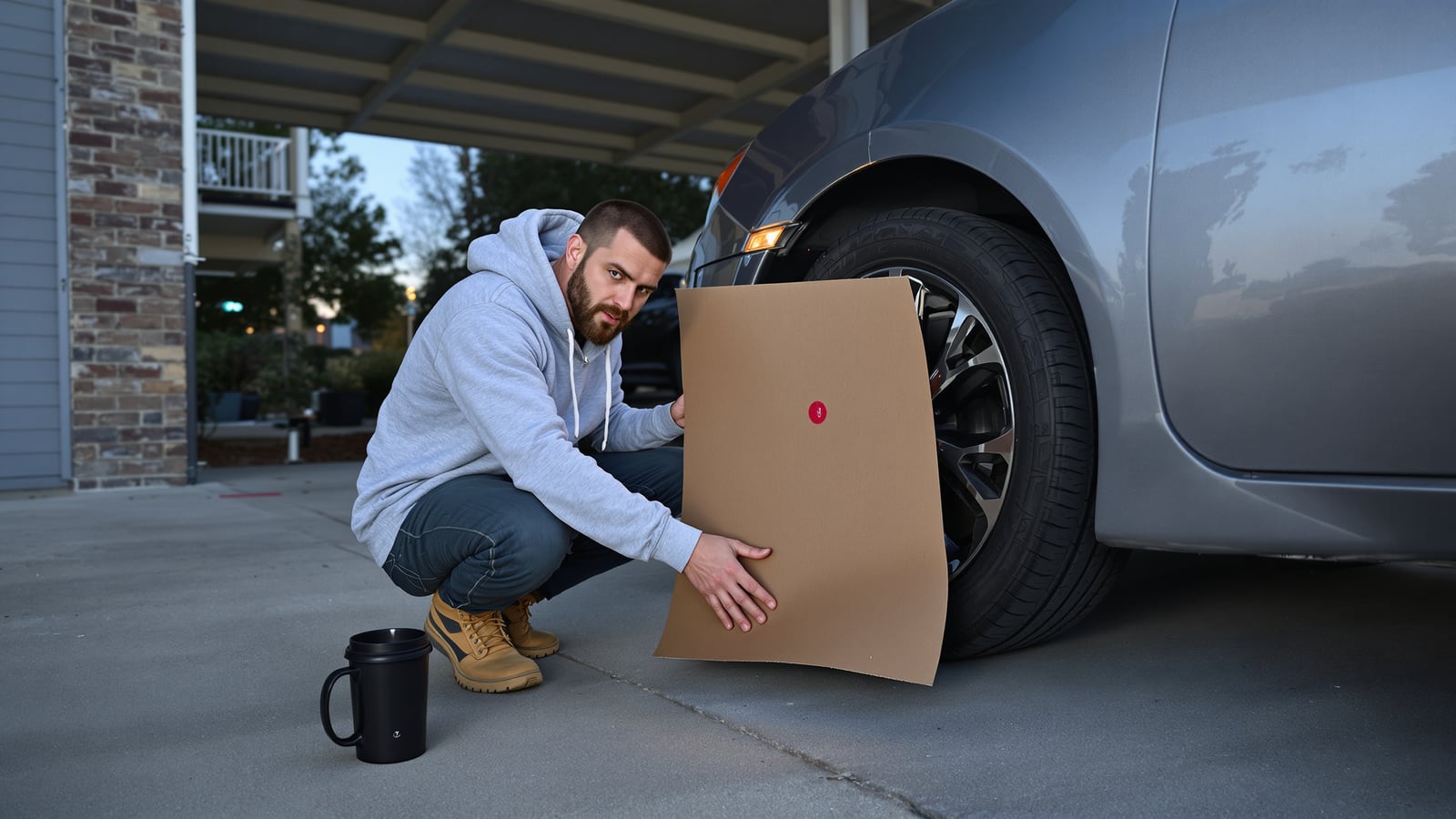
Quick answer: A damp, grimy transmission pan means the gasket is giving up. Check the fluid level, clean the pan, and watch it for a week. If it's still wet, reseal it now, while the job is cheap.
Slide a flattened cardboard box under the middle of your car tonight and look at it in the morning. A spot the size of a dime is a weep. A spot the size of your palm is a leak. A puddle means you're already late.
The weep is the one people ignore. It's a few drops. You top off the fluid twice a year and tell yourself it's fine. Meanwhile the gasket is hardening and shrinking, and one day a cold morning and a hard shift finish it. The fluid level falls fast, the pump sucks air, and the clutches inside start cooking.
Gasket and fluid is a small job. A rebuilt or replacement transmission is one of the biggest repair bills you'll ever see on a car.
Why the pan weeps
The pan is the shallow metal tray bolted to the bottom of the transmission. It holds the fluid reservoir and, on most cars, the filter. A gasket seals it, and that gasket lives a hard life. It goes through heat cycles every time you drive, sits in hot oil, and gets shaken for years.
Rubber, cork and composite gaskets all dry out eventually. Pan bolts can also loosen slightly or the flange can warp. Sometimes the gasket was fine and somebody overtightened the bolts last time, which crushes it and makes it leak sooner.
None of this announces itself. It starts as a dark, damp film along the bottom edge of the pan, collecting road dust until it looks like a greasy mud line.
Make sure it's the pan
Not every wet spot under the middle of the car is the pan gasket. Before you buy parts, rule out the usual impostors:
- Engine oil. Oil leaks from the rear of the engine can run back and coat the transmission. Oil is usually brown or black. Transmission fluid is often red or pink when it's fresh and brown when it's old.
- Cooler lines. Two metal lines carry fluid to a cooler, usually near the radiator. Wet fittings there look like a pan leak, but the fix is different.
- Axle seals. A leak behind a front wheel on a front-drive car sprays fluid sideways.
- Front pump seal. Fluid shows up at the bell housing, where the engine meets the transmission.
Here's how to sort it out. Spray the pan and the area around it with brake cleaner, wipe it down, drive a few days, and look again. Fresh fluid on the pan seam is your answer. Fluid higher up means the pan is innocent, and you've got a bigger job than a gasket.
Check the level the right way
Many older cars have a transmission dipstick. Many newer ones don't. If yours has one, the procedure is usually this, but read your owner's manual because some makes differ:
- Drive until the car is warm.
- Park on level ground, engine running, in Park (or Neutral if the manual says so).
- Pull the dipstick, wipe it, push it all the way back in, and pull it again.
- Read the level against the hot marks.
Look at the color and smell too. Red and sweet-ish is healthy. Dark brown means it's overdue for service. A burnt smell means heat has been working on the clutches and you should stop reading and call a transmission shop.
If there's no dipstick, there's a fill plug underneath and a specific temperature window for checking it. That's a shop job unless you own the right tools and have done it before. Don't guess.
When you can wait, and when you can't
A sensible person might decide to leave a faint weep alone. Say it's a 200,000-mile commuter you plan to drive until it's done, and the pan is only slightly damp. Checking the level every month and topping off with the exact fluid your car requires is a reasonable strategy.
You can't wait if any of these show up:
- Spots on the ground that keep growing
- Fluid level dropping between checks
- Slipping, flaring between gears, or a delayed engagement when you shift into Drive
- A whine that rises and falls with engine speed
- A burnt smell
Slipping and a whine mean the transmission is already running low on fluid. Stop driving it hard and get it to a shop.
The people who get burned are the ones who run it low "just to the weekend." The pump doesn't care about your schedule.
Doing the job yourself
On a lot of cars this is a fair driveway job if you're already comfortable under a vehicle and have jack stands. Never work under a car held up by a jack alone. Here's the outline:
- Let the car cool so the fluid isn't scalding.
- Support it safely on stands and set a drain pan underneath. Some pans have a drain plug. Many don't, and the fluid comes out as you loosen the pan bolts. Loosen the corners slowly and tilt the pan to control it.
- Drop the pan. Expect a couple of quarts of fluid and a thin layer of fine gray sludge at the bottom. That's normal clutch material. Chunks of metal aren't normal and are bad news.
- Replace the filter if the pan has one. Buy it together with the gasket, ideally as a kit.
- Clean both mating surfaces until they're bare and flat. Don't gouge them. A razor scraper used gently and a clean rag do the job.
- Fit the new gasket dry unless the manufacturer says otherwise. Don't glob sealant on out of habit.
- Tighten the bolts in a crisscross pattern, a little at a time, to the factory spec. That number is often in inch-pounds, not foot-pounds, which is exactly how people strip threads and crush gaskets.
- Refill with the exact fluid your manual specifies, then check the level the way the manual says.
The fluid spec isn't negotiable. Modern transmissions are picky, and "universal" fluid has ruined plenty of them. If the manual says a specific type, buy that type.
Some cars have plastic pans with the filter built in, and some pans are sealed to the transmission in odd ways. If you can't tell what you've got, ask a shop for a quote before you start unbolting things.
What to do with the old pan
Wipe the underside of the car clean when you're done, so the next leak shows up the minute it starts. Take the old fluid to a recycling drop-off, not the storm drain. Then put fresh cardboard under the car for a few days and check it.
If your wife, your son or your daughter drives the car, tell them what you found and what to watch for. A warning light is a lot less helpful than someone who already knows what a burnt smell means.
Where this fits
A weeping pan is one of the cheap early warnings a high-mileage car gives you, and the owners who hear it are the ones who get past 250,000 miles. It belongs in the same drawer as the maintenance that can't wait. If you're shopping for an older car, twenty minutes with the engine off will show you a grimy pan before the seller starts talking.
A transmission rarely dies without notice. Somebody just has to be looking at the pan.
Dean Shaw
Gear & Garage
Reads the warranty, the parts list and the long-term owner reviews before anything else. Trucks, tools, watches, and the cheap version that costs more.

Watch
Watch how it's done
Picked for this article.
From channels we rate. Plays on YouTube.
Ratchets And Wrenches
Transmission Oil Pan Gasket and Filter Replacement
1A Auto: Repair Tips & Secrets Only Mechanics Know
How to Replace Transmission Pan 02-09 Dodge Ram 1500 5.7L
Read next