

That cold-start clatter usually isn't carbon
Carbon buildup gets blamed for every rough first minute. Most of the time it's something else, and when it is carbon, the bill is smaller than the internet claims.
Quick answer: A rattle, tick or stumble in the first few seconds after a cold start has several causes, and carbon is the least common of them. Carbon deposits are real on direct-injection engines, but they cost you slowly: a rougher idle, some hesitation, a little fuel. They get expensive only when ignored for a long time.
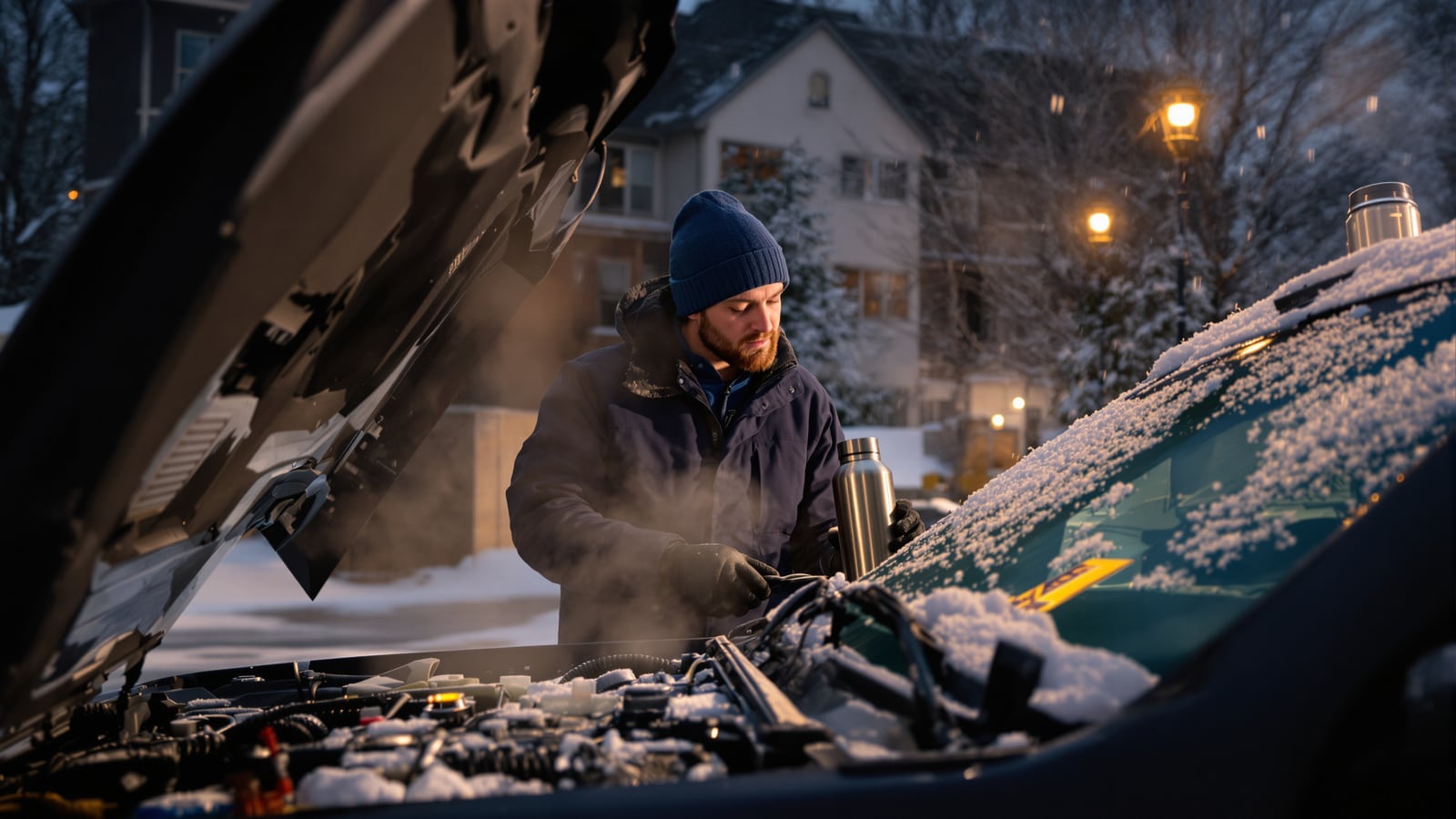
The driveway at 6:40 a.m.
It's January. You turn the key and the engine clatters for two seconds, then settles. You hear it again the next morning. By Friday you've read three forums and you're sure you've got a carbon problem and a four-figure repair coming.
Slow down. That sound has a list of suspects, and carbon sits near the bottom.
What the noise probably is
Injector tick. Direct-injection engines fire fuel straight into the cylinder at very high pressure, and the injectors click when they do it. Cold, it's louder. This is normal and it fades as the engine warms.
Cold-start idle strangeness. Many modern engines run a deliberately odd idle for the first minute to heat the catalytic converter fast. It can sound lumpy, high or slightly uneven. That's the computer doing its job.
Oil that drained away from the top of the engine. Thicker cold oil takes a moment to reach everything. A brief tick from the valve train that vanishes in seconds is common on a high-mileage engine with the right oil in it.
A timing chain or tensioner on its way out. This is the one that matters. A chain rattle that lasts a few seconds on cold starts, then goes quiet, can mean the tensioner is losing pressure overnight. If it's new, getting longer, or comes with a check-engine light and a crankshaft/camshaft correlation code (P0016 is the common one), stop guessing and get it looked at. A stretched chain left alone can turn into a ruined engine.
Low oil. Check it before you read another forum thread. It costs nothing and it's the most embarrassing explanation, which is why people skip it.
Here's a fair test. If the noise is gone in under five seconds, hasn't changed in months, and the engine runs smooth after that, relax. If it's getting longer, louder, or arrives with a warning light, it isn't carbon and it isn't a wait-and-see.
What carbon actually is
On an older port-injected engine, fuel gets sprayed behind the intake valves. It washes over them every time the engine runs, like a rinse cycle. Deposits stay minimal.
On a direct-injection engine, the fuel goes straight into the cylinder and never touches the back of the valves. Meanwhile, the crankcase breathes oil vapor into the intake, and that vapor bakes onto hot valves. Nothing washes it off. Over tens of thousands of miles it builds up like plaque.
Carbon also collects inside the combustion chamber and on the piston tops. That raises effective compression a bit and can bring on light pinging under load, which the knock sensor catches by pulling timing back. You lose a little power and efficiency and never know why.
What it really costs you
For most owners, in plain order:
- A rougher cold idle. The first minute stumbles a bit more than it used to.
- Hesitation off the line. Not dramatic, just a flat spot.
- A little worse mileage. Not enough to see on a single tank.
- Misfire codes, if it gets bad. Uneven airflow past crusty valves can make a cylinder fire poorly.
That last one is where the money lives. A persistent misfire dumps raw fuel into the exhaust, and that can overheat and damage the catalytic converter. A converter costs far more than a cleaning. So the carbon isn't the expensive part. Ignoring the misfire it causes is.
On a port-injected engine, the cost of carbon is close to zero. Don't spend a dollar chasing it.
What cleaning does and doesn't do
Fuel additives. The bottle in the checkout aisle goes into the gas tank. On a direct-injection engine, gas never touches the intake valves, so the bottle can't reach the problem. It can clean injectors and the chamber, which is fine, but don't expect it to strip the valves.
Intake-side sprays. Some professional services spray a cleaner into the intake while the engine runs. Results are hit or miss, and heavy buildup usually laughs at it.
Walnut-shell blasting. This is the real fix. A mechanic pulls the intake manifold and blasts crushed walnut shells at the valves. The shells scrub the carbon without harming the metal. It's labor, which is why it costs what it costs. Get a quote from an independent shop and compare.
Before you pay for any of it, ask for a borescope look. A small camera through the intake port shows the valves in a minute. If they're clean, you've saved yourself a job. If they're caked, you've got proof.
How to slow it down
None of this is exotic.
- Buy Top Tier gasoline. The standard requires more detergent, and it includes intake deposit control. It's a small step that helps the whole fuel system.
- Use the oil the manual calls for, on schedule. Cheap, wrong or stretched oil puts more vapor into the intake. Details on that in the car servicing that can't wait, and the kind that can.
- Take it for a real drive. Short trips never get the engine fully hot. Once in a while, give it a good long run on the highway at steady speed. It's not magic. It's just good for the engine, and it clears out moisture and fuel dilution in the oil too.
- Consider a catch can on a new direct-injection engine. It traps oil vapor before it reaches the intake. Quality varies and results differ by engine. I'd think about one on a fresh engine. I wouldn't buy one because someone on a forum said so.
The sound test worth doing
Before you do any of that, spend ten minutes the way this piece on checking a car with the engine off suggests: look, listen, and write down what you find. A note on your phone with the date, the temperature and how long the noise lasts is more useful to a mechanic than any theory. If you're running a high-mileage engine, what it really takes to get a car past 250,000 miles covers what to do before the rattle becomes a repair.
And if you're shopping, ask the seller when the oil was last changed and how the car has been driven. A direct-injection engine with a stack of receipts and a long-commute owner is a better bet than a clean one that spent six years doing mile-and-a-half errands.
A noise is information, not a verdict. Learn what it's telling you before you let anyone sell you the cure.
Dean Shaw
Gear & Garage
Reads the warranty, the parts list and the long-term owner reviews before anything else. Trucks, tools, watches, and the cheap version that costs more.

Watch
Worth an hour of your evening
More from Cars.
From channels we rate. Plays on YouTube.
Read next