What the First Amendment Actually Protects, and What It Doesn't
Forty-five words, a handful of narrow exceptions, and a lot of myths. Know the difference before you step up to the microphone.
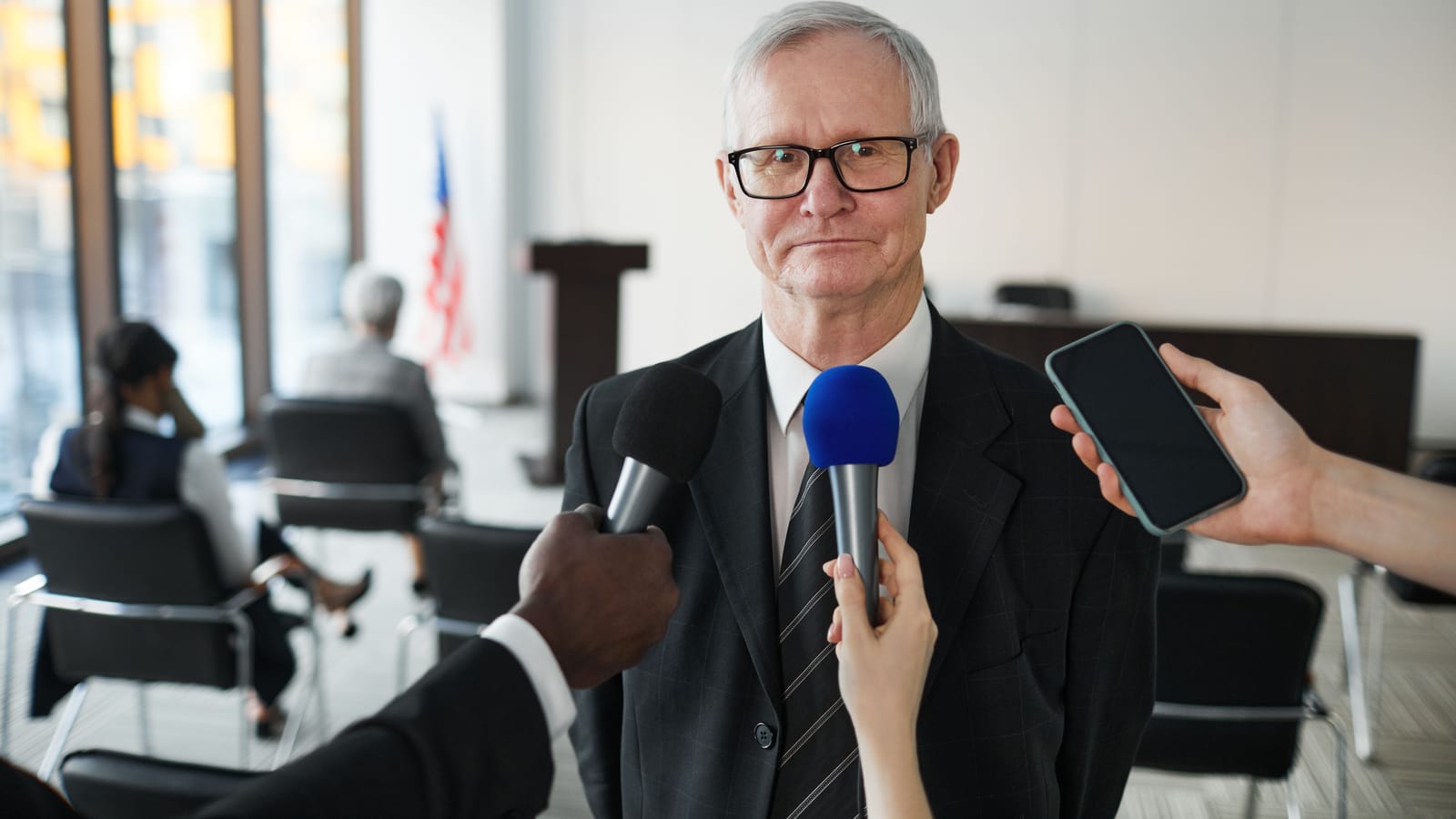
You get three minutes at the school board microphone. The chair cuts you off at ninety seconds because he doesn't like where you're going. Does he have the authority?
No. And knowing exactly why, in one sentence, is worth more than an hour of arguing in the parking lot afterward.
The First Amendment runs 45 words. Free speech gets a clause: "Congress shall make no law... abridging the freedom of speech, or of the press; or the right of the people peaceably to assemble, and to petition the Government for a redress of grievances." Since Gitlow v. New York in 1925, the Supreme Court has applied that restriction to the states through the Fourteenth Amendment. Your city council, your county commission, your state university, your local police department. All of them are bound.
It binds the government, not your neighbor
This is the distinction people trip over most. The First Amendment is a limit on government power. It isn't a general right to be listened to, published, hosted, employed, or invited back to Thanksgiving.
A private employer can fire you for what you posted. A private platform can take your account down. A church can decide who preaches from its pulpit, and a magazine can decide what it runs. That's not censorship in the constitutional sense. It's other people exercising their own liberty, including their freedom of association, and a conservative should be the last person to want the government policing it.
There's a real exception, and the Court sharpened it recently. In NRA v. Vullo (2024), a unanimous Court held that a New York regulator may not use the coercive weight of her office to pressure private companies into cutting off a group she disliked. Government can speak and persuade. It can't threaten. The older case is Bantam Books v. Sullivan (1963), where a state commission sent "advisory" letters that everyone understood as orders. Informal pressure with a badge behind it's still state action.
The unprotected categories are short and narrow
Courts have never treated speech as absolute. But the list of categories outside the First Amendment's protection is small, old, and hard to expand. The Court said so plainly in United States v. Stevens (2010) when it refused to invent a new one.
- Incitement. Brandenburg v. Ohio (1969) set the test: speech directed to inciting imminent lawless action and likely to produce it. "Someone should do something about that judge" isn't incitement. "Grab those bricks and go now" starts to be.
- True threats. In Counterman v. Colorado (2023) the Court required the government to show the speaker was at least reckless about the threatening character of his words. A jury can't convict on a listener's fear alone.
- Obscenity. Defined by the three-part Miller v. California (1973) test, and much narrower than most people assume. Material that's merely offensive doesn't qualify.
- Defamation. New York Times v. Sullivan (1964) requires a public official to prove actual malice, meaning knowledge of falsity or reckless disregard for the truth. Private plaintiffs have a lower bar under Gertz.
- Fraud, perjury, extortion, and speech integral to criminal conduct. Words used as the instrument of a crime aren't shielded because they're words.
"Fighting words" from Chaplinsky v. New Hampshire (1942) is technically still on the books. In practice the Court hasn't upheld a conviction on that ground in decades. Don't build an argument on it.
What you're allowed to say that people think you aren't
There's no hate speech exception in American law. None. In Matal v. Tam (2017), a unanimous Court struck down a federal trademark rule barring disparaging marks, and Justice Alito quoted Holmes on the point: the freedom worth boasting about is the freedom for the thought we hate.
Flag burning is protected expressive conduct under Texas v. Johnson (1989). Deeply offensive picketing near a military funeral was protected in Snyder v. Phelps (2011), eight to one. Lying about military decorations was protected in United States v. Alvarez (2012), because false statements aren't a standing exception either.
You can dislike every one of those outcomes and still want the rule. The power to punish offensive speech doesn't stay pointed at the people you'd aim it at. It changes hands every election.
Nobody can make you say it
Compelled speech gets less attention than censorship and matters just as much. West Virginia v. Barnette (1943) ended mandatory flag salutes in public schools, and Justice Jackson's line about the fixed star in our constitutional constellation is still the best sentence in the canon. Wooley v. Maynard (1977) let a driver cover a state motto on his license plate. 303 Creative v. Elenis (2023) held that a state can't force a designer to create expressive work carrying a message she rejects.
The principle cuts in every direction, and that's the point of it.
If you work for the government, the rules shift
Public employees keep First Amendment rights, but a modified version. Under Pickering (1968) and Garcetti v. Ceballos (2006), speech made as part of your official duties gets no protection, while speech as a citizen on a matter of public concern is weighed against the employer's interest in running the place. Kennedy v. Bremerton School District (2022) protected a coach's brief personal prayer at midfield after games.
Students keep their rights too. Tinker v. Des Moines (1969) is the anchor: no shedding constitutional rights at the schoolhouse gate, absent substantial disruption. Mahanoy Area School District v. B.L. (2021) limited how far a school's reach extends off campus.
Now use it
Back to that microphone. Governments can impose time, place, and manner rules on speech in a public forum as long as they're content-neutral, narrowly tailored, and leave open other channels. Three minutes for everyone is fine. Three minutes for supporters and ninety seconds for critics is viewpoint discrimination, and it's the thing courts look at hardest.
Do this before the next meeting:
- Pull the written public comment policy. It's usually on the district or county website, sometimes buried in board bylaws. Print it. Bring it.
- Read your state's open meetings law. Every state has one. It sets notice requirements, agenda rules, and when a body may go into closed session. Violations are often fixable by complaint to the state attorney general.
- Sign up early and write your remarks to time. Read them out loud with a stopwatch. Two minutes fifty is a finished argument. Four minutes is a gavel.
- Record it, if your state allows. Know your state's recording rules first.
- Put the same argument in writing to the board and to your representative. The Petition Clause is in the same sentence as the Speech Clause and gets used a tenth as often.
If a government body punishes you for your viewpoint, that's a matter for a First Amendment attorney, not a comment thread. Organizations like FIRE and the ACLU take cases across the political spectrum, and the constitutional question is usually a lot simpler than the people violating it want you to believe.
The amendment doesn't enforce itself. It's a written limit on power, held in place by citizens willing to show up, take the three minutes, and put their name on the record.
Marcus Vale
Editor-in-Chief
Twenty years in magazines, most of it deciding what to cut. Writes about work, discipline and the decisions that compound.

Watch
Worth an hour of your evening
More from Civics.
From channels we rate. Plays on YouTube.
Read next