

A brush pile that burns hot, burns clean and stays put
Smoke is wasted fuel, and the fires that run are usually built wrong from the start. Where you stack it matters more than how you light it.
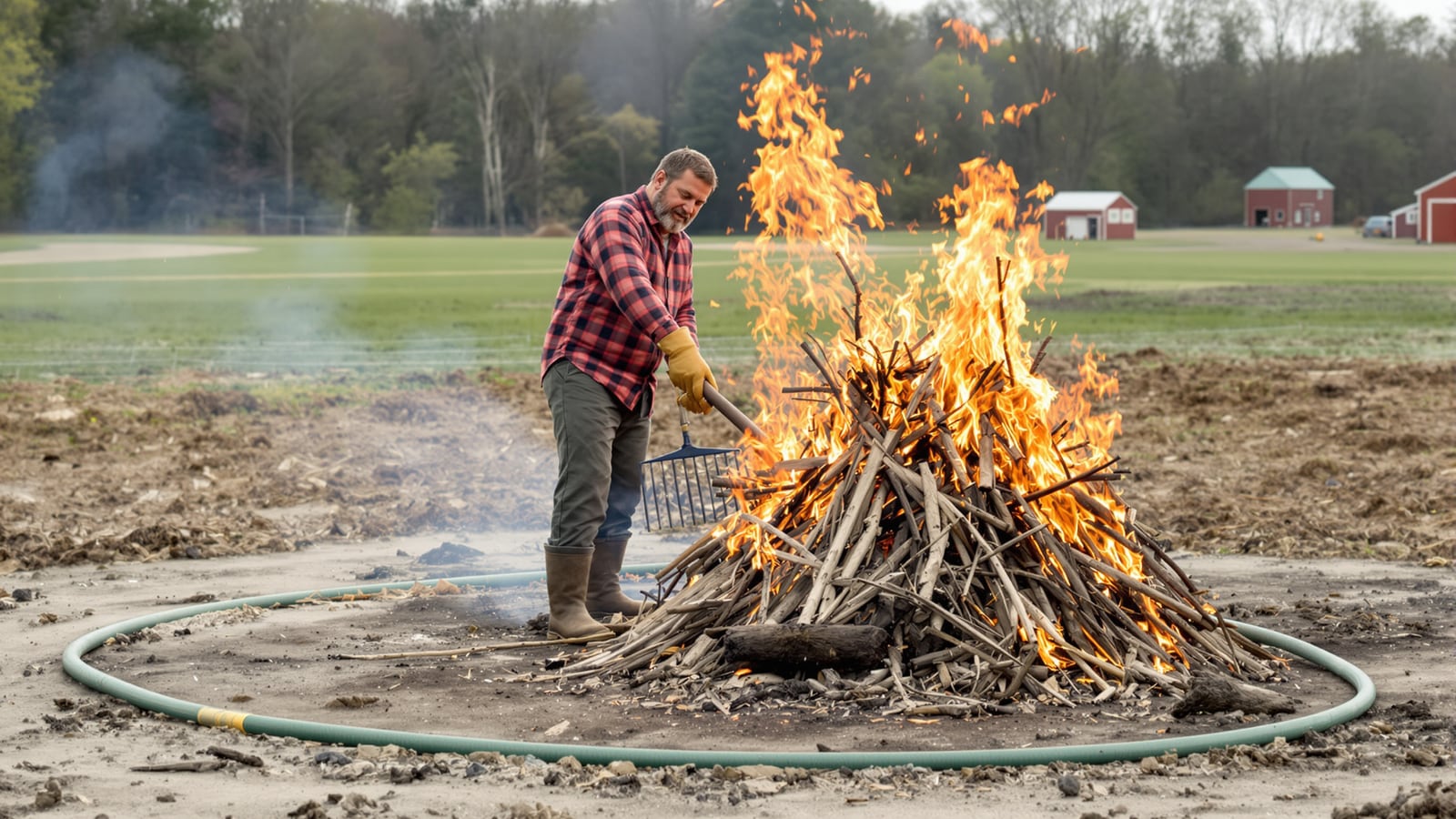
Quick answer: Burn small piles of dry brush, not one big heap of green. Pick a spot at least 100 feet from the barn with bare dirt around it, burn on a calm morning after rain, and don't leave until the ashes are cold enough to put your hand in.
The pile is wrong before you light it
Most brush piles get built where the truck stopped. That's usually close to the barn, because that's where the work was and nobody wanted to drag limbs any farther.
Then it grows. A winter of storm cleanup and fence-line clearing turns into a mound eight feet tall, packed with green cedar, a rotten stump and a few sheets of old plywood. In April somebody splashes diesel on it and steps back.
That's how you get a column of black smoke, a pile that burns for three days, and a sudden wish you'd bought a longer hose.
Smoke is unburned fuel. Thick white or black smoke means the fire is starving for air or choking on wet wood. A clean fire is one with plenty of dry, loose fuel and room to breathe. That's decided when you stack the pile, not when you strike the match.
Pick the spot like you're protecting the barn
Rules differ by state and county, and plenty of places require a permit or shut burning down entirely during dry spells. Check your local fire authority before you stack anything. A burn ban applies to you whether you saw the sign or not.
Fifty feet from buildings is a common minimum. With a barn full of hay, go 100 feet or more. Embers don't care what your permit says.
Look up before you commit. Overhanging limbs, power lines and a neighbor's fence line all count. Then look at the ground. You want open dirt, not dry grass.
- Clear to bare soil in a ring at least ten feet wide around the pile. Scrape it with a tractor blade, a disc or a hard rake.
- Know the prevailing wind. If it normally blows toward the barn, put the pile on the other side of the property, even if that means a longer drag.
- Keep it off roots and stumps. A fire that gets into a root system can smolder underground and come back up days later.
If you've cleared land for a house or fence, the spot you choose for the burn is worth the same thought as the spot you choose for a post. Corner posts decide whether a fence lasts. This is the same kind of decision, made once and lived with.
Dry brush, loose stack
Cut brush in the fall and winter, stack it, and leave it alone through a dry stretch. Brush that's been sitting for several months burns far hotter and cleaner than limbs cut last week. It's the same principle as seasoned firewood. If you've split wood in March to burn in December, you already understand it.
When you build, think of a campfire at larger scale.
- Start with a base of thicker limbs, laid crisscross so air can pull through from underneath.
- Add a layer of small dry stuff in the middle, twigs and leftover kindling.
- Pile the rest on loosely. Don't pack it down. Gaps are the point.
- Keep the pile low and wide, no taller than you can reach with a rake.
Cut limbs to manageable lengths first. A good saw and good habits make it faster and safer. If you haven't got the habits, read this first.
Build a small fire first, and feed it
Don't light a house-sized pile and walk away. Light a small pile, or one corner of a bigger one, and feed it as it burns.
Start from the downwind side with dry kindling, a fire starter or a propane torch. Skip the gasoline and diesel. Accelerant burns off in a flash and leaves the real fuel cold, and every year somebody gets badly burned doing it.
Once the base is roaring, push limbs in from the edges toward the center. A fire fed in stages stays hot, burns the smoke off and doesn't throw sparks the way a collapsing mountain does.
Concession: this takes longer. You might spend a full Saturday on what you could have lit in ten minutes. That's the cost of not having a fire department in your yard.
Pick the day, not the date
The best burn day has three things going for it.
Calm air. A lot of burn permits want wind under about ten miles an hour, and yours may be stricter. Wind in the morning is usually lighter than wind at two in the afternoon, so start early and plan to be done before it picks up.
Damp ground. A day or two after a soaking rain, or with snow on the ground, is ideal. The pile still burns if it was stacked dry, but the grass around it won't carry fire.
Time on your side. Don't start at 4 p.m. with chores waiting. A fire you can't watch is a fire you shouldn't light.
Tell your neighbors before you burn. A quick text beats a panicked phone call when they see smoke. The unwritten rules of having neighbors cover this and a few other things worth doing.
What never goes on the pile
- Treated lumber, painted wood, plastic, tires and shingles. They put out smoke you don't want to breathe and leave residue on your own ground.
- Poison ivy, oak or sumac. The oil can travel in smoke and cause serious reactions in the lungs and on the skin. Haul it somewhere else or let it rot.
- Green, wet material in bulk. Let it dry first, or you'll smoke out the county.
- Anything with aerosol or fuel in it. Cans and old gas jugs explode. Pick the yard up before you light.
Water, tools and an exit
Before the fire starts, have these laid out:
- A hose long enough to reach the pile, already connected and tested. If you don't have one, a tractor-mounted sprayer or a backpack pump works.
- A round-point shovel and a steel rake.
- Gloves, boots and cotton or wool clothing. Synthetic fabric melts onto skin.
- A phone, so you can reach the fire department fast if it gets away.
If the fire jumps the cleared ring and you can't stop it with a few quick passes of the hose and shovel, don't try to be a hero. Get people and animals clear, get the fire department on the way, and let them do the job. Barns can be rebuilt. You can't be.
Stay until it's cold
Most escaped burns happen after the owner leaves. Wind picks up. Embers hide in the middle of the ash. A stump hole keeps glowing for days.
When the flames are gone, spread the coals with a rake and soak them. Stir and soak again. Put your hand over the ashes, a few inches above, and feel for heat. If it's warm, it's not done.
Come back the next morning and check again. Then check once more after the next wind.
Leave the ground better than you found it
When it's cold, rake out what's left and scatter the ash thin. Reseed the burn scar with grass in the fall so it doesn't turn to erosion or weeds. Pull out any nails, wire or hardware that came out of the pile.
Burning isn't always the right call. A small brush pile left to rot gives quail, rabbits and songbirds a home, and a chipper turns limbs into mulch for the garden. But when you do light a match, do it like a man who plans to be there at the end.
A good fire is mostly planning. The last thing you want to find out is how fast a pile can outrun a man with a garden hose.
Wes Dunbar
Country & Skills
Grew up on an acreage and never quite left. Covers trucks, trades, land, and how to do the thing yourself.

Watch
Worth an hour of your evening
More from Country Bro.
From channels we rate. Plays on YouTube.
Read next