How to Find Fish on a Lake You Have Never Seen
Ninety minutes of map work and a stubborn willingness to leave dead water will beat local knowledge more often than you'd think.
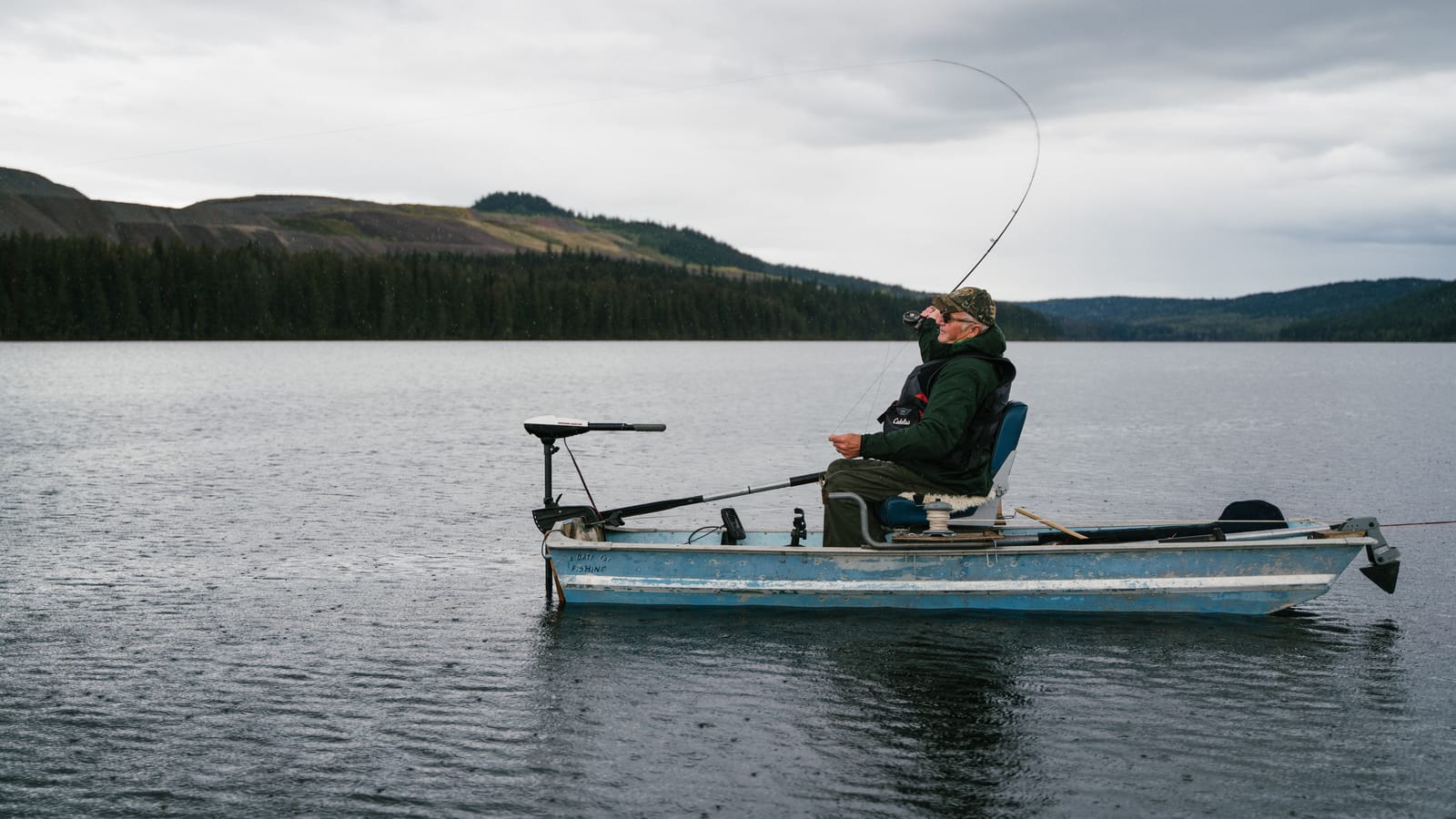
Give yourself ninety minutes on the water before you judge the place. That's the honest budget for a lake you've never launched on. Not ninety minutes of casting at the first pretty shoreline you see, either. Ninety minutes of eliminating water on purpose, which feels a lot like failing until suddenly it doesn't.
The work starts the night before, at the kitchen table, with a contour map and a cup of coffee. Ten minutes of that's worth two hours of idling around wondering where the fish went.
Read the lake before you see it
Pull up the lake on a mapping app. Navionics and Fishing Points both overlay depth contours on most public water in the U.S. and Canada, and Google Earth's historical imagery is the sleeper tool nobody uses. Drag the time slider back to a drought year. Low water strips the lake naked. Standing timber, old roadbeds, the actual shape of a creek channel, rockpiles that sit under twelve feet in a normal summer. All of it shows up in a photo from a dry August six years ago.
Then find the state or provincial survey. Many wildlife agencies publish lake management reports with species present, stocking history, and habitat notes. They'll tell you whether you're on a walleye lake pretending to be a bass lake, or whether that "trophy" reputation came from a stocking that stopped a decade ago.
Now mark waypoints. Eight to twelve, no more. You're looking for:
- Points, especially the ones where contour lines stack up tight on one side and spread out on the other
- Creek channel swings that bend in close to a bank or a flat
- Inside turns in the shoreline, the little C-shaped indentations fish use as ambush pockets
- Humps that top out shallower than 15 feet with deep water on at least two sides
- The narrowest spot in the lake, where wind and current pinch bait through
Drop those pins. They're a hypothesis, not a plan.
The first thirty minutes are for looking, not fishing
Idle. I know. Everybody wants the first cast in the water by 6:04 a.m. But run your first three waypoints at idle speed with your eyes on the graph and your rods in the locker, and you'll learn more than four hours of casting would tell you.
You're looking for one thing above all others: bait. Clouds of it, arches under it, the little confetti near the surface at gray light. Structure without bait is furniture nobody sits on. Bait without structure still catches fish.
Second thing: bottom hardness. Watch where the bottom return goes from a thin, sharp line to a fat, mushy one. That transition from rock or gravel to silt is a highway, and it holds fish on lakes that otherwise look featureless.
Third: the thermocline, if it's summer. On deeper lakes you'll see a hazy band on the graph, usually somewhere between 15 and 30 feet. Below it, oxygen runs thin. Don't waste your day fishing 40 feet down on a lake that stops holding fish at 22.
If you're on a 60-acre pond with no electronics and a jon boat, none of this is lost on you. You just do it with your eyes. Find the wind-blown bank, find the weed edge, find the one laydown that's different from the other forty.
Fish the ugly side
Newcomers fish the calm bank because it's comfortable and casting is easy. Wind stacks plankton, plankton pulls baitfish, baitfish pull everything with teeth. So take the chop in the face.
The rule holds through most of the year. In early spring it flips a little. The north and northwest shorelines catch the most sun and warm first, and a protected north pocket can run four or five degrees warmer than the main lake in April. That's where the first shallow fish will be, wind or no wind.
Fall's the exception nobody warns you about. During turnover, the lake mixes top to bottom, the water goes cloudy and sour-looking, and fishing gets genuinely hard for a week or two. If you show up to a lake that looks like weak coffee and smells faintly like a pond scum, that's what happened. Fish the creek arms, which stabilize first, and don't take it personally.
Cover water, then slow down
Start with something you can throw fast and far. A lipless crankbait, a spinnerbait, a jerkbait in cold water, a 3.8-inch paddle tail swimbait on a quarter-ounce head. You're not trying to finesse a bite out of a stubborn fish. You're asking the lake a yes-or-no question at forty casts an hour.
Give each waypoint fifteen minutes. Fifteen. Set a timer if you have no discipline, and most of us have no discipline. No bite, no bait on the graph, no follows? Pick up and run.
When you do get a bite, stop everything and take inventory. Depth. Bottom type. Wind direction on that bank. How far off the structure the fish was sitting. Water clarity right there. That combination is the pattern, and a pattern repeats across the whole lake. One keeper off the third-from-the-back point in a creek arm means every third-from-the-back point in every creek arm is now worth a look.
That's the whole game. One fish becomes a pattern, a pattern becomes a day.
Then slow down and milk it. Once you know where they live, a jig, a Texas-rigged worm, or a drop shot will pull the fish that wouldn't chase the search bait.
What the bait shop guy is actually telling you
Stop in. Buy something, even if it's a bag of beef jerky and a spool of line. Ask what's been going on, not where the fish are. Nobody's giving up a spot to a stranger, and you wouldn't either.
But listen for the useful parts underneath the vague answer. "They've been shallow" tells you a depth range. "The bite's been early" tells you a window. "Guys are throwing a white bait" tells you the forage is shad, not bluegill. Filter out the flexing, keep the data.
Check the regulations before the trailer touches the water
Rules change at every state and provincial line, and often lake by lake within a state. Length limits, slot limits, daily bag, seasonal closures on bass or walleye during the spawn, restrictions on live bait or on transporting water between lakes, and mandatory boat inspection or decontamination for invasive species in a lot of western states and Canadian provinces. Some lakes are electric-motor only. Some are catch-and-release only for certain species.
Look it up on the agency's website the night before, and carry your license on your phone or in your pocket. "I'm not from here" has never once worked.
Keep fish if you want to keep fish. A limit of walleye in the cooler is one of the great honest pleasures of North American life, and a family that eats what a father caught is better for it. Keep the eaters, let the big old females go, and clean up your line and your trash at the ramp.
Write it down
Before you pull the boat out, sit in the truck for five minutes and write in a notebook. Date, water temp, wind, clarity, where you got bit, what they hit, what depth. Not a phone note you'll never open. Paper.
Do that on ten strange lakes and something happens. You start showing up at lake number eleven, one you've never seen, and the map tells you where to start because you've read this map before under a different name.
That's the part nobody sells you in the tackle aisle. The lake isn't the mystery. You just haven't taken enough notes yet.
Wes Dunbar
Country & Skills
Grew up on an acreage and never quite left. Covers trucks, trades, land, and how to do the thing yourself.

Watch
Watch how it's done
Picked for this article.
From channels we rate. Plays on YouTube.
TacticalBassin
How To Find Fish On Any Lake! (Beginner to Advanced Maps and Electronics)
Kevin VanDam
How to Break Down a New Lake FAST | Seasonal Patterns, Bait Selection & Power Fishing Tips with KVD
Read next