

The Muskie Is Behind Your Lure at the Boat. Be Ready.
Pike and muskie anglers make a thousand casts to earn one look. Here's how to be awake for it, and what to do when the fish is at your feet.
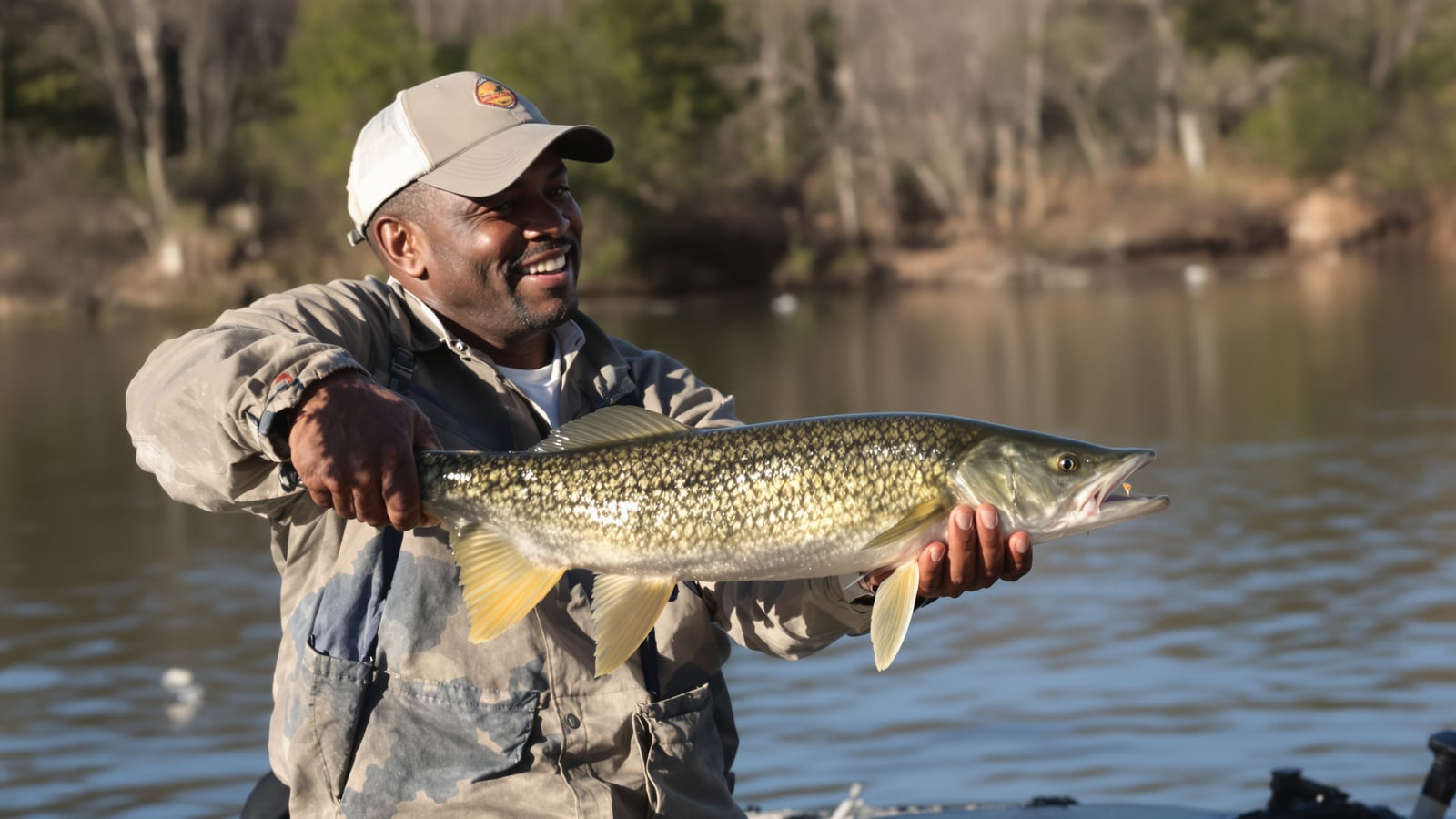
Quick answer: Fish the last ten feet of every cast as hard as the first ten. Finish with a wide, deep figure-eight, keep the rod low, and have your leader, net and pliers ready before the strike, not after.
You've thrown a lure the size of a small trout about four hundred times. Your shoulder aches. You're thinking about lunch. The bucktail swings up to the boat, you lift it out of the water, and a fish as long as your leg turns away from it in a slow, green swirl.
That's how most big pike and muskie are lost. Not on the hookset. Not on the fight. At the boat, to a guy who'd stopped paying attention.
They follow more than they bite
Muskie have earned their nickname, "the fish of ten thousand casts," because most of what you do all day produces nothing. But a lot of fish do see the lure. They trail it, check it, and decide. Pike are usually more decisive and will hit hard in the middle of a retrieve. Muskie like to follow, sometimes right to the rod tip, and then either eat or vanish.
So the cast isn't the main event. The end of the retrieve is.
Treat every cast as if it ends with a fish. Watch the lure all the way in, not the horizon. If you see a following shape, don't panic and don't speed up in a straight line. A fish chasing a lure in a straight line at the boat has nowhere left to commit.
The figure-eight, done properly
Most people try it once, half-heartedly, and decide it doesn't work. It works. It just needs room and commitment.
- Keep reeling until the lure is about a rod length from the boat. Don't pull it out of the water early.
- Put the rod tip in the water. Push it down a foot or so. This lets you make long, sweeping turns without lifting the lure toward the surface.
- Draw a big sideways eight. Think loops three or four feet wide, not tight little circles. Wide turns keep the lure on a path a following fish can track.
- Speed up slightly through the turn. That's where the strikes happen. The lure swings, the fish sees an escape, and it eats.
- Keep going longer than feels reasonable. Thirty seconds of eights beats ten seconds of regret.
Stand up if you're in a boat. You'll see deeper and move the rod more freely. If you're in a kayak, sit still and keep your loops smaller, and read Kayak Fishing Without Going Swimming before you try to land anything with teeth.
Water clarity matters. In stained water you may never see the fish at all, so eights are the only insurance you've got. In clear water you'll see the follow, and your heart will do something unreasonable.
Set the hook like you mean it
A pike or muskie mouth is bone and teeth. A gentle lift won't get a hook through it. When a fish eats, don't yank straight back. Sweep the rod hard to the side, reeling down to stay tight, and then do it again. Two or three firm sets is normal.
At the boat, with a short line, you've got almost no stretch to help. Keep the rod low, point it where the fish is going, and let your drag do some of the work. If you're running braid, set the drag loose enough that a surge doesn't pull the rod out of your hands. A big fish at the boat is at its strongest and wildest, and it will make one more run.
The gear that earns its keep
You don't need much, but what you have has to be heavy.
- Rod: Seven and a half to nine feet, heavy or extra-heavy power. Big bucktails and jerkbaits are work to cast all day, and a stiff rod puts the hook in.
- Line: Braid in the heavy range, with a stout leader.
- Leader: Pike and muskie bite through light line like it's thread. Use wire or heavy fluorocarbon, and check it for kinks and nicks every few casts. Cheap snaps are the first thing to fail.
- Lures: Bucktails, big jerkbaits and topwaters cover a lot of water for muskie. For pike, spoons, spinnerbaits and smaller jerkbaits all earn their keep. A few good lures beat a tackle box full of mediocre ones. The good ones cost real money, and you'll watch one sink some afternoon. Tie it on anyway.
- Hooks: Sharpen them. A file takes thirty seconds, and a dull hook on a big lure will cost you the fish of the year.
Be set up before the fish is
Have these within reach before your first cast:
- A big net with a deep, rubber-coated bag
- Long-nose pliers
- A jaw spreader
- Side cutters or bolt cutters for cutting a hook that won't come out
- A pair of gloves for the hand holding the leader, if you like them
Nobody wants to dig through a box with a thrashing fish in the net. Teeth and treble hooks together are no joke. If a hook goes deep into you or anyone in the boat, cut the line, leave it alone and get medical help right away.
Keep it fresh for eight hours
The hard part isn't technique. It's concentration.
Change what you throw every hour or so. Not because the fish demand it, but because switching from a bucktail to a jerkbait to a topwater makes you pay attention again. Fish a new weed edge. Move. Pick a rhythm and count your casts if you must, but don't coast.
Eat before you're hungry. Drink more water than you think you need. Get a good pair of polarized glasses, because they let you see the follow and the weed edges you'd otherwise miss.
Fatigue is why people stop looking at the end of the retrieve. Fight it with small variety and a real lunch.
Release it right, or keep it if the rules allow
Plenty of muskie anglers release everything, and plenty of waters require it. Pike, on the other hand, are a fine fish to eat on many waters where the regulations allow it, and keeping a legal one is nothing to apologize for. Both are honorable. What isn't honorable is fish handled sloppily or kept against the rules.
Regulations vary a lot by state and province. Minimum lengths for muskie are often well above what you'd expect, some waters are catch-and-release only for certain species, and seasons can be different for pike and muskie on the same lake. Read your local rules before you launch, and see Size Limits, Slot Limits and the Rules That Keep Fish Coming for how to make sense of them.
If you're letting one go, keep it in the water as much as you can. Wet your hands. Support the belly, don't hang the fish by the jaw, and don't take a long photo session. How to Release a Fish So It Actually Lives covers the details, and a big, tired muskie needs them.
The one that was at the boat
Every muskie angler has a story about the fish that followed. The ones who tell it as a triumph are the ones who kept the rod in the water and kept drawing eights while their heart tried to climb out of their throat.
The rest tell it as a lesson. Next time, you'll still be looking.
Wes Dunbar
Country & Skills
Grew up on an acreage and never quite left. Covers trucks, trades, land, and how to do the thing yourself.

Watch
Worth an hour of your evening
More from Fishing.
From channels we rate. Plays on YouTube.
Read next