One roast chicken and the four dinners it should give you
Get the bird right, strip it while it's still hot, and you've bought yourself three more dinners and a pot of stock.
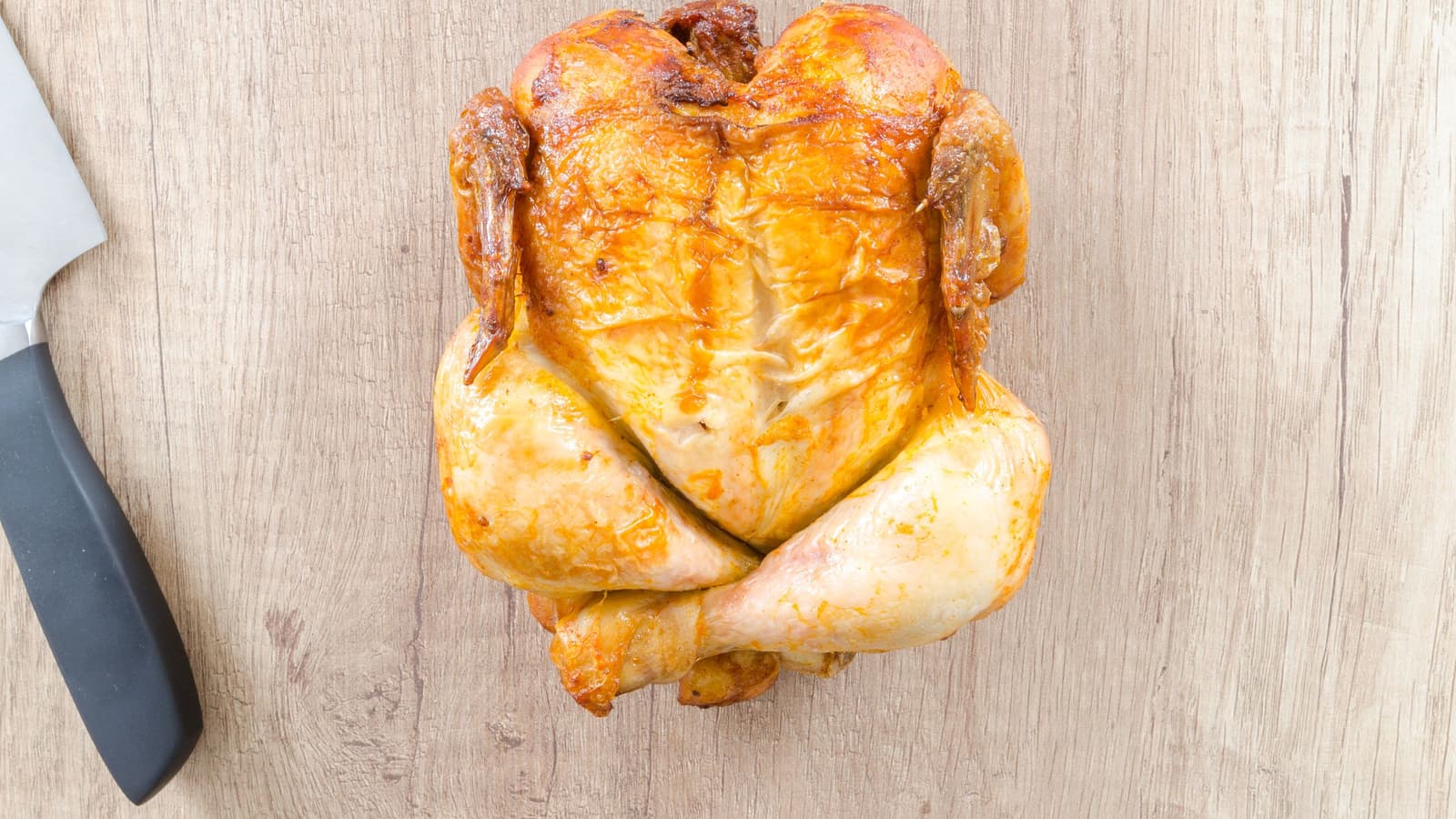
Buy a bigger chicken than you need for dinner.
That single decision is what separates a nice Sunday roast from four days of eating well without cooking from scratch again. A four-to-five-pound bird feeds two adults and two kids on the night, and still leaves you a pound of meat and a carcass worth more than the meat. Buy the three-pounder and you've made one meal and thrown away the interesting part.
Everything else below is technique. The roast itself is easy. The part people get wrong happens at nine o'clock, after dinner, when the bird is sitting on the counter and nobody wants to deal with it.
Salt it the day before
Kosher salt, roughly a teaspoon per pound of bird, rubbed over the skin and a little inside the cavity. Then put it on a rack or a plate in the fridge, uncovered, overnight. Twenty-four hours is better. Four hours is still worth doing.
Two things happen. The salt works its way into the meat, so the breast is seasoned all the way through instead of just on the surface. And the skin dries out, which is the entire secret to skin that shatters instead of flopping.
Wet skin steams. Steamed skin goes pale and rubbery, and no amount of oven heat fixes it once you've started from damp. If you've ever pulled out a chicken that looked tan and tasted like nothing, this was the reason.
Don't rinse the bird. You're washing off the thing you just built. Pat it dry if it looks damp, and leave it alone.
Hot oven, and stop opening it
Convection at 425°F, or conventional at 450°F. Put the bird breast-up in a cast iron skillet or a small roasting pan, something just bigger than the chicken. A huge sheet pan lets the fat spread thin and burn.
Skip the basting. Every time you open the door you drop the oven temperature and you're spooning liquid onto the skin you spent all night drying out. Basting is a habit inherited from cooking lean birds low and slow, and it does nothing good here.
Tie the legs loosely with string if you like a neat shape, but understand the trade-off: trussing tight protects the breast and slows the thighs down, so the thighs finish underdone. I'd rather leave the legs splayed and let the dark meat get properly hot.
One real decision: potatoes under the bird or not. Under the bird, they're superb and the chicken skin on the bottom goes soft from the steam. On their own pan, everything crisps and the potatoes are merely good. Pick based on which you care about more.
Pull it early
Temperature is the only reliable test. Poke the thickest part of the breast, not touching bone, and pull the bird at 157 to 160°F. The thigh should read 170 to 175°F, and that's fine — dark meat wants to be hotter, and it's full of connective tissue that needs the heat to break down.
Carryover cooking will take the breast up several more degrees while it rests. If you wait until the breast reads 165 in the oven, it'll be at 172 by the time you carve, and that's the difference between juicy and chalky.
Rest it twenty minutes on a board. Not covered in foil, which traps steam and softens the skin. Twenty minutes is long enough for the juices to redistribute and short enough that the meat is still hot.
Carve the breast, pull the legs and wings, and put it on the table.
The ten minutes that decide the next three meals
When dinner's over, don't put the platter in the fridge.
Strip the carcass while it's still warm. The meat comes off in one piece when it's warm and fights you when it's cold. Ten minutes with clean hands and you'll get more off a carcass than a knife will ever manage.
Sort as you go into three piles:
- Clean shreds. Thigh meat, the oysters off the back, any leftover breast. This is your good meat.
- Bits and skin. Cartilage-adjacent scraps, gelatinous bits, leftover skin. Goes in the pot.
- Bones. Everything else, including the wing tips and the back.
The clean shreds go in a container in the fridge, and they're good for about four days. The bones and bits go straight into a stockpot.
What goes wrong: people leave the whole carved bird on the plate overnight. By morning the meat has dried against the bone, gone gray, and nobody's excited about it. So it sits for three days and gets thrown out. That's the whole failure. Not the roasting — the ten minutes after.
Dinner two, from the bones
Cover the bones with cold water by an inch. Add an onion halved, a carrot, a couple of celery ribs, a bay leaf, a few peppercorns. No salt yet, because you'll reduce it later and salt concentrates.
Bring it to a bare simmer and hold it there. Bubbles breaking the surface lazily, not a rolling boil. Boiled stock goes cloudy and tastes muddy, because the hard agitation emulsifies the fat into the liquid. Three hours is plenty from a roasted carcass.
Strain it. Cool it down fast — an ice bath in the sink, or pour it into a shallow pan — because a big pot of warm stock sitting on the counter is exactly how food gets unsafe. Get it into the fridge within a couple of hours. The fat sets on top overnight and lifts off in a disc.
Now you've got a liquid that makes soup, rice, beans, or gravy taste like somebody cared. Chicken and rice soup with a handful of the clean shreds and a squeeze of lemon is a twenty-minute dinner. Freeze what you don't use in two-cup portions.
Dinner three, the good shreds
Use the best meat on the meal where it's the star. Tacos are the easiest win: warm the shreds in a hot pan with a little fat, cumin, smoked paprika and a splash of the stock so they don't dry out. Char the tortillas directly on the burner. Lime, raw onion, cilantro.
The mistake is microwaving cold chicken. It goes stringy and tastes reheated. Hot fat in a pan for ninety seconds does the opposite — the edges catch and it tastes cooked, not warmed over.
A chicken sandwich works the same way. Coarsely chopped meat, mayonnaise, mustard, celery, plenty of black pepper, on real bread.
Dinner four, the scraps
By day three you've got maybe a cup of chicken left, and it's fine, because this meal is about the rice or the potatoes.
Fried rice needs day-old cold rice, a very hot pan, and restraint. Egg first, out of the pan. Then aromatics, then rice pressed flat and left alone until it crackles. Then chicken, scallions, soy sauce down the side of the pan so it sizzles rather than steams. Egg back in at the end.
Or a hash: diced potatoes cooked properly in fat until crisp, onion, the last of the chicken, a fried egg on top. Breakfast for dinner, and nobody complains.
Four dinners, one oven session, one pot on the stove. The only skill you actually had to learn was pulling the bird at 157 and refusing to walk away from the counter for ten minutes.
Do it this Sunday. By Wednesday you'll be the person who never has to ask what's for dinner.
Dean Shaw
Gear & Garage
Reads the warranty, the parts list and the long-term owner reviews before anything else. Trucks, tools, watches, and the cheap version that costs more.

Watch
Worth an hour of your evening
More from Food.
From channels we rate. Plays on YouTube.
Read next