The cheapest good ground beef comes from a whole animal
Buy a quarter or half of a beef and the hamburger gets cheaper and better. What the cut sheet doesn't tell you, and how to cook it right.
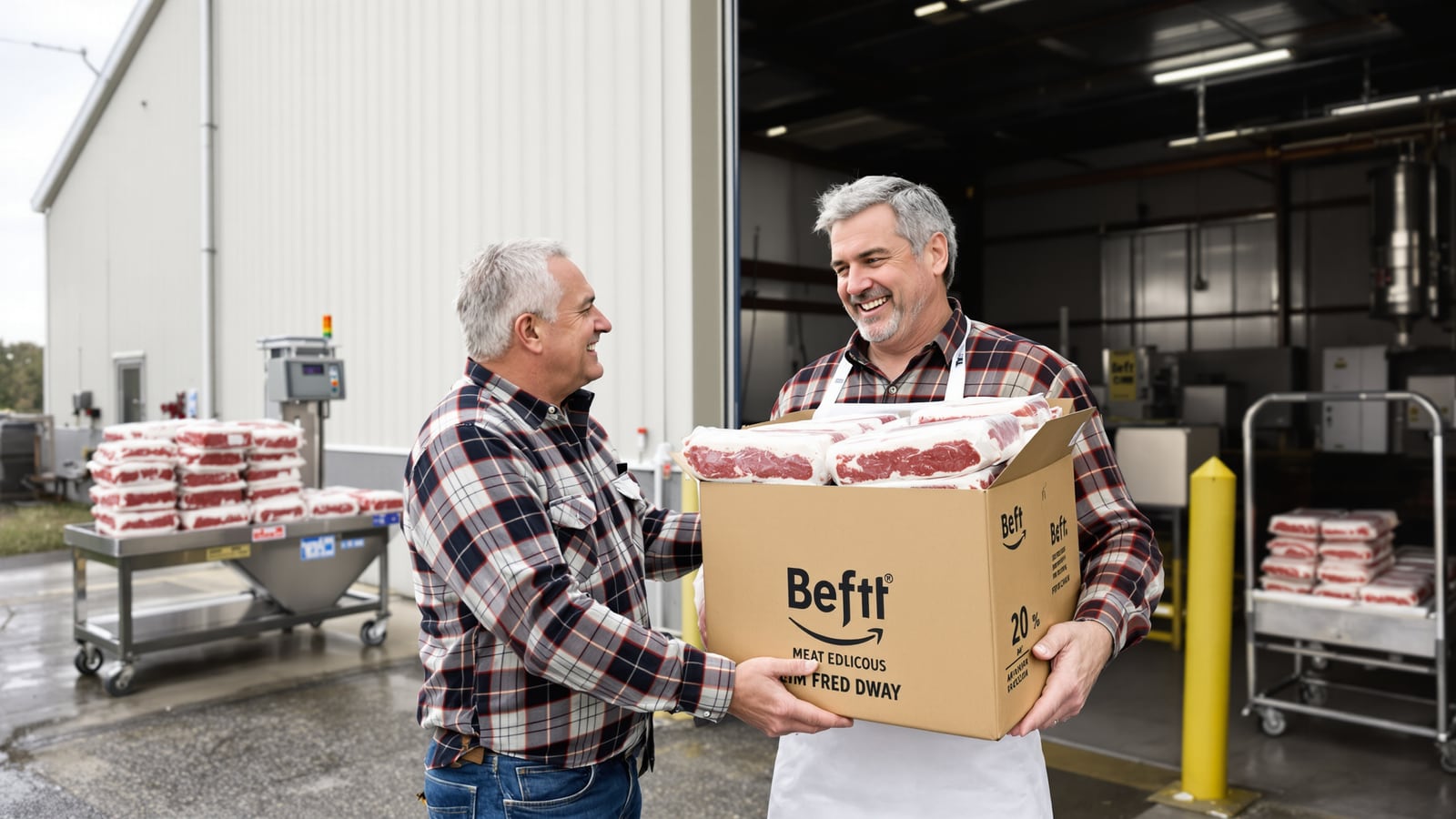
Quick answer: Buy a quarter or half of a local beef, ask for the ground in one-pound flat packs at a fat ratio you chose, and judge the price by the packaged pound you take home, not the hanging weight on the invoice. You'll end up with a freezer full of the best burger you've eaten and a lower cost per pound than the grocery store.
What's in that grocery tray
A tray of 80/20 tells you one thing: the fat ratio. It doesn't tell you what went into it. Commercial grind can be trim from many animals, mixed and re-mixed, and you'll never know which ones.
Ground beef from a single animal is different. It's the trim from the steaks and roasts the butcher cut for you, plus the chuck and the lesser cuts, ground fresh into one batch. One animal. One diet. One fat. When a burger tastes like beef instead of like a tray, that's the reason.
That's my opinion, and the proof is a Saturday afternoon at the grill. But the cost side is arithmetic, and it's worth doing properly.
Do the math the right way
Most first-timers get burned here, so slow down.
A rancher usually sells by hanging weight. That's the carcass after slaughter, before aging and cutting. You won't take that weight home. Bone, trim and moisture lost during aging take a good chunk of it, so your packaged meat is meaningfully less. Ask the processor what they typically see.
The bill also has two parts. One goes to the rancher for the animal. The other goes to the processor for cutting, wrapping and a kill fee. Plenty of people remember the first number and forget the second, then feel ambushed.
So add both and divide by the pounds you actually carry out the door. That's your real cost per pound across every cut, steaks and roasts included. Ground beef is usually the biggest line on the cut sheet, which means the cheap part of the animal is also most of the animal.
Compare that number to what you pay now for the grind, the roasts and the steaks you'd otherwise buy separately. If you cook at home most nights, it usually wins. If you eat beef twice a month, it doesn't, and you should say so out loud before you write the check.
The cut sheet decides everything
The processor will hand you a form with boxes. This is where a good purchase gets made or wasted.
- Ground packaging. Ask for one-pound packs, vacuum sealed if they offer it, and pressed flat. A flat pound thaws in an hour. A brick takes a day and a half.
- Fat ratio. Pick one. Beef finished on grass runs leaner, and lean grind makes dry burgers. Ask whether they'll add fat back to hit roughly 80/20. If you want a mix, ask for some of the grind lean for chili and sauces, the rest at burger fat.
- Patties. Skip them. You can form your own in thirty seconds, and a pre-pressed patty is dense and tight.
- Roasts versus steaks. Every roast you take instead of grinding it is a Sunday dinner. The Sunday roast that leaves your afternoon alone is a good use for them.
Write the ratio and pack size on the sheet. Verbal instructions get forgotten by the third animal of the day.
The freezer problem
A quarter beef takes real room. A half takes a chest freezer, not the top of your fridge. If you don't own one, buy the freezer first, or split a half with a neighbor or a brother-in-law. That's often the smartest move. Split it fairly, weigh it out in front of both families, and bring your own cooler and boxes when you pick up. Wipe the cooler down before you return anything you borrowed.
One more cost nobody mentions: if the power goes out for a long weekend, you're out hundreds of dollars of beef. Keep the freezer closed, and know who has a spare freezer nearby.
Label everything with the date. Beef kept well wrapped holds quality for a long time, but "I'll remember" is how a pack ends up two years deep and freezer burned.
How to cook it so you don't waste it
Better meat is easy to ruin. Nearly every failure comes down to one of these.
Gray, steamed crumbles. You dump two pounds into a medium pan and it floods with liquid. The meat boils instead of browning. Use a hot cast iron or heavy skillet, cook a pound or less at a time, and press it flat and leave it alone for two or three minutes before you break it up. You want a dark crust. That crust is the flavor. If your pan needs rescuing, your cast iron pan is probably not ruined.
Dense, rubbery burgers. Overworking. Warm hands and heavy packing turn loose grind into a sausage. Form the patty with as few touches as you can, press a shallow dimple in the middle so it doesn't dome, and salt the outside right before it hits the heat. Salt mixed deep into the meat early gives you a springy texture that isn't a burger.
Dry burgers. Too lean, too long. Fat is what makes the thing juicy. If your grind came back lean, don't cook it to death to be safe. Add fat or build a different meal around it.
Raw in the middle, burnt outside. Ground beef needs to reach 160°F inside, and the only way to know is a thermometer. Color lies. Check the thickest part.
Thawing on the counter. Don't. Thaw a flat pack in the fridge overnight, or seal it and set it in cold water, changing the water every half hour, and cook it right away.
Three things worth doing with it
A smash burger is the best test of good grind. Roll a loose ball, drop it on a ripping hot pan, press it flat with a stiff spatula, and leave it for about a minute. Flip, cheese, done. The edges go lacy and crisp, and nothing from a tray tastes like it.
Brown a big batch on Sunday and portion it. Your Wednesday just got easier, and cook components, not meals, and Wednesday stops being grim shows how to spread a pound across tacos, pasta and rice bowls.
And if money is tight, a freezer of grind is a budget plan. It's most of the reasoning in how to feed a family well when the food budget is tight.
If you can't commit to a quarter
Buy a chuck roast at the store and ask the butcher to grind it while you wait. You'll get a single-cut grind with real beef flavor for a normal price, and you'll learn how much you care before you buy a freezer.
Then find a rancher near you. Ask for a name, a processor, and a date. Good ones book months ahead, so ask early.
Spend one season eating burgers off one animal, and the tray in the case won't look like food.
Wes Dunbar
Country & Skills
Grew up on an acreage and never quite left. Covers trucks, trades, land, and how to do the thing yourself.

Watch
Worth an hour of your evening
More from Food.
From channels we rate. Plays on YouTube.
Read next