Baste your vegetables in butter like you baste a steak
Butter dropped on at the end just sits there. Add it at the right moment, in a hot pan, and plain vegetables start tasting like the best part of the plate.
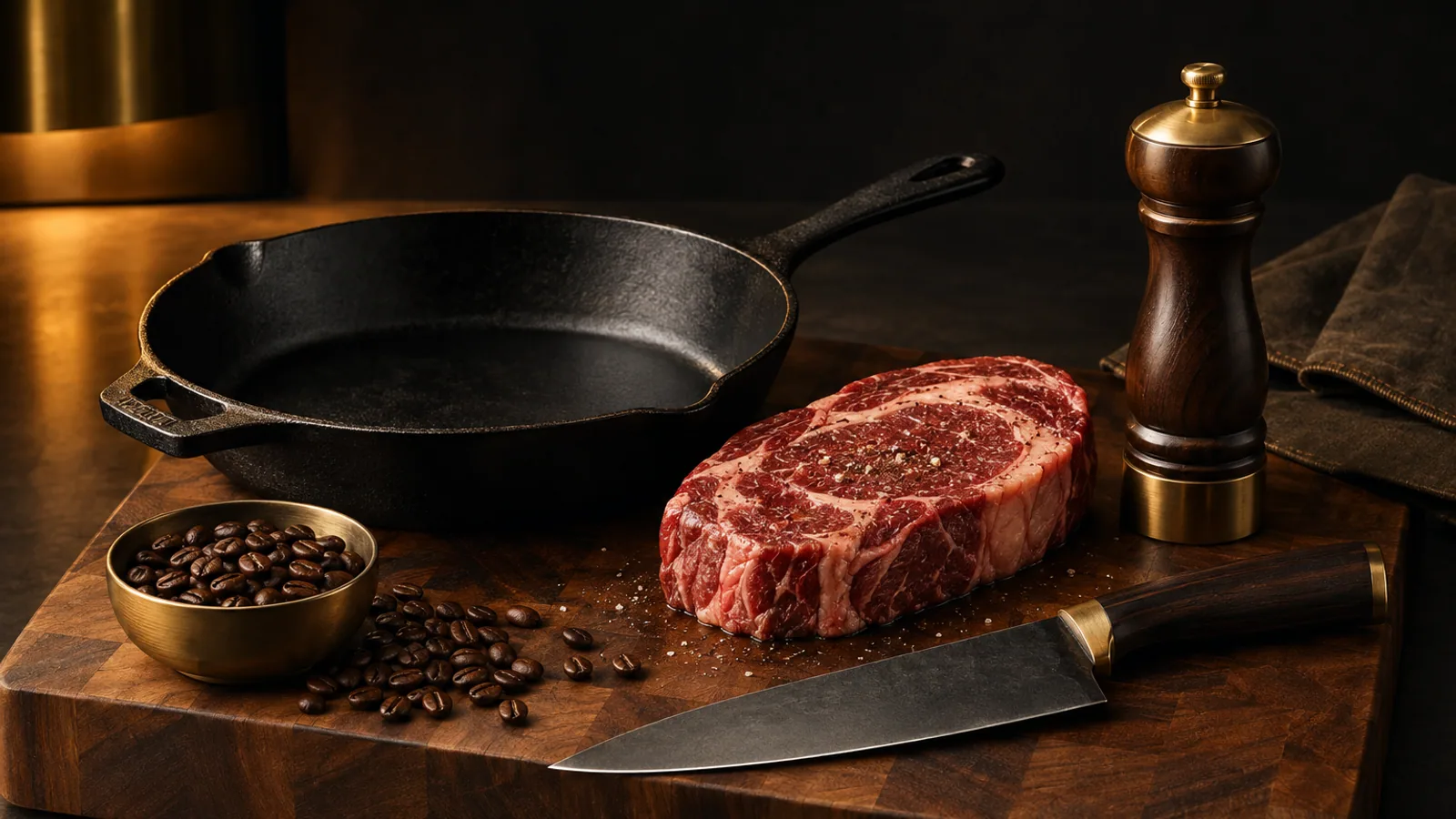
Quick answer: Sear the vegetables dry in a little oil until they're properly browned. Drop the heat to medium, add a couple tablespoons of butter with garlic and a sprig of thyme, and spoon it over them for a minute or two. Finish with lemon off the heat. Butter goes in late, never first.
The steak guy who serves wet broccoli
You know him. He'll tell you for ten minutes how he gets a crust on a ribeye, then he puts a pile of steamed green beans next to it with a pat of butter melting into a puddle on top.
That's butter as a garnish. It slides off cold vegetables and pools on the plate. It does nothing.
The steak method is different. Heat does the browning, and butter comes in at the end to carry flavor and coat everything. Vegetables respond to exactly the same treatment, and most men never try it.
Why the order matters
Butter is mostly fat, with a little water and some milk solids. Those solids are what make it taste like butter. They're also what burn. Put butter in a ripping hot pan at the start and the solids scorch before your carrots have colored. You get bitter specks and a smoking kitchen.
So you split the job. Oil handles the high heat and builds the browning. Butter comes in after, on lower heat, where the milk solids toast to a nutty gold instead of black. That's the whole trick, and it's the same reason a good steakhouse doesn't start a steak in butter.
The method
Use a heavy skillet. Cast iron is ideal. If yours is neglected, it's probably not ruined.
- Dry the vegetables. Wet vegetables steam, and steamed vegetables never brown. Pat them with a towel. This is the step people skip and the one that matters most.
- Heat the pan first. Medium-high, a tablespoon of neutral oil, until it shimmers. The vegetables should hiss the moment they land.
- Give them room. One layer, nothing touching if you can manage it. Crowd the pan and the moisture they release has nowhere to go. Cook in two batches. Yes, it's annoying.
- Leave them alone. Three to four minutes before you turn anything. Browning needs contact, and every time you poke them you reset it.
- Turn, then lower the heat. Medium. Now add two tablespoons of butter for a pound of vegetables, plus two smashed garlic cloves and a sprig of thyme or rosemary.
- Baste. Tilt the pan so the butter pools on one side. Spoon it over the vegetables for one to two minutes. It should foam and smell like toast. If it smells sharp, pull the pan off the heat.
- Finish off the flame. Salt, black pepper, and a squeeze of lemon or a splash of vinegar. Acid cuts the richness and makes the butter taste like more than it is.
Use unsalted butter. That way you decide how much salt goes on, instead of the carton deciding for you.
What to cook this way
Mushrooms. Start them in a dry pan, no fat at all. They'll give up their water, then it'll cook off, and only then do they brown. Add oil, then butter. Salt them late, because early salt pulls out water and delays the browning.
Brussels sprouts. Halve them and put them cut side down. Don't touch them for four minutes. The flat face goes deep brown and the leaves loosen and crisp. Butter and a little lemon turn a vegetable people claim to hate into the first dish gone from the table.
Green beans and asparagus. Blanch in salted boiling water for two to three minutes, drain, and dry them completely. Then sear. Raw ones go limp and gray before they brown.
Carrots. Cut them in half lengthwise so there's a flat side. Sear flat side down. They need longer than you'd think, seven or eight minutes, but the sweetness concentrates and the butter turns glossy.
Cabbage. A wedge with the core left in so it holds together. Sear both cut sides, baste, and cover for a few minutes to soften the center. Cheapest side dish in the store, and it tastes like you spent real money.
Potatoes. Boil small ones until a knife slides in, smash them flat, then sear in oil and baste. Crisp edges, soft middle, and butter in every crack.
What goes wrong
Pale and soft. The pan wasn't hot enough or the vegetables were wet. Usually both.
Black specks and a bitter taste. The butter went in too early or the heat stayed too high. Next time, drop the heat before the butter goes in, and add it only after the vegetables have color.
Greasy. Too much butter. Two tablespoons per pound is plenty. Past that you're frying in it, and you'll leave a slick on the plate.
Garlic gone bitter. Minced garlic burns in seconds. Smashed whole cloves sit in the butter and perfume it without scorching. Pull them if they darken.
Raw in the middle, burned outside. Thick vegetables need a head start. Blanch them, microwave them for a couple of minutes, or cover the pan briefly after the sear.
One honest trade-off: this is still butter. It's a side dish you'd make on a Sunday or when you've got a good steak resting, not a way to eat every vegetable every night. If you're avoiding dairy, ghee works. It's butter with the milk solids removed, so it takes more heat. You lose some of the nutty taste, but it won't scorch.
Use the steak pan
This is where the method pays off. Cook the steak, move it to a board to rest for five to ten minutes, and don't wash that pan. Pour off most of the fat, leave the browned bits stuck to the bottom, and cook your vegetables right there. The drippings season them for free.
Those browned bits are flavor you'd otherwise scrub down the drain. When you're done, deglaze with a splash of water or stock, pour it over the plate, and then clean the pan properly. Dry it, oil it lightly, and put it away better than you found it.
If you're building a rotation of dinners you can cook without a recipe, this belongs in it. Pair it with something from six meals you should know by heart. And if you prep ahead, cook components, not meals. Blanch the green beans on Sunday and the Wednesday sear takes six minutes.
Next time the steak comes off, don't reach for the steamer bag. Put the vegetables in the pan.
Wes Dunbar
Country & Skills
Grew up on an acreage and never quite left. Covers trucks, trades, land, and how to do the thing yourself.

Watch
Worth an hour of your evening
More from Food.
From channels we rate. Plays on YouTube.
Read next