Your grilled chicken burns because the whole grill is hot
Build the fire on half the grate, salt it the day before, and stop guessing at the joint with a knife.
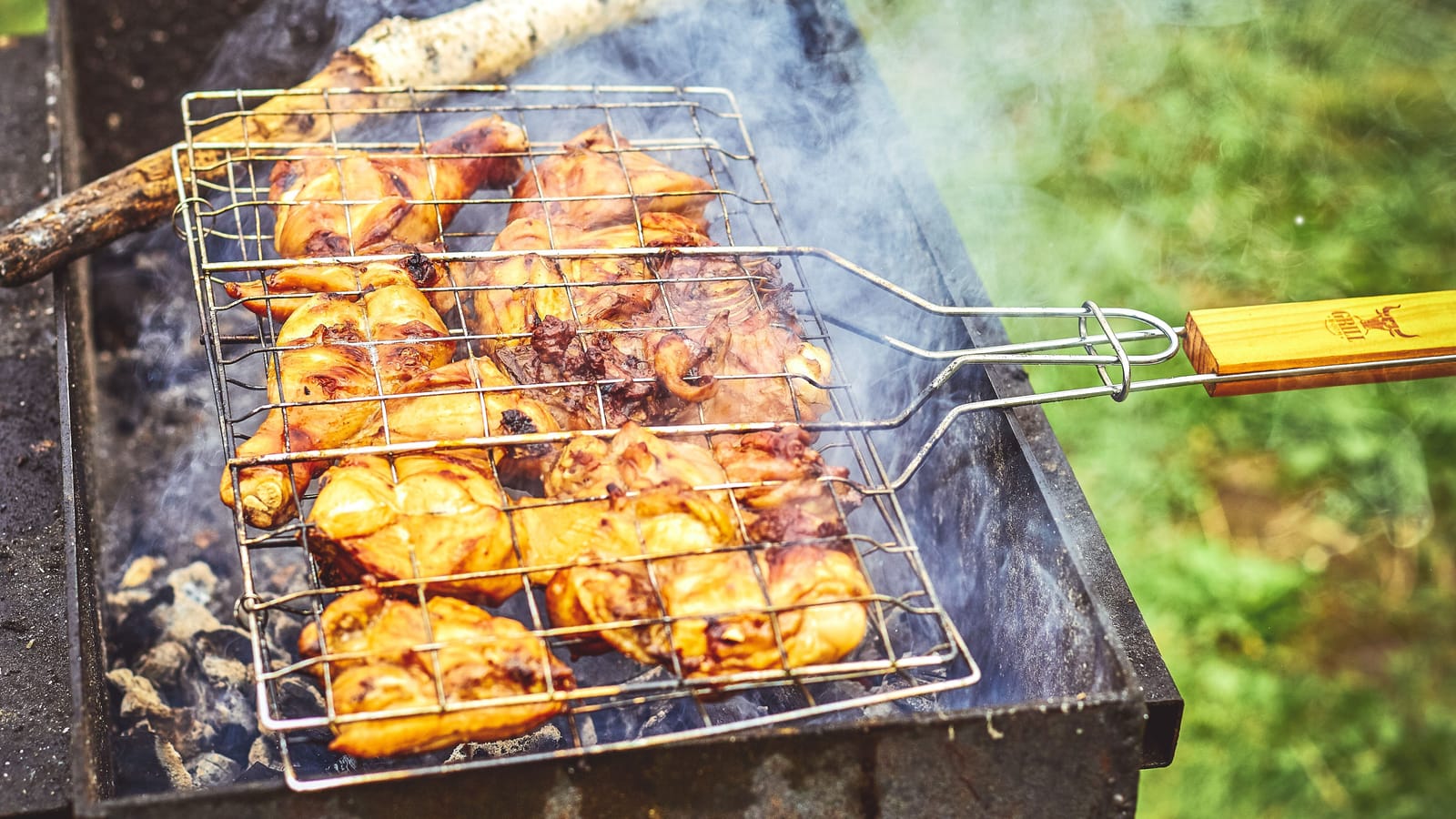
Light one chimney of charcoal, dump it on the left half of the grate, and leave the right half bare. That single move fixes about eighty percent of bad grilled chicken. On a gas grill it's the same idea: two burners cranked, two off, lid down.
Chicken isn't steak. A ribeye is thin, forgiving, and done in six minutes over screaming heat. A bone-in thigh is a lumpy, fatty, uneven thing that needs fifteen to twenty-five minutes of real cooking time, and it's wrapped in skin that drips grease straight onto your coals. Cook it the way you cook a steak and you get carbon on the outside, raw at the bone, and a neighbor politely rearranging his plate.
Two zones, or nothing
The hot side is for color. The cool side is for cooking. That's the whole system.
Start bone-in pieces on the indirect side, skin up, lid closed, vents open. You're running an oven at roughly 350 to 400°F. The meat comes up slowly and evenly, the fat renders, and nothing is dripping into open flame. When the thickest piece is about ten degrees short of where you want it, move everything over the coals, skin side down, and stand there. Two to four minutes. Don't walk away to get a drink. This is the part where chicken turns from dinner into a cautionary tale.
Boneless, skinless breasts can go the other direction if you've evened them out. Hot side first for marks, then slide them over to coast. Either order works. What doesn't work is leaving them in one place over one heat for the whole cook.
Salt it yesterday
A dry brine does more for grilled chicken than any marinade you've ever bought. About three-quarters of a teaspoon of kosher salt per pound, on all sides, then sit it on a rack over a sheet pan in the fridge, uncovered, for four hours minimum. Overnight is better.
Two things happen. The salt works into the meat so it holds moisture when the heat hits, and the surface dries out. Dry skin browns. Wet skin steams, goes flabby, and then finally burns in one spot while the rest of it stays the color of a paper bag.
The mistake almost everybody makes is salting at the grill. Ten minutes before cooking is the worst possible timing — the salt has pulled moisture to the surface and hasn't had time to pull it back in. You've made the skin wetter than when you started. Either salt a day ahead or salt literally as it goes on the grate.
A wet brine works too, and it's more forgiving for lean breast meat. The trade-off is a slightly spongy texture and skin that never quite crisps. If you're grilling skin-on, go dry.
Make the pieces the same thickness
A chicken breast is an inch and a half at the fat end and a half inch at the tip. You can't cook that evenly. Physics doesn't care how good your rub is.
Butterfly it, or put it in a zip-top bag and hit it with the flat side of a meat mallet or the bottom of a heavy skillet until it's about three-quarters of an inch all the way across. Now it cooks in eight to ten minutes instead of eighteen, and the thin end isn't chalk by the time the thick end is safe.
Same logic for a whole bird. Cut out the backbone with kitchen shears, flatten it, and you've turned a forty-five-minute problem into a thirty-minute one with skin that actually crisps.
Thighs forgive you. Breasts don't.
If you're cooking for a crowd and you're not confident yet, buy thighs. Bone-in, skin-on. They've got more fat and more connective tissue, which means there's a wide window where they're good instead of a narrow one. Overshoot a thigh by ten degrees and it's still juicy. Overshoot a breast by ten and it's a dish sponge.
Breast meat is done at 160 to 165°F and there's no reward for going past it. Dark meat is better higher, up around 175 to 185, because that's where the collagen gives up and the texture turns silky instead of rubbery. Yes, you're pulling two things off the grill at different temperatures. That's not fussiness, that's just how the bird is built.
Buy a thermometer that reads in two or three seconds. The cheap dial ones that take fifteen seconds and hover are worse than nothing, because you stand there with the lid open bleeding heat while it makes up its mind.
Flare-ups are a fat problem, not a water problem
When grease hits coals, you get flame. When you spray that flame with a water bottle, you get steam, ash on your food, and a bigger flare thirty seconds later.
Move the chicken. That's it. Slide it to the cool side, let the fat burn off, slide it back. That empty half of the grate is your fire extinguisher, and it's the second reason to build a two-zone fire.
Trim the loose flaps of skin and fat hanging off thighs before they go on. Less fuel, fewer fires.
Sauce goes on at the end
Barbecue sauce is mostly sugar. Sugar burns long before chicken cooks. Brush it on at the start and you'll have a black lacquer shell over raw meat, which somehow still gets served at cookouts every summer.
Cook the chicken to within about five degrees of done, then brush and flip, brush and flip, over the hot side for the last three or four minutes. Two thin coats beat one thick one. If you want more, put a bowl on the table.
Dry rubs with a lot of brown sugar have the same problem, just slower. Keep sugary rubs on the indirect side until the last few minutes.
Rest it, then cut into the thickest piece
Five to ten minutes on a board, loosely tented. The temperature climbs a few more degrees on its own and the juices settle instead of running out onto the cutting board.
Then cut the biggest thigh at the bone and look. Pink near the bone on a properly cooked bird is normal — it's marrow pigment, not doneness — but clear juices and opaque meat are what you want to see. If it's glassy and translucent, everything goes back on the cool side with the lid down for five minutes. Nobody will remember.
What they'll remember is the guy who served raw chicken at the Fourth of July. Don't be him.
Wes Dunbar
Country & Skills
Grew up on an acreage and never quite left. Covers trucks, trades, land, and how to do the thing yourself.

Watch
Watch how it's done
Picked for this article.
From channels we rate. Plays on YouTube.
The Kettle Guy
How to Grill Boneless Skinless Chicken Thighs (Two-Zone Method)
Saucy Rossy’s BBQ Kitchen
Crispy BBQ Chicken Thighs on a Charcoal Grill | Easy Two-Zone Method | SaucyRossyBBQ
Read next