

Buy the battery that holds its charge, not the biggest number
A rechargeable AA that's dead by the time you need it is worse than no battery at all. Here's how to buy cells that are still full after months on the shelf.
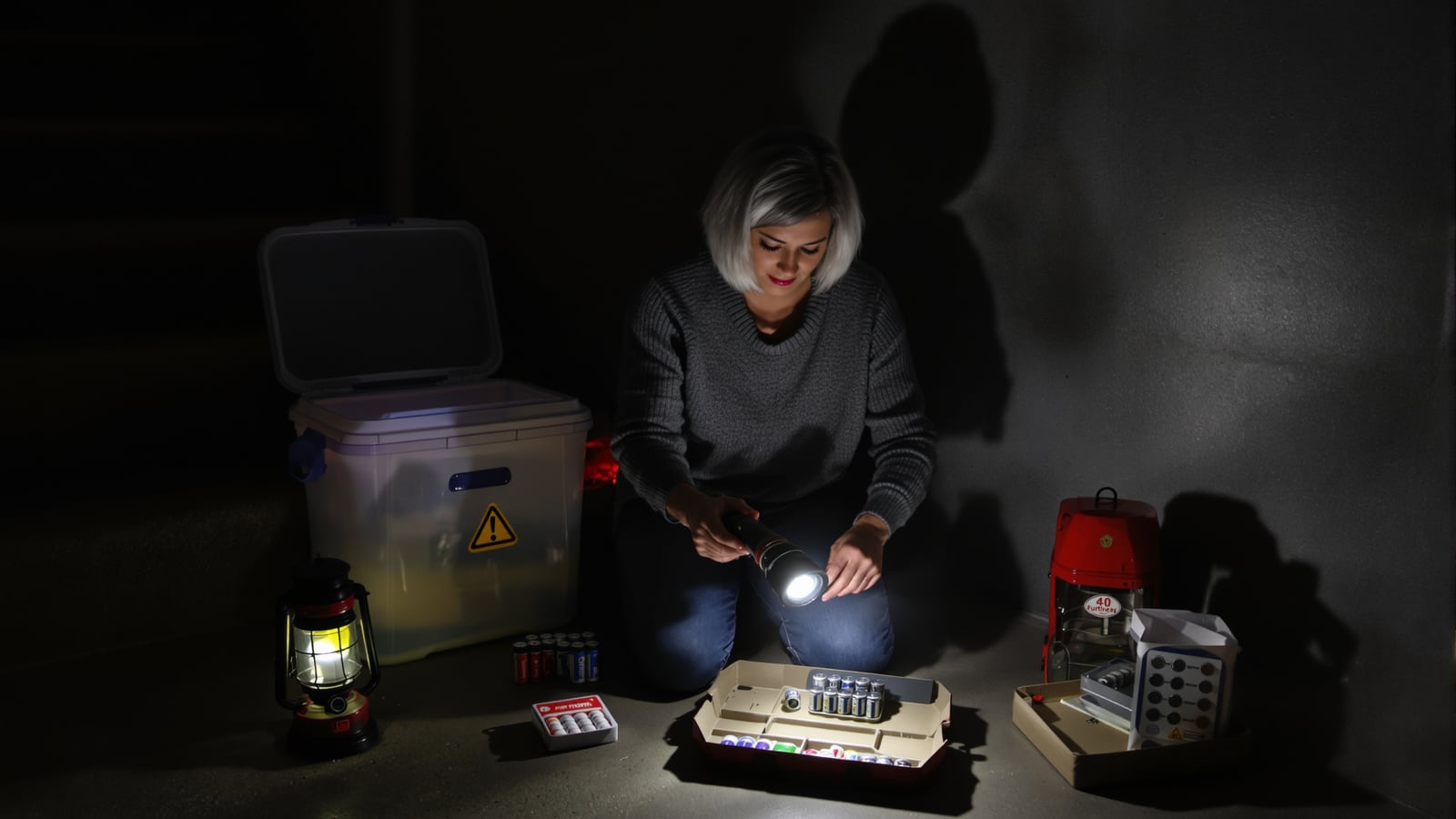
Quick answer: For AA and AAA, buy low self-discharge NiMH cells (Panasonic's Eneloop is the best-known). Keep them for things you use weekly. For anything that has to work after sitting for a year, use a fresh lithium or alkaline battery and put a date on it.
It's the same scene in a lot of houses. The power goes out, you grab the flashlight, and it gives you a brownish glow. So you dig into the junk drawer for the rechargeables you charged in spring. They're dead. Every one of them, even though nobody touched them.
That's not bad luck. It's how the cheap kind of rechargeable works.
Why the big number lies
Look at a pack of ordinary NiMH batteries and you'll see a capacity in bold: 2500 mAh, 2800 mAh, whatever the maker could print. It sounds like a horsepower rating. Higher must be better.
That number tells you how much a cell holds on the day you charge it. It says nothing about how much is left in three weeks. Standard NiMH cells leak their charge steadily while they sit. Leave a fully charged one in a drawer and a good chunk of it is gone within the first month. After a season, you're holding a paperweight.
In 2005, Sanyo introduced the Eneloop, a NiMH cell built to stop that leak. These are now called low self-discharge cells, or LSD for short. They give up a little peak capacity in exchange for holding what you put in. Most come "pre-charged" or "ready to use," and that wording on the pack is the quick tell. A standard cell makes you charge it first. An LSD cell comes out of the package with juice, because it can sit on a shelf for months and still have it.
So the drawer-killer isn't a defective battery. It's the high-capacity one with the loud label, used for the wrong job.
What to buy
For most households the answer is short.
- Standard low self-discharge AA and AAA. Eneloop, or any cell that says "low self-discharge" or "pre-charged" on the pack. These are your flashlight, remote, wall clock and kids' toy cells.
- The high-capacity "Pro" versions only for hungry gear you drain in days: a camera flash, a gaming controller, a bike light you run every night. They trade some endurance and some holding time for more runtime, which is fine if the cell never sits.
- A charger that treats each slot on its own. Cheap chargers that charge cells in pairs can overcook one and undercharge its partner if the two aren't matched. Look for individual slots and a model that shuts off when the cell is full. It costs a little more and saves you from buying new cells every two years.
Buy them in sets of four or eight and keep each set together. Don't mix an old cell with a new one in the same device. The weak one drags down the strong ones and can get hurt in the process.
The honest trade-off: LSD cells cost more up front than a bulk pack of alkalines. You'll earn that back after a few dozen charges. If you only ever need a battery twice a year, though, a pack of alkalines is cheaper and simpler. Buy for how often you actually reach for the thing.
Where rechargeables don't belong
Some jobs need a battery that will work on a day you haven't planned for. For those, don't gamble on a charge you can't see.
Smoke and carbon monoxide detectors. Use what the manufacturer's manual calls for, and replace it on a schedule you can remember. Pick a date you won't forget and do every detector at once.
The safe keypad and the garage door backup. You'll only learn they're dead the day you need them. Put fresh alkalines in and write the date on the inside of the battery door.
The weapon light and the red dot. If you keep a firearm for home defense, the light on it and the optic on top are only as good as their cells. Use a quality lithium or fresh alkaline in each one, and know the date you installed them. Then check them on the first of every month. A defensive tool that needs a charge-up first isn't a defensive tool. Also, NiMH cells run at a slightly lower voltage than alkaline, and some lights and optics don't like it. Read the manual before you swap.
Non-rechargeable lithium AAs are the best choice for gear that sits for years. They cost more per cell. They also don't leak the way alkalines can when forgotten, which brings up a related point: pull batteries out of anything you're storing for the winter. A leaking cell has wrecked more good flashlights than any drop ever did.
The lithium-ion ones are different
Your phone, power bank, cordless drill and rechargeable flashlight use lithium-ion cells. They hold a charge much better than NiMH, so the drawer isn't their problem. Heat is.
Leaving a power bank in a truck's glovebox through a July afternoon will age it faster than a year of normal use. Leaving it at 100 percent for months does the same. If you're storing a lithium-ion battery, a tool battery or an extra flashlight cell, leave it around half full, keep it somewhere cool and indoors, and top it off every few months. If a lithium-ion pack ever swells, gets hot while idle, or smells odd, stop using it and take it to a proper recycling drop-off. Don't toss it in the trash.
If you want the same logic for the device in your pocket, there's more in Make Your Next Phone Last Five Years. And if you've built a smart home setup, count the sensors and locks that run on small batteries. Those are the ones that quietly die in the middle of the night.
The drawer system
Fifteen minutes, one time, and the problem goes away.
- Dot every cell. Use a permanent marker and write the year you bought it on the side. Cells older than four or five years that don't hold a charge anymore go in the recycling bin.
- Charge a set, then test it. Put the set in a flashlight, label the bag, and check it in a month. If it's still bright, you've got the right kind. If it's dim, you've got the wrong kind and you know now instead of during a storm.
- Keep one home for them. A small box, one spot, charged cells on the left and spent on the right.
- Put a date in your phone. Every six months, spend ten minutes rotating the set and checking the detector and flashlight batteries.
And a rule that's older than any of this. If you take the last charged set from the family drawer, put the next set on the charger before you walk away. Someone will go looking for a flashlight in the dark. Leave them something that works.
Dean Shaw
Gear & Garage
Reads the warranty, the parts list and the long-term owner reviews before anything else. Trucks, tools, watches, and the cheap version that costs more.

Watch
Worth an hour of your evening
More from Gadgets.
From channels we rate. Plays on YouTube.
Read next