

Your shop door isn't leaking through the panels. It's the edges.
A new insulated door won't fix a drafty shop if the gaps stay. Find the leaks in ten minutes, seal them in an afternoon, and measure the difference.
Quick answer: Seal the edges before you shop for a new door. The bottom seal, the side and top stops, and the gap at the floor let in more cold and dust than a thin panel ever will. It's an afternoon of work.
Do the math on a gap
A worn bottom seal on a 16-foot door can leave an eighth of an inch of daylight along the floor. That's 192 inches times one-eighth, or 24 square inches. Cut a hole in your shop wall about five inches on a side and see how warm you stay.
Now add the sides, the top, and the spots where the sections meet. A door that looks solid is often a very large vent with a nice paint job.
People still spend real money on a new insulated door and leave the edges alone. Then they wonder why the heater runs all day and the bench is gray with dust by Friday.
Find the leaks in ten minutes
You don't need a contractor. You need a dark shop and a little patience.
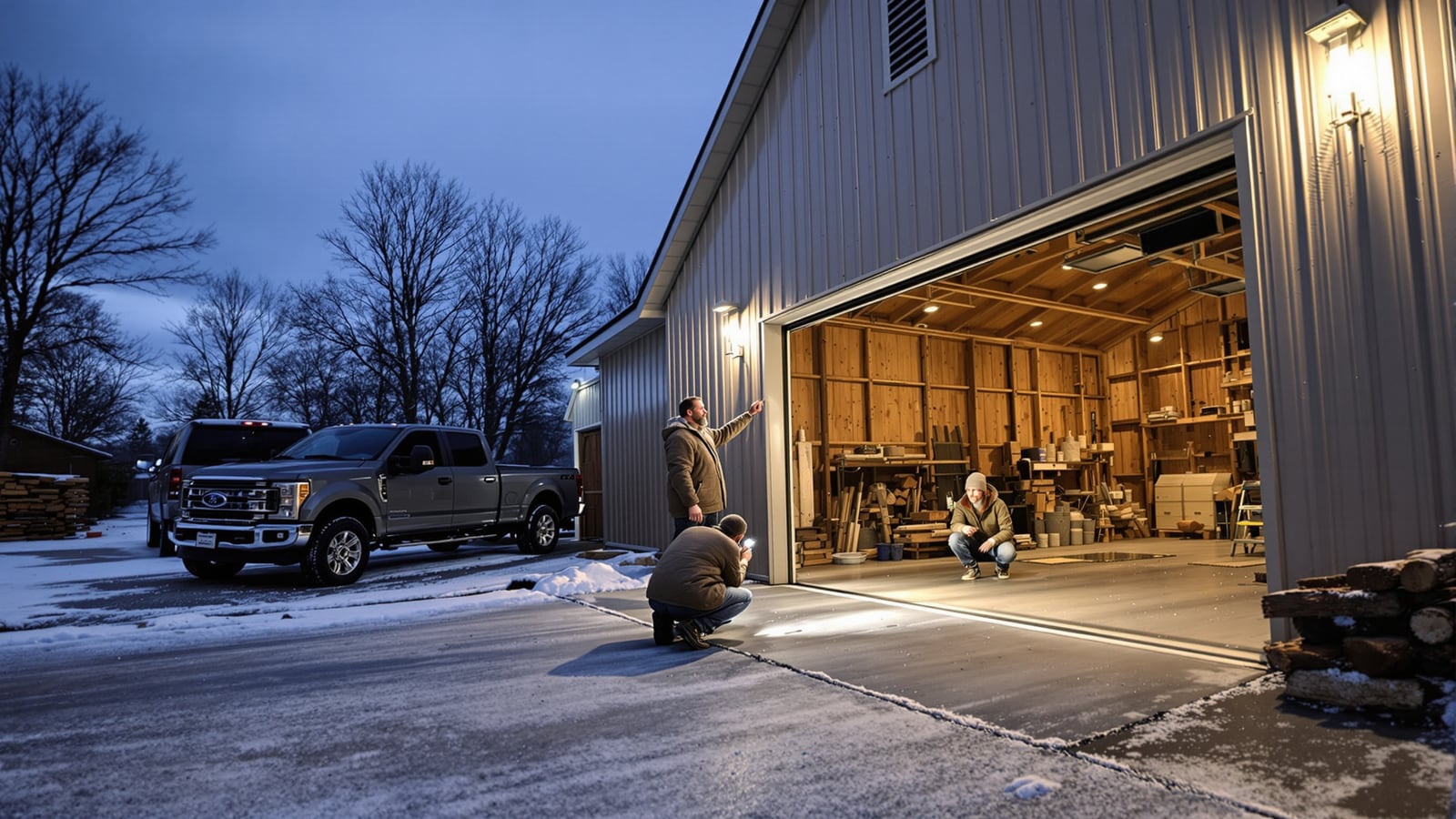
- The daylight test. Close the door on a bright day, kill the lights, and look. Any line of light is a hole. A flashlight swept around the outside from a helper works at night.
- The dollar bill test. Shut the door on a bill at several spots along the bottom and sides. If it slides out with no drag, the seal isn't touching.
- The thermometer test. A cheap infrared thermometer is the one gadget here I'd buy first. On a cold day, scan across the panel and then along the edges. The panel will read one number. A leak will read several degrees colder, and you can point right at it.
- The tissue test. Hold a strip of tissue near the seams on a windy day. If it flutters, you've found moving air.
Write down the readings. You'll want them later.
Fix it in this order
The bottom seal first. It's the worst offender and the easiest fix. Most doors have a track on the bottom edge that holds a rubber seal. Slide the old one out, measure the track and the door width, and buy a replacement that matches. A T-style seal fits a twin-channel track. A bulb seal fits a single one. Take the old strip to the store if you're unsure.
If your slab is uneven, a bulb or fin seal squishes and conforms better than a flat blade. If it's badly out of level, a threshold seal glued to the concrete closes the gap from the other side.
The side and top stops second. These are the vinyl or wood strips the door closes against. Over the years they pull away, warp, or get hit by a truck mirror. Move them so they touch the door lightly when it's shut. Light is the key word. If the stop presses hard, the opener strains and the door drags.
Everything else last. Check the small stuff:
- The gaps where the panel sections meet.
- The spot where the opener wiring or a vent pokes through.
- The service door next to the big one. It often leaks worse.
None of these cost much, and each one closes a hole you'd otherwise keep paying to heat.
Does the panel matter?
Some. A foam-core panel generally holds heat better than a thin, hollow steel one, and foam injected between layers usually beats a sheet of polystyrene stuck on the back. You can feel the difference in January by putting your hand flat on the door. Thin steel feels like a refrigerator.
But the panel is the second purchase. If your door is dented, bowed, or past repair, replace it. When you do, ask for a factory bottom seal and have the installer set the stops properly, then run the same tests afterward.
If the door is fine and the edges are shot, a new door is a very expensive way to fix a rubber strip.
The other side of sealing
Tight isn't always better.
A sealed shop keeps road dust and pollen out. It also keeps your sawdust in. Once you close the gaps, the fine stuff from sanding hangs in the air with nowhere to go, so run dust collection and an air filter while you work. Don't count on drafts to clear the room.
Fuel changes the rules. If you run a gas or kerosene heater, a propane torch, or finishing products that put off fumes, you need fresh air and a working carbon monoxide alarm. Never run an engine in a closed shop, not even for a minute. If anyone gets a headache, feels dizzy, or gets sick while working, open the doors and get outside and into fresh air right away. Get medical help if it doesn't pass.
And one more trade-off. A good seal can freeze to the slab on a cold, wet night. Wipe the bottom edge, and a light coat of silicone spray on the rubber keeps it from tearing when the door opens.
Test the opener after you change anything
New seals change how the door sits and how hard it pushes. Lay a 2x4 flat on the floor under the door and close it. The door should hit the board and reverse. If it doesn't, stop and adjust the opener's force and travel settings, or get a garage door tech to look at it. This is a safety check. Don't skip it because everything looks fine.
Measure what you did
Here's where the gadgets earn their place. A Wi-Fi temperature and humidity sensor on the bench costs little and shows you a graph. Compare a cold morning before and after. If the shop holds ten degrees more overnight, the work paid off. If it doesn't, you've got another leak.
For a detached shop, check your signal before you buy anything. A sensor that drops off the network is a paperweight. The home internet numbers that matter explain what to look at, and a cheap mesh node or a wired access point usually solves it.
A door-open sensor is the other one worth having. A big door left up all night undoes every bit of sealing you did, and a tilt sensor on the top panel will tell your phone. It's one of the few pieces of smart home kit that earns its place. Mount it, name it "Shop Door," and forget it until it saves you.
The short version of the afternoon
Start at the bottom. Run the thermometer along the edges. Replace the seal, adjust the stops, patch the small holes, and check the opener. Then read the sensor in the morning.
You'll hear it first. A sealed shop is quiet in a way an old one never is, and the wind stops coming through the floor.
Dean Shaw
Gear & Garage
Reads the warranty, the parts list and the long-term owner reviews before anything else. Trucks, tools, watches, and the cheap version that costs more.

Watch
Watch how it's done
Picked for this article.
From channels we rate. Plays on YouTube.
Everyday Home Repairs
How To Replace Garage Door Bottom Seal
HouseImprovements
How To Replace A Garage Door Seal
Read next