

Wyatt Earp's Real Job Was Taking Guns Off Drunks
The famous gunfight lasted thirty seconds. The lawmen who actually tamed the frontier spent years doing something duller and harder.
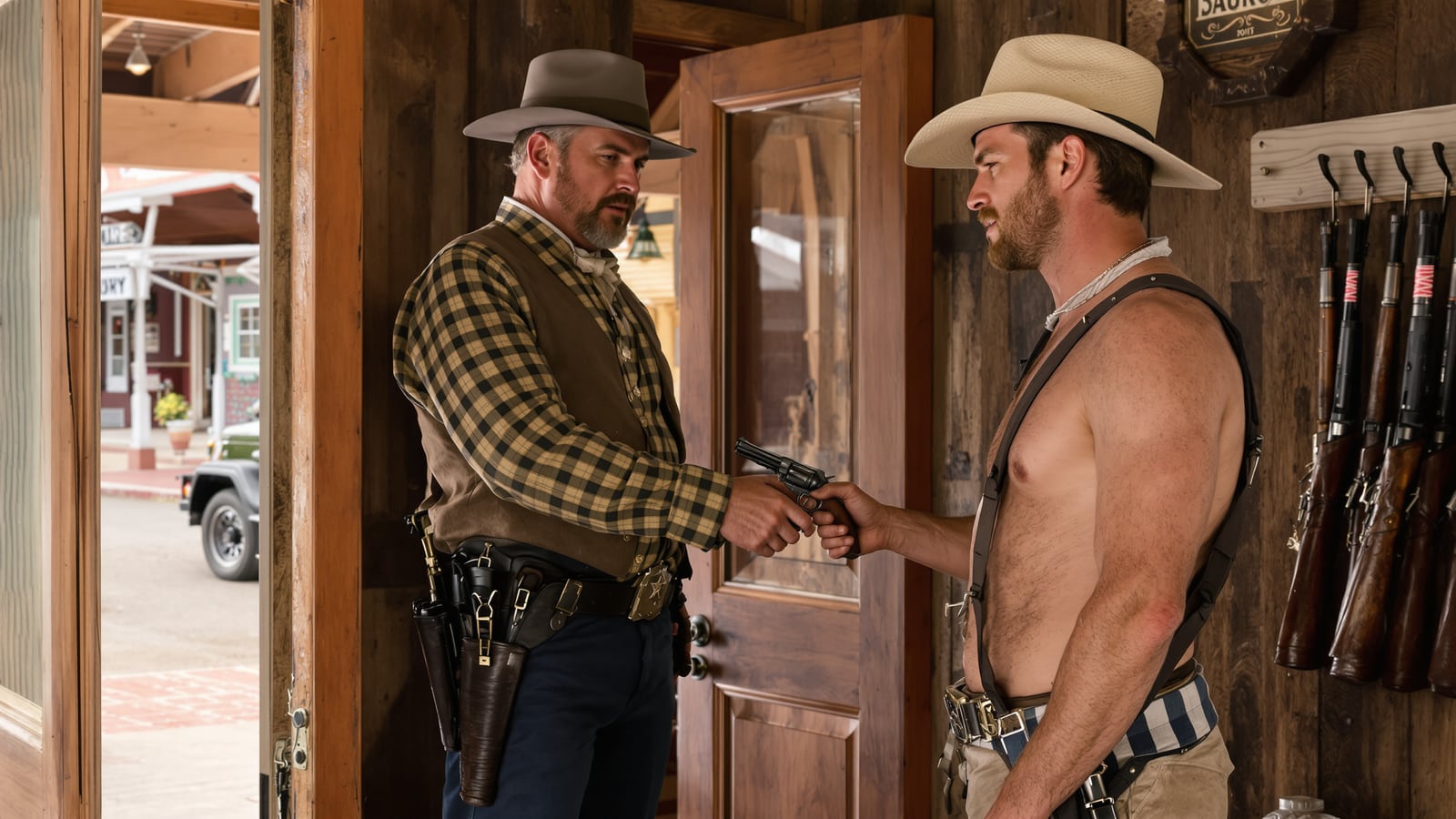
The gunfight everyone remembers lasted about thirty seconds. The hours before it tell you more.
On October 26, 1881, in Tombstone, Arizona Territory, Wyatt Earp pistol-whipped Ike Clanton, who was drunk and had been threatening the Earps all night. A little later he did the same to Tom McLaury. Both men were armed, both were in violation of a town ordinance, and Earp reached for the barrel of his revolver instead of the trigger. Old West hands called it buffaloing. It ended arguments without ending lives.
That afternoon the shooting happened anyway. Three men died in a vacant lot near the O.K. Corral: Tom and Frank McLaury and Billy Clanton. Virgil and Morgan Earp and Doc Holliday were wounded. Wyatt walked away untouched.
That's the story the movies kept. The rest of the job is the part worth knowing.
The job was paperwork and nerve
Wyatt Earp wasn't a gunslinger who happened to carry a badge. He was a town policeman, and the work was mostly dull. Pull a drunk off the street. Collect a fine. Check a gun at the saloon door.
In Dodge City, Kansas, where Earp served as assistant marshal in 1876 and again in 1878, the town drew a line along the railroad tracks. Cowboys coming off a three-month drive could carry a revolver on the trail and had to hand it over inside town. These were local ordinances, passed by townspeople who were armed themselves, and enforced by men who were answerable to the voters. That accountability is the whole difference between a lawman and a bully with a gun.
The record also contradicts the legend. Historian Robert Dykstra went through the court and newspaper records of the Kansas cattle towns and found far fewer killings than Hollywood suggests, never more than a handful in a single year in any one of them. The towns weren't peaceful because the lawmen shot a lot of people. They were as peaceful as they were because the lawmen made it expensive to start trouble and cheap to stop.
It was still dangerous work. On April 9, 1878, Dodge City marshal Ed Masterson was shot and killed trying to disarm a drunk cowboy. His younger brother Bat Masterson had just been elected sheriff of Ford County and carried on the job. Nobody was paying these men enough to do it. Somebody just had to.
Earp wasn't a saint, and the record says so
He was born in Monmouth, Illinois, in 1848, and he arrived in law enforcement with baggage. In 1871 he was charged with horse theft in the Indian Territory and left before the case was settled. In Wichita he served as a policeman in 1875 and 1876, then lost the job after a scuffle with a political rival. He gambled. He spent more of his life around saloons than most of his admirers like to admit.
Learn that before you hold him up to your sons. A man can be a flawed human being and still do a hard job well on a given day. Earp's strengths were real: he was steady under pressure, he was physically brave, and he stayed loyal to his brothers when it cost him dearly. His faults were real too. Both belong in the telling.
The hard part of Tombstone
The gunfight wasn't the end of it. A month-long hearing before Judge Wells Spicer ended in November 1881 with a decision not to indict the Earps and Holliday, finding that Virgil, as a lawman, had acted within his duty in making the arrest.
The cost came next. On December 28, 1881, Virgil Earp was ambushed on a Tombstone street and lost the use of his left arm. On March 18, 1882, Morgan Earp was shot dead through a window while playing billiards.
Wyatt didn't wait for a courtroom after that. He took a posse out under a federal marshal's commission and hunted the men he believed were responsible. Frank Stilwell died in the Tucson rail yard. Florentino Cruz and others followed. Arizona had warrants out for Wyatt by the time he crossed into Colorado.
Call it what it was. It was understandable, and it was no longer law enforcement. A man whose brother has been murdered and whose government has failed to deliver justice will feel the pull of that road. Earp took it, and the record shouldn't pretend he didn't.
The lawmen the movies skipped
Earp gets the statues. Others did as much, with less noise.
Bass Reeves was born into slavery, escaped into the Indian Territory during the Civil War, and in 1875 was sworn in as a deputy U.S. marshal working out of Fort Smith, Arkansas, under Judge Isaac Parker. He served about three decades in some of the roughest country in the nation. The commonly cited count is some three thousand arrests. When a warrant came across his desk for his own son, Bennie, charged with murder, Reeves reportedly took it himself and brought him in. Bennie was convicted and served time at Leavenworth.
That's character. The law applied to his family exactly as it applied to everyone else's.
Bill Tilghman worked Dodge City alongside Earp and Masterson, then spent decades as a deputy U.S. marshal in Oklahoma. In 1896 he took the outlaw Bill Doolin alive. In 1924, at seventy, he was still wearing a badge when a Prohibition officer named Wiley Lynn shot him dead in Cromwell, Oklahoma. Lynn was later acquitted.
Bat Masterson went east, took a job as a sportswriter, and in 1905 was appointed a deputy U.S. marshal in New York by Theodore Roosevelt. He died at his desk at the Morning Telegraph in 1921.
What came after
Wyatt Earp left Tombstone, ran saloons, and chased mining money to Alaska and California. He died in Los Angeles on January 13, 1929, at eighty. Movie cowboys William S. Hart and Tom Mix were among the pallbearers. The legend started to grow almost at once, and a lot of what's known as "Earp history" comes from Stuart Lake's 1931 biography Frontier Marshal, written after Earp was gone and far from reliable on the details.
So read the primary record when you can: the Spicer hearing testimony, the newspapers of the day, Dykstra's study of the cattle towns. They're more interesting than the legend, and they don't flatter anybody.
If you'd like more of the people who built this country without being asked, start with The Pioneer Women Who Wrote It All Down, who recorded what these towns were like from the other side of the saloon door. Then read The Men Who Built Your Ordinary Tuesday. And for men who held the line at a higher price, there's The Medal of Honor Men You Should Be Able to Name.
Order is rarely won by the fastest gun. It's won by the man who keeps showing up, sober, in the same dusty street, for decades. Tilghman did it until he was seventy.
Marcus Vale
Editor-in-Chief
Twenty years in magazines, most of it deciding what to cut. Writes about work, discipline and the decisions that compound.

Watch
Worth an hour of your evening
More from History.
From channels we rate. Plays on YouTube.
Read next