

Twist Your Own Cord Before You Weave Your First Basket
Basketweaving costs less than a tank of gas to start, and the first skill is two feet of cord you can make tonight.
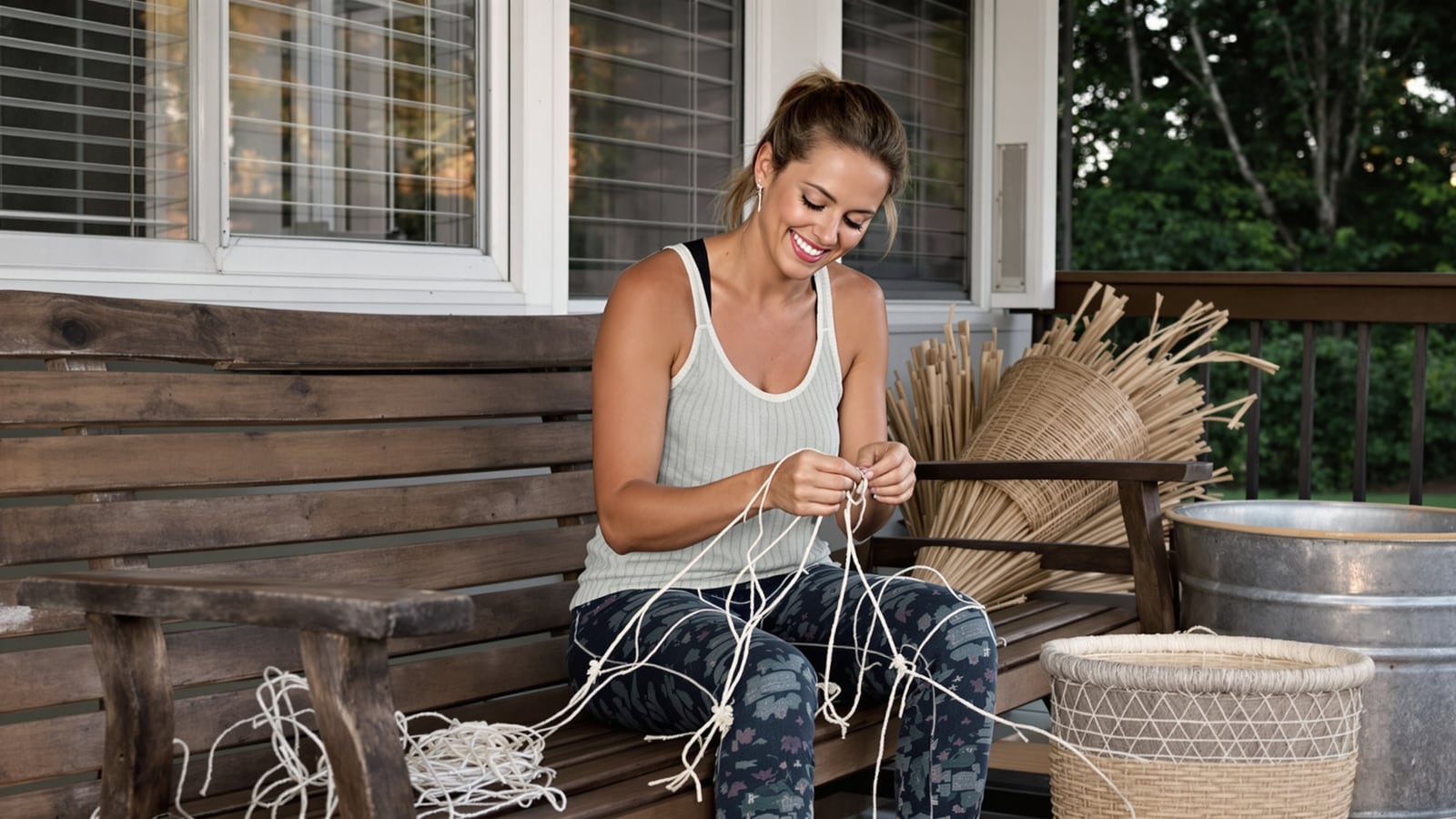
Quick answer: Start with cord, not a basket. Twist a few feet of jute twine this week, then weave one small round-base basket from a beginner reed kit. Plan on roughly thirty to fifty dollars for everything, and check your supplier's current prices before you order.
Take a length of plain jute twine, about an arm's span. Fold it in half so you've got two strands side by side. Pinch the fold between your left thumb and finger. With your right hand, twist the top strand away from you, clockwise, until it kinks tight. Now lay that twisted strand over the other one, counterclockwise. Swap hands. Twist the new top strand clockwise, cross it over. Repeat.
Ten minutes later you're holding rope. Two-ply cord, made the way people have made it for thousands of years. It's called a reverse wrap, and the whole logic of it is that each strand twists one way while the pair wraps the other, so the cord can't unravel. That's the physics. The rest is practice.
This is the angle most beginners miss. Everyone wants to buy a basket kit. But cordage teaches your hands the one thing weaving runs on: tension. How tight is tight, how even is even. Learn it on twine that costs next to nothing and you'll waste less reed.
Why people get hooked
You finish things. A basket is done when the rim is done, usually in an evening or two, and then it sits on your counter holding keys or bread or firewood kindling. Nobody has to tell you whether you did a good job. The thing either holds its shape or it doesn't.
It's also quiet work. No screen, no app, no score. Your hands stay busy and your head clears out, which is why you'll see guys at craft tables next to their grandmothers, and nobody finds that strange. Kids take to it fast too. A ten-year-old can twist cord at the kitchen table and feel like a frontiersman.
And there's a self-reliance streak in it. Cordage is one of the oldest human skills. Learn to make cord from plant fibers and you start seeing dogbane stalks, nettle, cattail leaves and basswood bark differently. Same for yucca if you live in the Southwest. That's bushcraft territory, and a lot of outdoorsmen come to basketry from that side.
What it really costs
You don't need a workshop. You need a table and a towel.
For cordage:
- A ball of natural jute twine, a few dollars at any hardware store
- Scissors you already own
For your first basket:
- A beginner reed kit from a basketry supplier, or a coil of round reed in two sizes, thick for the spokes and thin for the weaving
- A spray bottle and a bucket or tub for soaking
- Clothespins, the plain wooden kind, to hold things in place
- A sharp pair of flush cutters or small pruning shears
- An old towel, a ruler, and a pencil
- An awl, which is handy but optional
Add it up and you're in the range of a couple of dinners out. Order a kit with a pattern included and your first basket is nearly guaranteed to turn out, which matters more than saving a few bucks. Beginners who skip the pattern tend to quit.
Skip the fancy stuff. No weaving frames, no specialty jigs, no bundle of ten different woods. You'll know what you want after three baskets.
Your first three things this week
1. Make two feet of cord. Use jute. Do the reverse wrap until your twist is even and the cord looks like something from a hardware aisle. If one ply keeps overpowering the other, you're twisting unevenly. Slow down.
2. Order a small basket kit. Pick a round-base basket, nothing bigger than a coffee mug. Round reed needs soaking, so read the instructions before the box arrives, not after.
3. Weave it. Soak the reed until it bends without cracking, which is usually minutes for fine reed. Wrap the pieces you're not using in a damp towel so they don't dry out on the table. Pull each weaver snug, not tight. Check the shape every few rows. When you reach the top, fold the spokes down and lock the rim.
If it comes out lopsided, that's normal. Use it anyway.
The mistakes everyone makes
- Pulling too tight. The basket starts to pinch inward or the spokes bow. Snug, not strangled.
- Letting reed dry mid-weave. It cracks right where you need it to bend. Keep a spray bottle handy and mist as you go.
- Starting big. A laundry hamper is a fine goal for month six. Not week one.
- Uneven spoke spacing. Eyeball it and you'll regret it by row four. Use the ruler.
- Harvesting on land that isn't yours. If you move on to gathering your own material, ask the landowner first. Take a little from a big patch, never the whole stand. Leave it looking like you were never there. If you're stripping bark or cutting stems, cut cleanly and away from your body.
- Not knowing your plants. Some of the plants used for cord, dogbane among them, shouldn't be eaten. Use a regional field guide or ask a local club to confirm what you've found before you cut anything.
Where the people are
A search for your state plus the word "basketmakers" usually turns up a guild. Many run meetings with beginners welcome and cheap workshops, often at libraries or community centers. Folk schools are another good bet. The John C. Campbell Folk School in North Carolina is one that teaches basketry, and there are others around the country. Check community colleges, county fairs, and the craft section of your nearest extension office too.
If you came in through the outdoors side, bushcraft and primitive-skills groups often teach cordage on weekend campouts. Bring jute to a meetup and somebody will show you a better way to twist it.
Other handwork hobbies lead the same way. If you enjoy this, look at leatherworking, where you'll use the same patient hands with different materials. Beekeepers sometimes weave straw skeps by hand, so your first hive might eventually need a basket. And if you're thinking about gathering materials outdoors, read where you can legally metal detect first. The permission rules there apply here too.
Give it one evening. Twine, a table, a towel. If your first cord comes out uneven, twist another. The third one will surprise you.
Dean Shaw
Gear & Garage
Reads the warranty, the parts list and the long-term owner reviews before anything else. Trucks, tools, watches, and the cheap version that costs more.

Watch
Worth an hour of your evening
More from Hobbies.
From channels we rate. Plays on YouTube.
Read next