

Woodburning Starts With a Cheap Pen and a Piece of Basswood
Pyrography is drawing with heat. You can finish a real piece this weekend at the kitchen table, for about the price of a nice dinner out.
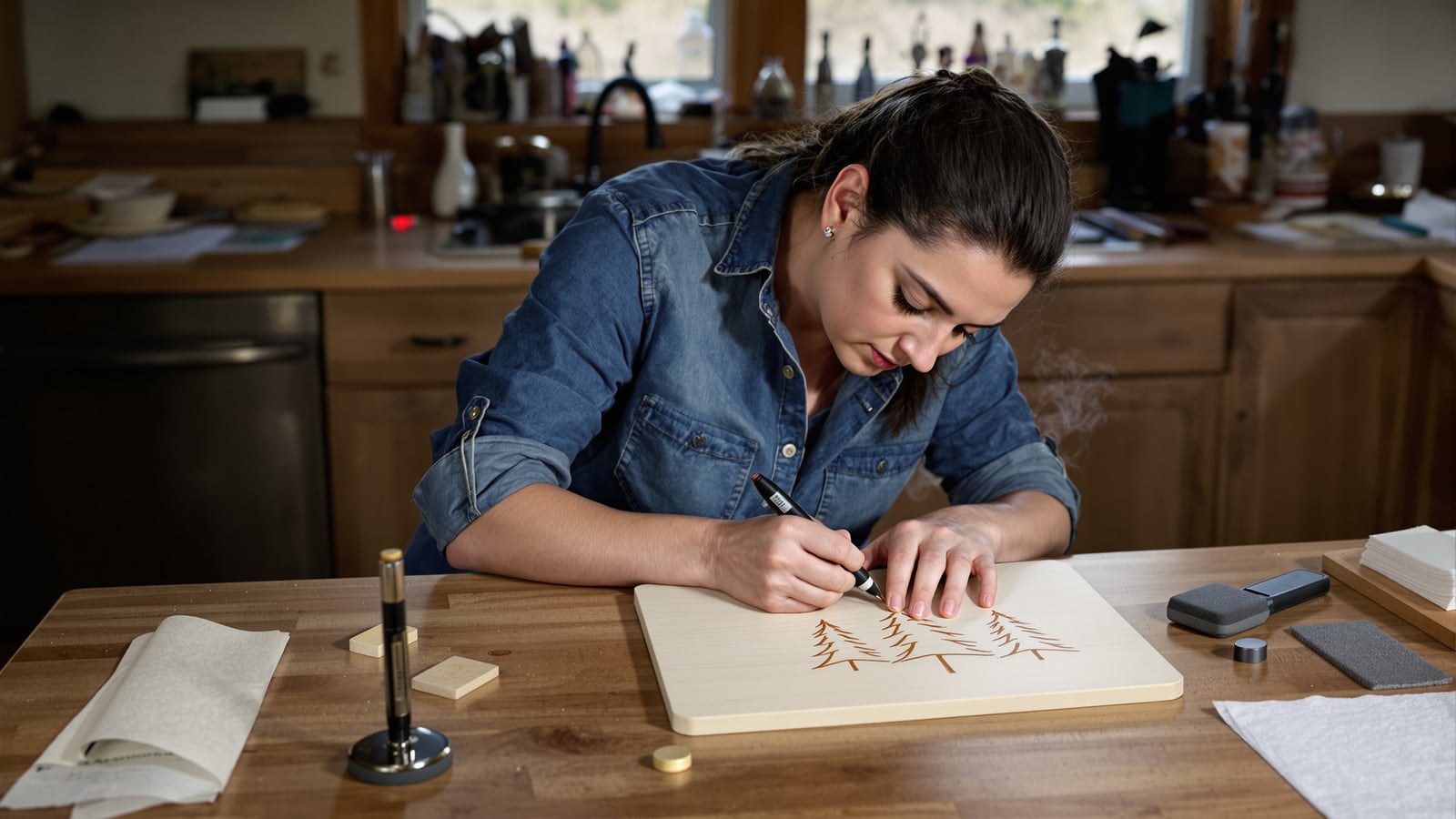
Quick answer: Buy a basic woodburning pen, a few basswood blanks and a sheet of fine sandpaper. Draw a simple design in pencil and burn it slowly at low heat. Plan on roughly $30 to $60 all in, and a finished plaque by Sunday night.
What it is, and why it grabs people
Pyrography is a long word for burning a picture into wood with a hot tip. The pen looks like a fat pencil with a wire loop or blade on the end. You touch it to the wood, and it leaves a line. Move slowly and the line goes dark. Move fast and it stays pale.
That's the whole trick, and it's why people get hooked. One tool gives you every shade from honey to near-black. There's no paint to mix and nothing to dry. You just watch a drawing appear.
It's also forgiving in a way most crafts aren't. You can sand off a mistake. You can turn a flub into a knot, a shadow or a fence post. And the results are the kind of thing a wife, a mother or a kid hangs on the wall. A family name board or a farmhouse scene says more than anything off a store shelf.
It's quiet, too. No dust cloud, no loud machines, no shop required. Your kitchen table works.
What it really costs
You can spend $25 or $2,500. Start at the bottom.
- A basic pen. A craft-store kit like the Walnut Hollow Creative Versa-Tool usually runs somewhere around $25 to $40. It comes with a handful of tips. It's enough to learn on and to finish your first dozen pieces.
- Wood. Basswood plaques and blanks are a few dollars each at craft stores. Buy a handful.
- Sandpaper. A small pack of 220 grit costs a few dollars.
- Graphite transfer paper. A few dollars. It lets you trace a design instead of freehanding it.
- A heat-safe stand or a ceramic tile. Your pen needs somewhere to rest that isn't your table. A spare tile from the hardware store solves it.
Total for the starter setup: roughly $30 to $60, depending on how many blanks you grab.
Step up later if you stick with it. Specialist makers like Razertip build pens with adjustable heat and fine, swappable nibs. That kind of setup starts around a hundred dollars and climbs from there. You don't need it yet. Spend the money after you've burned through your first ten blanks and know what you're missing.
Pick the wood before you pick the design
The cheap pen isn't what ruins most first projects. The wrong board does.
Basswood is the beginner's wood. It's pale, soft, tight-grained and burns evenly. Birch and poplar are decent too. Pine is the trap. It's everywhere and cheap, but the soft and hard parts of the grain burn at wildly different rates, so your lines wander and the resin smokes.
Skip these entirely:
- Pressure-treated lumber, which is full of chemicals you don't want in your lungs.
- MDF and particleboard, which are glue and dust.
- Anything painted, stained or varnished.
Plywood is a gray area. The glue layers smell bad when burned and the veneer is thin. Stick with solid wood for now.
Your first three things this week
1. Sand and burn scrap. Sand a basswood blank smooth, to 220 grit. Then spend an hour just making marks. Draw straight lines at different speeds. Make a row of dots. Shade a square from light to dark. Pull the pen toward you rather than pushing it, and let the tip do the work. Pressing hard doesn't make a darker line, it makes a gouge.
2. Pick a design you can't wreck. Your last name in block letters. A pine tree. A mountain ridgeline. Pencil it on, or trace it with transfer paper. Simple shapes and clean outlines beat ambition every time.
3. Finish one piece, start to end. Burn it. Erase the pencil lines. Brush off the dust. Then seal it with a wipe-on clear finish like Danish oil or a clear spray, tested first on your scrap. Drill a hole or add a hanger, and give it away or hang it up. A finished piece teaches you more than five half-burned ones.
The mistakes everyone makes
Burning too hot. Beginners crank the heat and then wonder why the lines blob. Start low. You can always go back over a line darker. You can't go back lighter.
Going too fast. Slow is the entire skill. If your lines look scratchy, you're rushing.
Skipping the sanding. Rough wood grabs the tip and skips. Smooth wood glides.
Parking a hot pen on the table. The tip stays hot for minutes after you let go. Always use the stand. Keep the work away from paper, a curtain or a pile of shavings, and keep a glass of water or a small extinguisher within reach. It's a hot tool, so treat it like one.
Working in a closed room. Burning wood puts smoke in the air. Crack a window or run a fan across the table so the smoke goes away from your face. Set a small fan to blow it out, not at you. If you start getting headaches or a scratchy throat, stop and open up the space.
Letting kids run the pen. Older teenagers can do this with an adult watching. Little ones can sand, trace and pick the design. That's a fine job and it keeps the fingers safe.
Finding your people
Woodburning is mostly a solo hobby, but the people who do it love to share. Here's where they gather:
- Craft and woodworking stores. Chains like Woodcraft and Rockler, plus craft stores, often run beginner classes. Ask at the counter.
- Local woodcarving and woodworking clubs. Many have a few burners in the group. Search for your town plus "woodcarvers" or "woodworkers guild."
- Library and community-ed programs. Maker nights and craft classes pop up there more than you'd think.
- Craft fairs. Find the burner with a booth, buy something, and ask how they started. Most are happy to talk.
- Online groups. Search Facebook or Meetup for pyrography groups near you, and for the bigger national ones to see other people's work.
If you go to a club, show up with something. A finished plaque to pass around, or a box of donuts. And if someone lends you a pen or a tip, hand it back cooler, cleaner and with the tip wiped, the way you'd return anything borrowed.
If you like hobbies that live in your hands, leatherworking is a close cousin. It's the same patient work with a similar payoff. And if you'd rather build a whole little world than burn one, a model railroad fits on a sheet of plywood.
Your first line will wobble. Your fifth plaque won't. Keep the first one anyway, because it proves where you started.
Dean Shaw
Gear & Garage
Reads the warranty, the parts list and the long-term owner reviews before anything else. Trucks, tools, watches, and the cheap version that costs more.

Watch
Worth an hour of your evening
More from Hobbies.
From channels we rate. Plays on YouTube.
Read next