

How to find a safe deposit box after a death and get it opened
The bank seals the box the moment it hears about the death. Here's how to find it, prove you have the right to open it, and not make it worse.
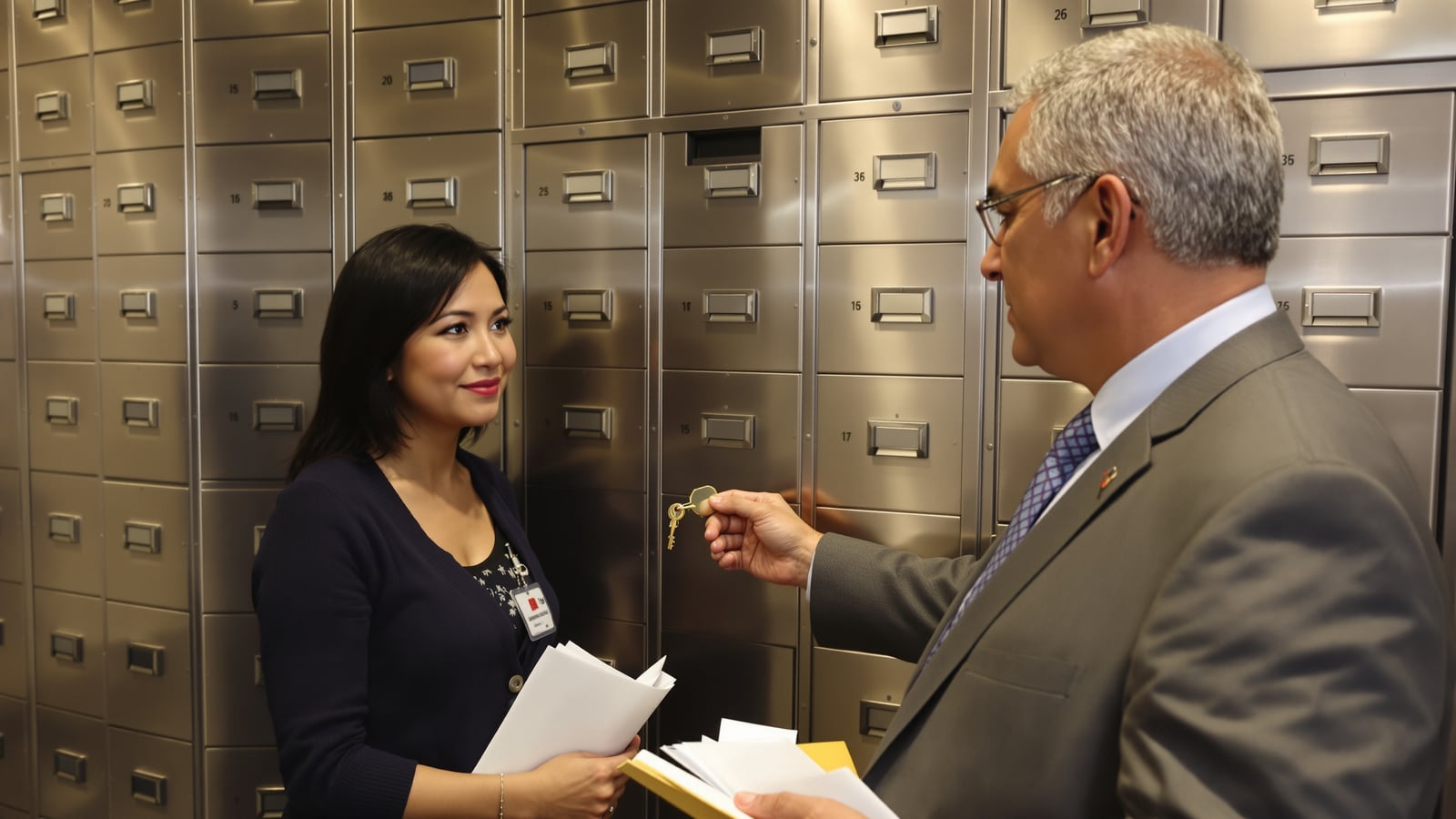
Call the bank where you think the box is, tell them the renter has died, and ask what they need to open it. You can't just walk in with a key and a death certificate. In most cases you'll need a court-issued document naming you as the person in charge of the estate: letters testamentary if there's a will, letters of administration if there isn't. The bank will seal the box once it hears about the death, so plan on weeks, not days. Budget for certified death certificates, a probate filing fee that varies by county, and possibly a locksmith if the key is missing.
That's the short version. The order matters, so work through it in order.
1. Find out which bank has the box
Start at home. The key is small and flat, usually stamped with a number and the words "Do Not Duplicate." It turns up in sock drawers, desk trays, old wallets, and envelopes in the filing cabinet. If you find one, the bank's name is sometimes on the envelope. The box number is often on the key itself.
No key? Look for paper. Banks bill box rent once a year, so check the last two or three years of statements for an annual fee, or the mail for a rental notice. A charge of a few dozen dollars to a couple hundred, depending on box size, is the tell. Ask the family's accountant or attorney too. They've often seen the invoice.
Then call the banks and credit unions where the person had accounts. Ask for the branch manager. Some will only confirm a box exists once they've seen your paperwork, so don't take a first "we can't discuss that" as a no.
2. Notify the bank and ask for its estate requirements
Once you've found the right branch, tell them in person or in writing. Bring a certified copy of the death certificate and your ID. Ask three questions:
- Who is listed on the box, and is there a co-renter?
- What exact documents do you need before anyone can open it?
- Is the rent paid through when?
A co-renter can often get in, but the bank may still seal it after a death, and some states add extra steps. A power of attorney ends at death. So does a "deputy" or agent's access on a box, in most cases. Don't count on either one.
Ask about rent especially. If the fee goes unpaid long enough, the bank can drill the box and eventually turn the contents over to the state as unclaimed property. Pay it from your own pocket if you have to, and keep the receipt for the estate to reimburse you.
3. Get legal authority
If there's a will, find the named executor and file in the probate court of the county where the person lived. The clerk's office can tell you the forms and filing fee, which vary widely by county. If there's no will, the court appoints an administrator, usually a spouse or adult child.
Order certified copies of the death certificate from the state or county vital records office. The cost is typically somewhere between $5 and $30 each, depending on the state. Order more than you think you need. The bank, the court, the insurer, and the motor vehicle office each want an original with a raised seal.
Some states have a small-estate procedure that skips full probate when the estate is under a set dollar limit. The limit differs a lot from state to state, and banks don't always accept the shortcut for a box. Ask the court clerk and the bank both. For anything complicated, a probate attorney is worth the hour. If you're the one who hasn't written a will yet, this guide will save your own family this trip.
4. Ask about the will-search exception
Here's something most people never hear. Many states let a family member get into the box before any court appointment, only to look for a will, a burial plot deed, or burial instructions. California's Probate Code section 331 is one example. The bank opens the box with you present, removes only those papers, and hands the original will to the court or the named executor. You usually sign a statement, sometimes under penalty of perjury.
Other states handle this differently or require a court order first. Ask the bank whether your state allows it. If it does, you'll avoid waiting on letters just to learn whether the will exists.
Once you have the original will, file it with the probate court. Many states require that promptly after death, and some set a deadline of only days.
5. Open it with an officer and a witness
When you have your letters, schedule the appointment. Bring ID, the letters (many banks want a copy issued within the last 60 to 90 days), the death certificate, and the key if you have it. Some banks also want their own access form signed.
Take a second person as a witness. Photograph the contents before you touch anything, then write an itemized list on the spot. Cash, jewelry, coins, titles, deeds, insurance policies, passports, and old stock certificates all go on that list. If there's a firearm, don't carry it out the door until you've checked your state's transfer rules and the will's instructions.
Take what the estate needs now, like the deed, the insurance policy, and the car title. Leave anything valuable in the box until the estate is ready to distribute it. A bank vault is a fine place for a watch to wait.
6. Lost key? Expect a drilling fee
If you can't find the key, the bank will have a locksmith drill the lock, with an officer present. The charge varies, but it's often in the low hundreds of dollars, and the estate usually pays it. Don't pay a locksmith on your own. The bank has to do it.
7. Nothing at the bank? Search unclaimed property
If you can't find a box but suspect one, search MissingMoney.com, which is backed by the state unclaimed property administrators, and the unclaimed property office in every state the person lived. Boxes with unpaid rent can end up there after a dormancy period, and the clock differs by state. It's free. Be suspicious of anyone charging you to do it.
The mistake that does the most damage
People empty the box too early.
It usually starts with kindness. A widow or an adult son has a key and a branch that knows the family. Someone's at the counter. A bank employee, wanting to help, lets them in. Out comes a stack of cash, some jewelry, a few bonds. It all goes home to be "kept safe."
Now there's no inventory and no witness. If a sibling later asks what was in there, nobody can prove an answer. The executor can't account for what the estate owns. In the worst case, a perfectly honest person gets accused of taking something. It's also how a will gets "lost" in the shuffle.
Do it by the book, even if it's slower. Get the authority, bring a witness, write down every item, and put back what doesn't need to leave. Return the key at the end and settle the rent before you walk away. You'd do the same with a borrowed truck.
One last thing. Write down where your own key and box number are, and tell the person who'll be handling your affairs. That's about five minutes of work. If you're also helping with other paperwork, replacing a lost birth certificate or Social Security card is a related chore you may need to do.
Ray Okonkwo
Money & Business
Former commercial banker turned small-business owner. Covers salary, credit, margins and the arithmetic nobody does before signing.

Watch
Worth an hour of your evening
More from How To.
From channels we rate. Plays on YouTube.
Read next