Brush the blind, cut the spread, fix the waders
Ducks don't care how many decoys you own. They care about your face, your shadow and where the wind is putting them.
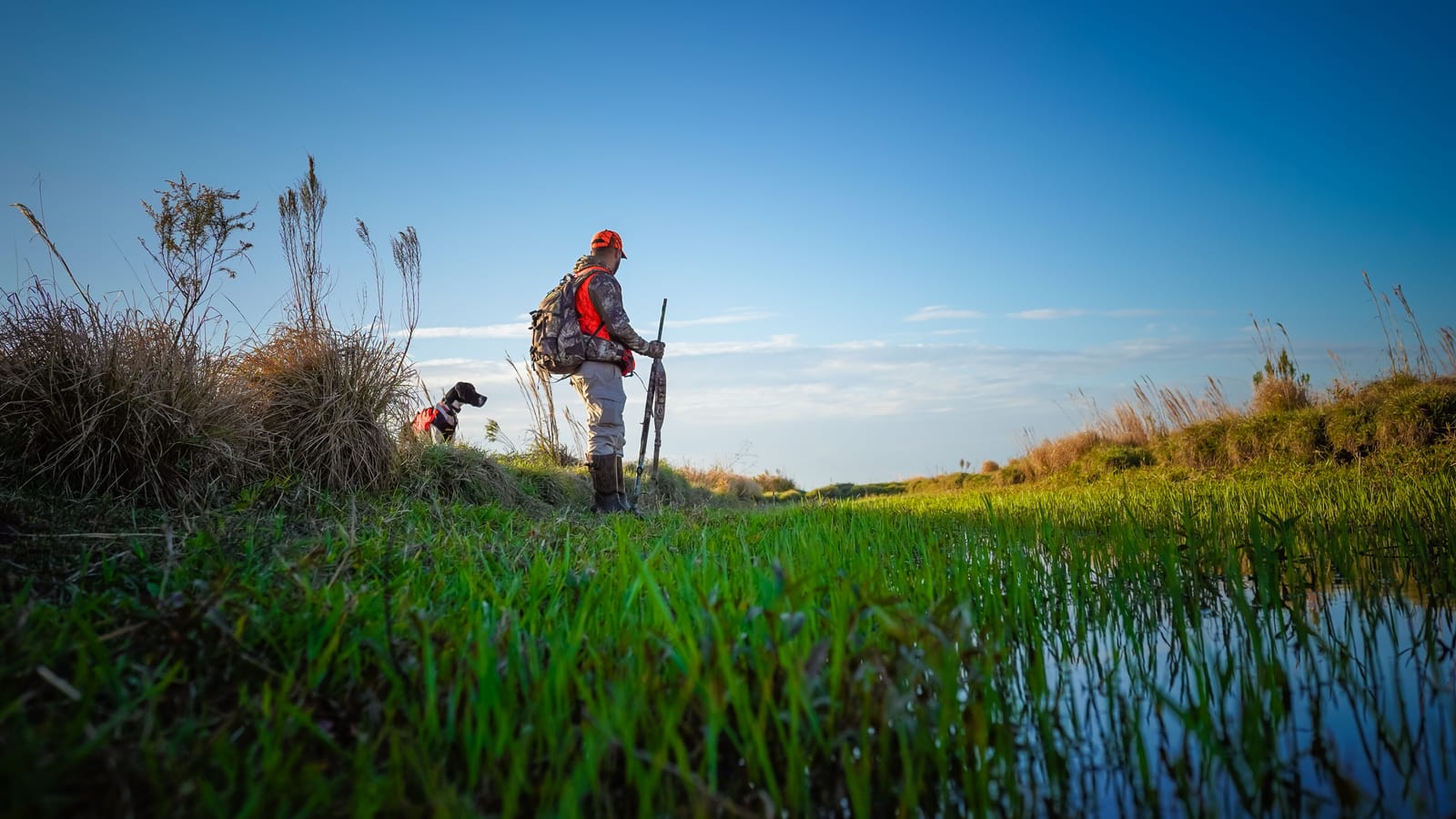
Start with the leak. Before you think about a single decoy, take your waders into a dark garage on a dry afternoon, drop a bright flashlight down inside one leg, and walk around the outside looking for pinholes. Neoprene wears through at the knees and at the crease behind the ankle first. Breathable waders fail where the suspender clip rubs. Mark every pinhole with a silver Sharpie, let the boots dry two full days, then put a dab of Aquaseal on each mark and let it cure overnight.
That's a two-hour job in September that saves you a 26-degree morning in December with a cold wet sock and nowhere to go.
Wet feet in a duck blind aren't an inconvenience. They're the reason you pick up at 8:40 a.m. on the one morning the weather finally turned and the new birds showed.
Dry means layers under the waders, not thicker waders
Neoprene in 5mm is warm and it's also a sweatbox on the walk in. If the hike to your hole takes more than ten minutes, you'll arrive damp from the inside, and damp from the inside is the same cold as damp from the outside. Walk in with your top layer unzipped and your jacket in the bag. Put it on once you stop moving.
Underneath, wool or synthetic. Cotton socks are a mistake you only make once. Two pairs of merino, a light liner and a heavy over-sock, with room in the boot for both. If your toes are tight, your feet will be cold no matter what you paid.
Cinch the wading belt. Every time. It's not a fashion item. If you go down in current or step into a hole, that belt is what keeps your waders from filling and turning into an anchor. Cold water takes your grip strength in about a minute, and your judgment before that.
Gloves: bring three pairs, keep two dry in a zip-top bag inside your coat. You will soak the first pair rigging decoys in the dark, and you'll be picking up frozen line for the rest of the morning with the spares.
Your blind is only as good as the stuff growing next to it
Brush it with vegetation from within fifty yards of where it sits. Fresh green cattails jammed into a brown November marsh look like a green dot from 200 feet up, and ducks circling at that height are reading the whole picture, not the detail.
Zip ties beat bungees. Grass bundles sag by mid-season, so re-brush in mid-November when everything goes tan.
Three things get you busted more than bad camo:
- Your face. A pale oval turned upward is the brightest thing in a brown marsh. Dark brim, face mask or paint, and watch through the gap in the grass instead of over the top.
- Movement. Call with your hands still. Reach for the thermos when the birds are behind you or already committed and dropping.
- Your shadow, and your dog's. A layout blind in a cut field throws a hard line on a bright morning. Angle it so the sun is behind or beside you, not painting your side wall.
Set the shooting lanes before legal light and tell everyone where they are. A crowded blind with four guys and two dogs is where muzzle discipline stops being a slogan. Guns stay unloaded with the action open until everyone's seated and the dog is on the stand. Assign zones. Left man takes left, right man takes right, nobody swings past the end of the blind. One person calls the shot, and "take 'em" is the only phrase that means take 'em.
Twelve good decoys beat three dozen lazy ones
On a beaver pond or a flooded ditch, six to a dozen is plenty. On big open water you need numbers to be visible, so two to four dozen. But the number matters less than the hole.
Wind at your back or quartering over your shoulder. Ducks land into the wind, so they'll come from downwind of the spread, which puts them in front of you at the right distance. Leave an obvious opening 20 to 30 yards off the blind. That's your landing hole, and that's your shot. If birds are consistently landing 60 yards out at the edge of the spread, your hole is in the wrong place. Move decoys, not your expectations.
Space them loosely. Content ducks spread out. Tight bunches read as nervous birds about to leave, and late-season mallards that have been shot at from Saskatchewan to Arkansas notice.
Motion is the piece most guys skip. A jerk cord with three decoys on it and a bungee anchor costs almost nothing and puts real ripple on flat water. On still, bluebird days, that ripple is worth more than another dozen blocks. Spinning-wing decoys work, sometimes too well early and not at all late, and rules on motorized and electronic decoys vary by state and by season — several states restrict them outright or set date windows. Check your current regulations before you stake one out, not after.
Rig with Texas-style weights and tangle-free line. You'll set and pick up in the dark, with cold hands, and every tangle costs three minutes you'd rather spend sitting still.
The paperwork is part of the hunt
Federal law says you're hunting migratory birds with a shotgun that holds no more than three shells total, which means a plug in most repeaters. Nontoxic shot only. If you're 16 or older, you need the federal duck stamp signed across the face, plus your state license and HIP registration, and HIP is per-state, so a road trip means registering again. In Canada it's the Migratory Game Bird Hunting Permit with the conservation stamp. Baiting is illegal, and "I didn't know the field was baited" is a defense that works far less often than people think.
Shooting hours for waterfowl usually run from a half hour before sunrise to sunset, but season dates, zones, daily bags and species limits change every year and differ by flyway and state. Read the current guide. Put it on your phone.
That duck stamp money isn't a tax. It buys wetland acres, and wetland acres are why there are ducks to argue about at all. Buy an extra one and don't sign it, if you like the art. The refuge still gets the money.
Pick up cripples before you pick up your gun again
A hit bird swimming for cover is your first job, ahead of the next flight. Mark it, send the dog, or go get it yourself. Birds you don't find still count against your bag in every ethical sense and in most legal ones.
Pick up your hulls. All of them. Public marshes get closed by the behavior of the worst hunter who used them last week, and a ring of spent shells around a blind is the cheapest ammunition an anti-hunting argument ever gets.
Last thing, and it's the one that saves lives: tell somebody your exact hole and your out time, wear the life jacket in the boat while the motor's running, and carry a fire kit in a dry bag. October water at 45 degrees doesn't care how good a swimmer you were in high school.
The mornings you'll remember aren't the limits. They're the ones where the wind came around at 4 a.m., your feet stayed dry, and a pair of greenheads dropped into a hole you built on purpose.
Wes Dunbar
Country & Skills
Grew up on an acreage and never quite left. Covers trucks, trades, land, and how to do the thing yourself.

Watch
Watch how it's done
Picked for this article.
From channels we rate. Plays on YouTube.
Orvis Guide to Fly Fishing
Fix Your Leaky Waders with Tom Rosenbauer
Simms Fishing
Simms GORE-TEX® Wader Repair
Read next