

Your property tax bill is an opinion. You can argue with it.
The county's number is a guess about your house, and guesses have errors. Here's how to find yours before the appeal window shuts.
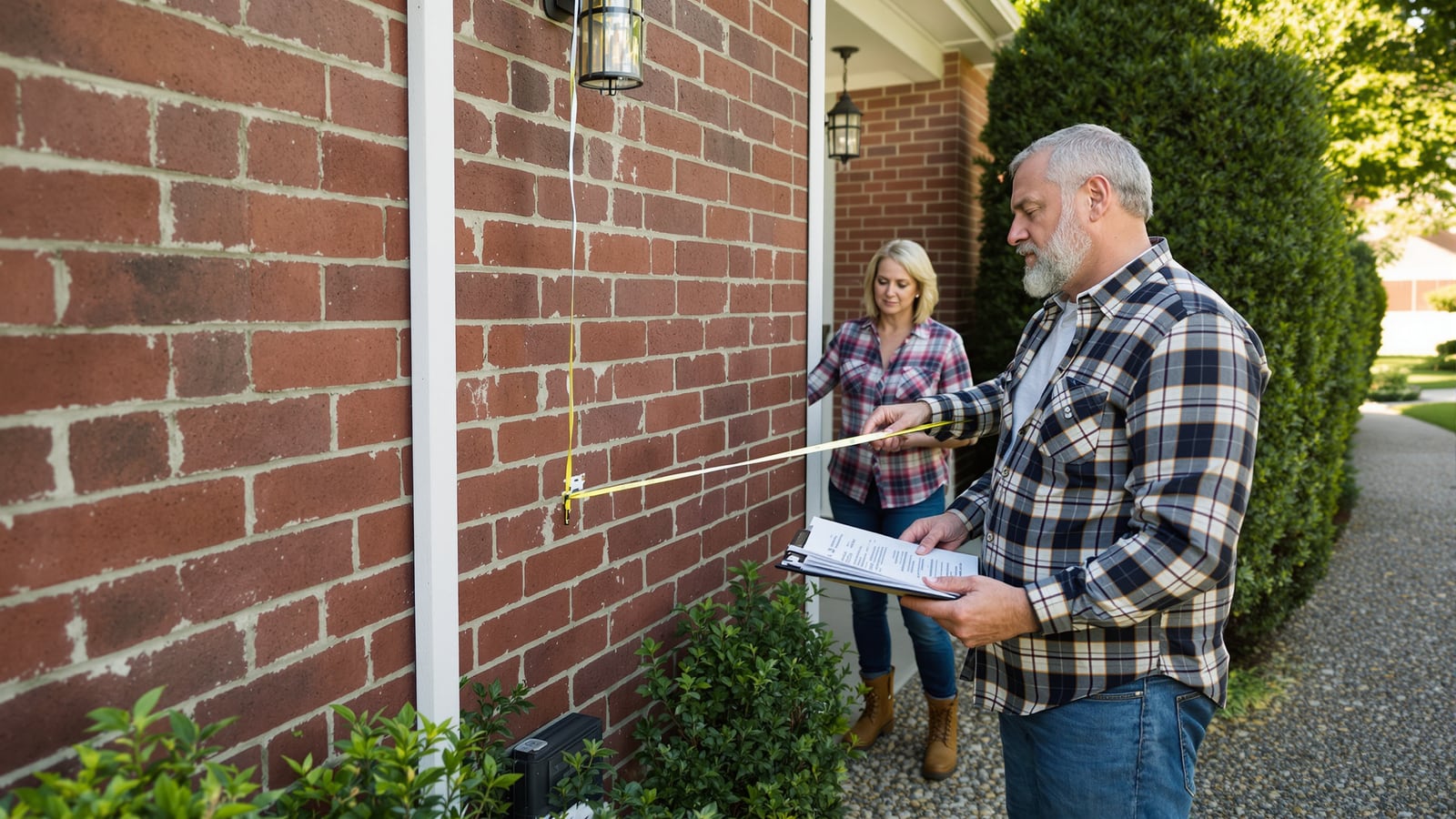
Quick answer: Your tax is your home's assessed value times the local rate. You can't argue with the rate, but you can argue with the value. Find the deadline on your assessment notice, check the county's record of your house for factual mistakes, then back your case with recent sales of similar homes. Many appeals take an evening of work.
This is general education, not tax or legal advice. Rules, deadlines and procedures differ by state and county. Confirm yours with your local assessor's office or a licensed tax professional.
The notice that looks like junk mail
It arrives in a plain envelope, two sheets, mostly boxes. Most people glance at the number, sigh, and put it under the mail pile. That's the mistake.
In many places the assessment notice comes first and the actual bill follows months later. The appeal window is tied to the notice. Often it's a few weeks. Sometimes it's a couple of months. By the time the bill lands and makes you angry, the window may be closed.
So find the notice. Look for words like "appeal deadline," "protest by," or "informal review." Write that date on the calendar in ink. If you've already tossed it, call the assessor's office or look up your parcel on the county website today.
Do the arithmetic first
Here's a hypothetical. Your home is assessed at $400,000 and your combined local rate is 1.2 percent. The tax is $4,800 a year.
Say the assessment is $30,000 too high. That's $360 a year. If the error sits there for five years, you've handed over $1,800 for nothing. Evenings are worth more than that.
Two cautions. Some states assess at a fraction of market value, so a notice showing $280,000 on a $400,000 house isn't necessarily a bargain or a mistake. And rates are set by local governments, usually through budgets and votes. Your appeal won't change the rate. It only corrects your share.
If your savings would be small, say under $100 a year, weigh the time. That's a legitimate call. Just make it with the numbers, not out of dread.
Read the record card like a contract
Every county keeps a property record, sometimes called a property card, on your house. It's usually free online. Pull it up next to the notice and check each line against reality.
- Square footage. Compare it to your closing documents, an old appraisal, or the plans. Clerks mistype. A finished area listed at 2,400 square feet that's really 2,000 is a 20 percent overcharge on that line.
- Bedrooms and bathrooms. A listed full bath that's a half bath matters. So does a fourth bedroom that's a closet with ambition.
- Finished basement or attic. Records sometimes show space as finished when it's a concrete floor and a water heater.
- Garage, deck, pool, outbuildings. Check that each one exists. Check that you still own it. A shed that came down in a storm may still be on the books.
- Lot size and features. Wrong acreage and wrong views and wrong waterfront claims all show up.
- Age and condition. A house rated "good" with a failing roof and a cracked foundation is overrated.
- Parcel details. Make sure it's your house. Records get crossed more often than anyone admits.
A factual error is the cleanest appeal you'll ever file. You aren't arguing opinion. You're pointing at a line and saying it's wrong.
Then check the value against real sales
If the record is clean, the next question is whether the number is fair. The strongest evidence is what similar houses actually sold for.
Pick three to five homes near yours that sold recently, close to the county's valuation date. Match them on size, age, style and condition. Use the sale prices, not the asking prices. Note the addresses and dates, and print the listings or the county sale records.
Some counties also accept comparisons to the assessments of similar homes, to show you're being taxed more heavily than the neighbors. Ask the assessor's office whether that's allowed where you live.
If you bought the house recently at a normal arm's-length price, that number is powerful evidence. A purchase price a good deal under the assessment is hard for the county to wave away.
Condition counts too. Photos of the cracked slab, a contractor's written repair estimate, a roof quote. The county's computer model has never been inside your house. You have.
Check the exemptions while you're in there
Value isn't the only way a bill goes wrong. Many states and counties offer reductions that you have to claim yourself:
- Homestead or primary residence exemptions
- Senior, disability or veteran exemptions
- Caps on how fast your assessed value can rise
These often need an application, and they can quietly fall off after a refinance, a change in ownership, or a missed renewal. Look at the bill's line items. If you qualify for something and don't see it, ask. This can be worth more than winning a value dispute, and the paperwork is simpler.
Filing, and what to bring
Most places start with an informal review. You call or email the assessor, explain the error, and send documents. A lot of problems end right there.
If that fails, there's usually a formal appeal to a local board. Expect a short hearing, often ten or fifteen minutes. Treat it like a job interview with receipts.
- Lead with the number you want, and why.
- Bring one tidy packet: record card with the errors marked, comparable sales, photos, estimates.
- Stay polite. The board members are neighbors doing a job. Being right and being pleasant works better together.
- Keep paying the bill on time while the appeal is pending unless your jurisdiction says otherwise. A late penalty will eat your win.
Ask the office up front whether a review in your area can ever raise a value instead of lowering it. In most places that's rare when you stick to documented facts, but it's your right to know the rules before you file.
If you win
A reduced assessment lowers future bills too, so you gain every year until the next reassessment. If you're owed a refund for a past year, treat it like any windfall. Put it to work before it quietly disappears.
If your mortgage escrow had been pricing in the higher bill, expect your servicer to adjust the monthly payment after the corrected bill is issued. Meanwhile, if you lose, you've still learned what's in the file. And if your escrow payment jumped last year and rattled your budget, your emergency fund is what absorbs that kind of surprise.
Nobody at the county is cheating you. They're running a model on thousands of houses, and yours is one row. Spend one evening making sure the row is right.
Ray Okonkwo
Money & Business
Former commercial banker turned small-business owner. Covers salary, credit, margins and the arithmetic nobody does before signing.

Watch
Worth an hour of your evening
More from Money.
From channels we rate. Plays on YouTube.
Read next