

A snapped string is a lesson, not a trip to the store
The first time a string breaks, your kid learns more in fifteen minutes at the kitchen table than in a month of practice. Don't take that away from them.
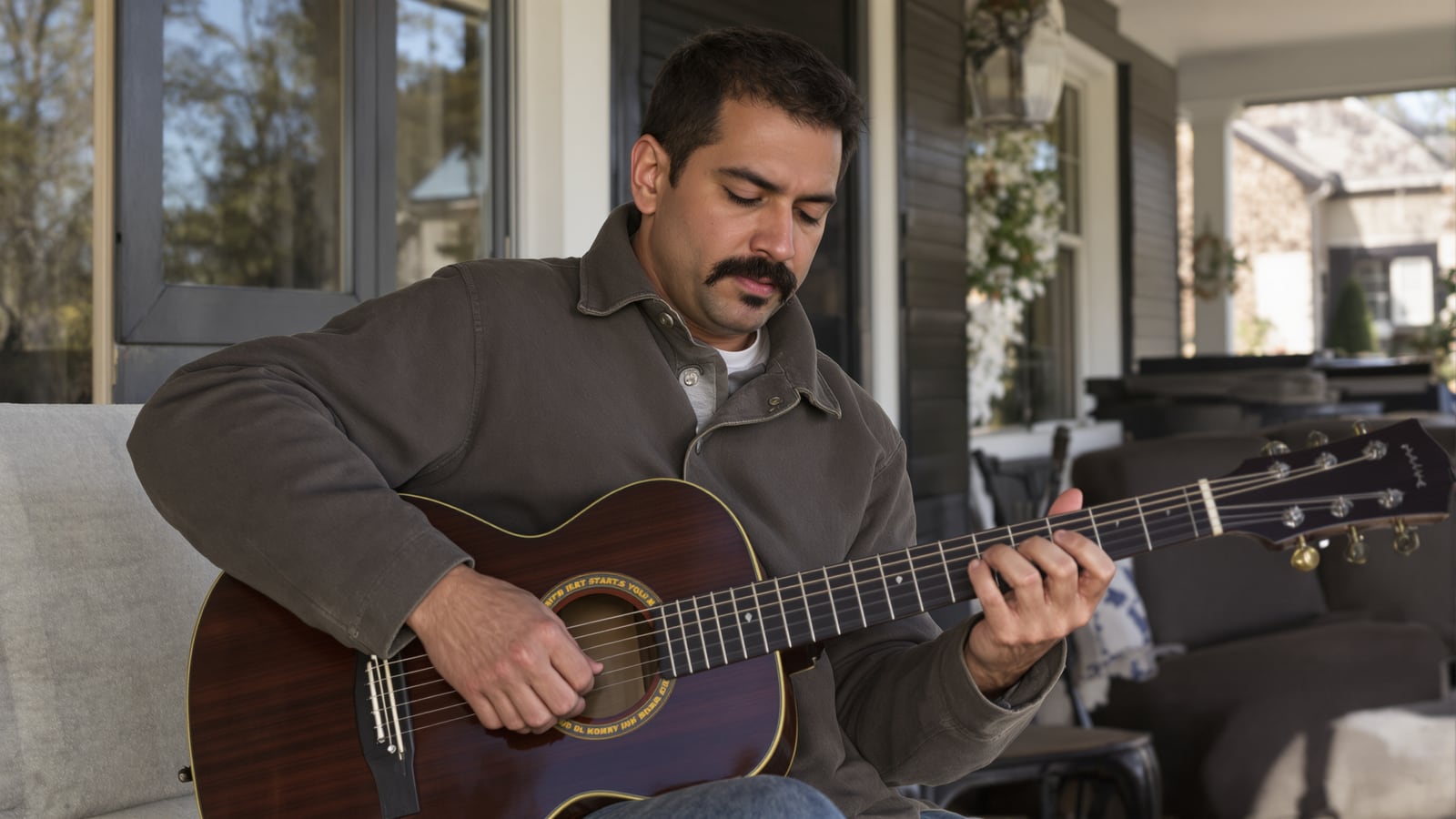
Quick answer: Keep a spare set of strings in the case. When one snaps, have your kid change the whole set while you sit beside them and keep your hands in your lap. Budget fifteen minutes the first time, five once they've done it a few times.
The moment you've been waiting for
It happens mid-song. A sharp crack, a string curling off the neck like a dropped spring, and a kid looking at you like the guitar just died.
You have two options. You can say "we'll grab a new one this weekend." Or you can say "good, go get the winder."
The first teaches a child that when something breaks, someone else handles it. The second teaches them that a guitar is a machine they own and can keep running. That lesson carries. The kid who restrings a guitar at ten is the kid who changes a bike tire at twelve and a car battery at sixteen.
A new guitar would be the wrong answer anyway. A broken string is the cheapest thing that can go wrong with the instrument, and strings are meant to be replaced.
What goes in the kit
Pull this together before anything breaks, and keep it in the case pocket:
- A spare set of strings that matches the guitar. Most beginner acoustics use light gauge, often labeled .012 to .053. Most electrics use .009 to .042. Check the pack against what's on there now.
- A string winder. It's a small plastic crank that turns the tuning peg ten times faster than your fingers. It usually has a notch for pulling bridge pins.
- Clippers. A nail clipper does the job.
- A tuner. The phone app works.
- A soft rag.
Put on safety glasses for the cutting step. Cut string ends are stiff and sharp and they fly. Kids think this is a joke until the first time one goes past an eye. It's not a joke.
The steps, for an acoustic
Keep the guitar flat on a towel on the table. Let your kid do the work and talk them through it.
- Loosen the dead string all the way with the winder, then pull it free. Don't yank it. On an acoustic, the other end is held by a small plastic pin in the bridge. Use the notch in the winder to ease that pin out, then slide the string out with it.
- Wipe down the guitar while it's open. With the old strings off, the fretboard is easy to clean. A dry rag takes off the gray film. This is the "leave it better than you found it" habit in its smallest form.
- Match the string to its slot. The thickest string goes in the top slot, the lowest note, and they step down to the thinnest. A kid who puts the wrong gauge in the wrong place will find out when it won't tune. That's fine. Let them find it.
- Drop the ball end into the bridge hole, then push the pin back in with the groove facing the neck. Pull up gently on the string until you feel the ball seat against the pin. Skip this and the pin shoots out like a cork when the string comes up to pitch.
- Feed the other end through the tuning post, pull about two inches of slack, and kink it. Wind it so the string wraps downward on the post, two or three turns, each wrap below the last. Neat wraps hold the pitch.
- Tune up slowly. Bring it to pitch, give the string a gentle pull away from the fretboard, and retune. A new string stretches, so expect to do this three or four times. Don't crank it past the note to speed things up. That's how the replacement string breaks, too.
- Clip the extra tail off the post, safety glasses on.
An electric is the same idea. The string goes through the back of the body or the bridge instead of a pin, and on some models a bit of the end is bent to lock it. Your kid can read the diagram inside the string pack, which isn't a bad skill by itself.
Change them all, not only the one
A single snapped string is a good reason to replace the whole set. The others are the same age and wearing the same way. The new one will sound bright and ring true, and the old five will sound dull beside it. Changing everything also means two more rounds of practice for the same lesson, and kids learn by repetition.
If the guitar is an electric, you can swap one at a time, which keeps tension on the neck. On an acoustic, a full set is fine and easier to follow.
Why it broke
Don't skip this part. A string that breaks after a year of hard playing was just old. A string that breaks in the same place twice is telling you something.
- Breaks at the bridge or saddle: there's usually a rough edge in the slot. A pro can smooth it in a couple of minutes.
- Breaks near the nut: the slot may be sharp or too narrow.
- Breaks while tuning up: it was wound badly, or tuned too high. Learn from that.
Teach your kid to run a fingertip lightly along the area and look. Anything that snags is worth a trip to a guitar shop, and that's the one time the shop is the right call. If you're also thinking about whether the instrument itself is worth the money, our piece on what actually matters when you buy your first acoustic will keep you from fixing a guitar that was never going to be good.
Hold your hands in your lap
This is the hard part, and it's yours, not theirs. You know how to do this in four minutes. They'll take thirty-five, the string will end up in the wrong slot once, and a pin will roll under the couch.
Let it happen. Point and ask: "Which slot does the thick one go in?" Don't reach. A kid who fixes it badly and then fixes it right has learned it. A kid who watches you do it has watched a video.
When they finish and play a chord that rings clean, you'll see it on their face. They didn't only fix a string. They own the guitar now.
Make it routine
A broken string every few months is a nuisance. A change every few months on purpose is maintenance. Pick a day, maybe the first of the season, and make it a ritual: new strings, clean the fretboard, wipe the body. If your kid is on a schedule of daily practice, it fits in naturally next to a plan like twelve minutes a day. And if it's you who's just starting out, the first ninety days of learning guitar as a grown man has a place for this chore too. Do it together and it turns into something you share.
Keep a spare set in the case. Always. Because the string will go at the worst moment, in front of the most people, and a kid who can swap it in five minutes without a word to anyone is a kid who'll keep playing.
Dean Shaw
Gear & Garage
Reads the warranty, the parts list and the long-term owner reviews before anything else. Trucks, tools, watches, and the cheap version that costs more.

Watch
Worth an hour of your evening
More from Music.
From channels we rate. Plays on YouTube.
Read next