

A metronome fixes your timing. A room full of players fixes you.
Six months of practicing alone gets you the chords. Playing with other people teaches you the things the metronome can't.
Commentary
Quick answer: Practice alone until you can switch between three or four chords without stopping. Then get in a room with other players as fast as you can. That's where timing, listening and humility get built.
The guy with the clean metronome work
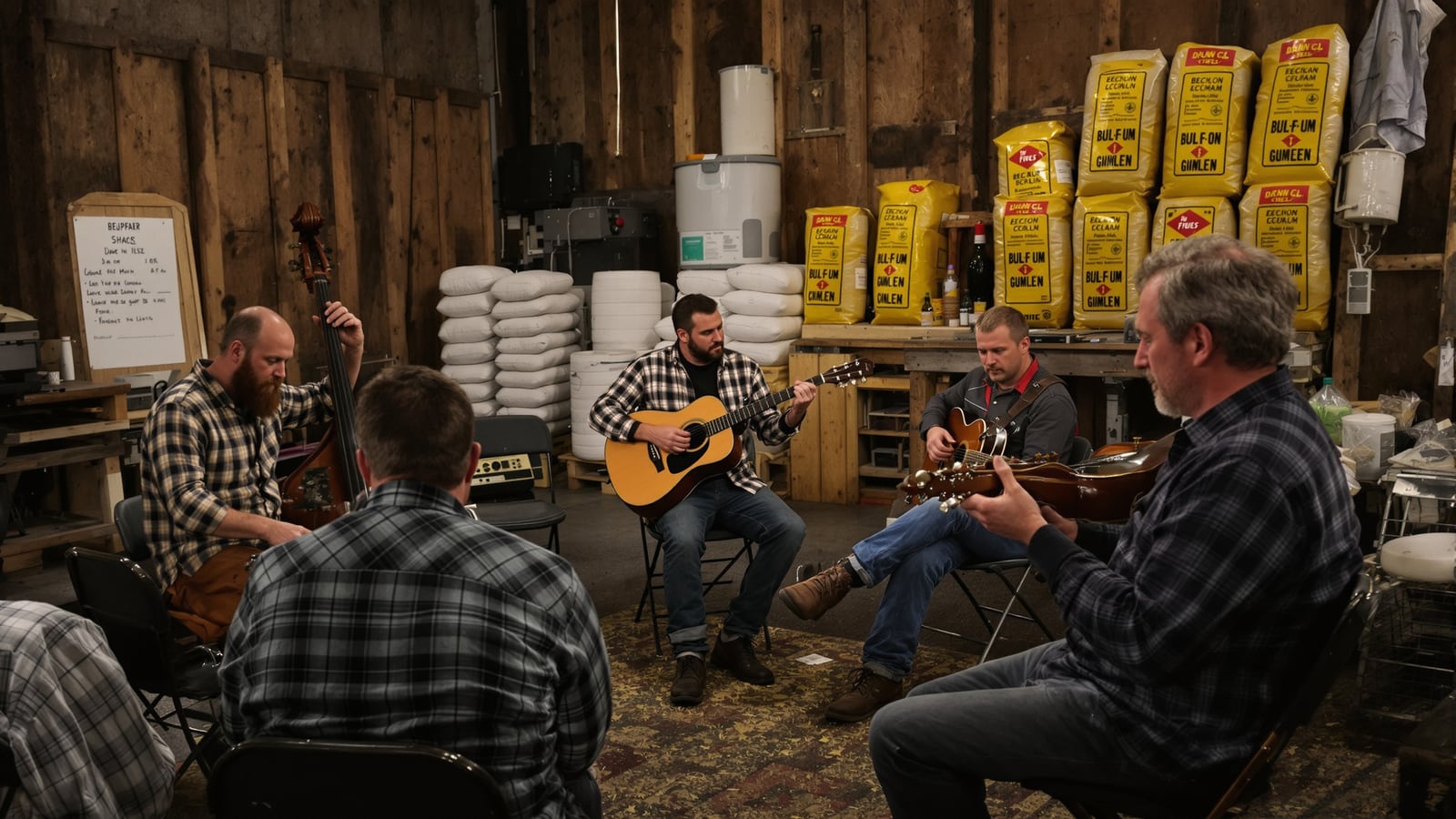
Picture a Thursday night jam in the back room of a feed store. A man in his forties sits down with a new capo and six months of disciplined practice behind him. He's good. He's clean. He's been playing along to a click every night.
Then the group hits the chorus of "Wagon Wheel" and he starts pushing. Just a hair. The bass player doesn't say a word. He keeps walking at the same pace, and within two bars the guy is pulled back into the pocket like a boat on a line.
Nobody scolded him. He felt it, and he never forgot it.
That's the first thing playing together does that a metronome can't. A click tells you you're wrong. People make you feel what right is, and the feeling is what sticks. Use the metronome for what it's good at, which is catching drift in your own hands. Just don't expect it to teach you to play with anything.
You can't hear the song while you're attacking it
Most beginners play loud because loud feels like confidence. Then they wonder why they can't hear the mandolin.
Every good jam leader says the same thing in different words. If you don't know the song, play softer. Watch the left hand of the guy next to you. Sit out a verse if you have to, and come back in on the chorus when you've found the changes.
It's humbling for about a week. Then it turns into the most useful habit you own. You start listening before you speak. You notice who's driving the rhythm and who's leaving space. That habit doesn't stay in the music room. It follows you to the dinner table, the job site and the argument with your teenager.
Everybody trains wrong on mistakes
Practicing alone teaches you to stop and fix a mistake. Playing with others teaches the opposite, and it's more useful. You wrong-chord the bridge, you wince, and the song goes on without you whether you like it or not. So you find your place and rejoin.
That's the skill. Not perfection. Recovery.
A dropped plate at a family dinner doesn't stop the dinner. A flubbed line in a toast doesn't end the wedding. Men who've spent a few years playing in groups tend to be calmer in a mess, because they've been in thirty small messes and walked out of every one.
Serve the song, but keep your seat
A good player in a group does two things that look opposite and aren't.
He serves. He takes his break, gives it back on time and plays under the singer. If someone's learning, he slows down. If the fiddle player's on a roll, he lets her run. The song comes first, and so does the person next to him.
He holds the line. If the whole circle starts rushing, he stays steady. If somebody plays over the singer every verse, he says something kind and plain, or he picks a different group next week. A steady rhythm player isn't a pushover. He's the reason the others can take risks.
Serve your people first. Don't let anybody walk on you. A jam teaches both at once, and you get to practice them where the stakes are low and the coffee is hot.
The unwritten code is stronger here than almost anywhere
Show up ten minutes early. Help carry the amp. Bring something to share, even if it's just a bag of cookies from the store. Stack the chairs before you leave, then check the room one more time. Don't dominate the song list. If you called the last tune, let someone else call the next one.
You'll notice the people who do this get invited back. The ones who don't, don't. Nobody writes it down. Everybody knows.
Pick a room that's right for where you are
- Bluegrass and old-time jams are usually the most welcoming to beginners. The tunes are repeated, the chords are simple, and there's a real tradition of letting newcomers sit in the circle. Look for a local bluegrass association or ask at a music store.
- Open mics are fine for nerve, but they're mostly performance, not playing together. Good for step two.
- A band of two is underrated. You and a buddy, or you and your wife, or you and a kid, on a back porch. Ten minutes a night is enough.
- A band with a drummer is the best timing teacher of all, because a drummer can't be argued with.
A kid who's learned only three chords can already play with you. G, C and D cover hundreds of songs. Add E minor and you've got "Wagon Wheel." Hand them the rhythm part and take the harder one yourself. In six months they'll be holding their own, and you'll have a standing hour together every week that neither of you will skip.
When it doesn't work
Some jams are cliquish. Some leaders talk more than they play. Some groups run the same eight songs for years and never welcome anyone new. If you've been twice and nobody's said hello, don't take it personally and don't force it. Find another room. There's always another.
And don't walk in cold. You need enough chords that you're not sinking the song. If you're still fighting to change from G to C, spend another few weeks on your own first. The first ninety days of learning guitar as a grown man lays out how to get there without burning out. And if you're still shopping for an instrument, what actually matters when you buy your first acoustic will keep you from overspending on the wrong thing.
What you're really learning
On paper, you're learning to play in time. In practice you're learning to listen before you talk, to play quietly when you don't know the answer, to recover when you blow it and to give the other fellow room to shine. You're learning to show up early and stay late, and to hold steady when everyone else is rushing.
Those are the habits of a man people want in the room. Music just happens to teach them faster than anything else, and it's a lot more fun than a seminar.
So put the metronome in the drawer one night a week. Call somebody. Count off the tune, and keep your eyes on the bass player's hands.
Dean Shaw
Gear & Garage
Reads the warranty, the parts list and the long-term owner reviews before anything else. Trucks, tools, watches, and the cheap version that costs more.

Watch
Watch how it's done
Picked for this article.
From channels we rate. Plays on YouTube.
ArtistWorks
Bluegrass Jamming Skills: Jam Protocol & Etiquette with Michael Daves || ArtistWorks
Acoustic Guitar Magazine
Bluegrass Jam Etiquette | Jackson Emmer | Acoustic Guitar Teaching Artists
Read next