

Start cold, and put the shell on before you need it
Most hikers dress for the parking lot and pay for it by the first ridge. Here's how wool, synthetics and a shell actually work together on the trail.
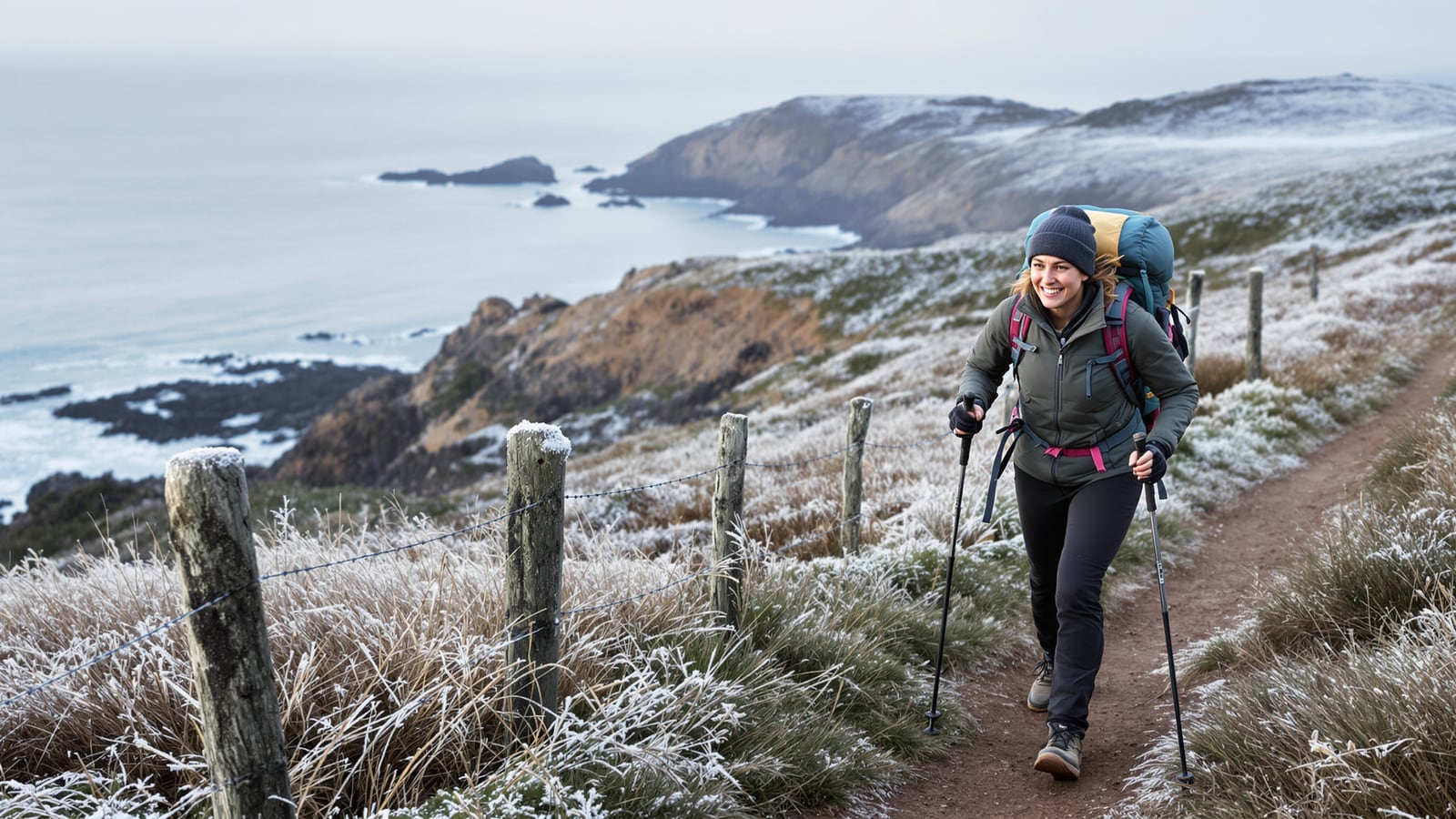
Quick answer: Wear a thin wool or synthetic base and one midlayer you can shed. Carry a puffy jacket and a shell in the pack. Leave the trailhead a little cold, because you'll warm up in ten minutes. Put the shell on before you're soaked or shivering, and take it off before you're sweating.
The parking lot lies to you
It's 34 degrees at the trailhead on an October morning. You've got a fleece on, a wind-proof jacket over it, and a hat pulled down. You feel great for about eleven minutes.
Then the trail tilts up, and fifteen hundred feet of climbing is waiting. By the first switchback your back is wet. By the second you're unzipping everything and cursing. At the top the wind finds that damp shirt, and a sweaty hiker with a ridge breeze on him gets cold fast.
You didn't dress for being cold. You dressed for standing still. A hiker's job is to manage moisture, and warmth mostly follows from that.
So start slightly chilly. If you're comfortable standing at the car, you're overdressed for the first mile.
Base layer: wool or synthetic
Pick one thin layer against your skin. Never cotton. Cotton soaks up sweat, holds it, and pulls heat out of you all day. A cotton tee is fine on a short summer stroll. Anywhere the weather can turn, leave it home, jeans included.
Merino wool is the better all-rounder for cool weather and multi-day trips. It still insulates when damp, it feels less clammy, and it doesn't stink after the third day. The trade-offs are real. It dries slower than synthetic, it costs more, and it wears out first where your pack straps rub.
Synthetic (polyester or nylon blends) dries quicker, usually costs less, and holds up to abuse. It also gets ripe fast, and it can melt if a fire spark lands on it. For a hard sweaty climb in warm weather, it's often the better choice.
Our call: wool for fall, spring and anything overnight. Synthetic for hot, steep day hikes where you'll soak the shirt regardless. If you only buy one, buy wool.
Midlayer: the dial you turn all day
This is a fleece or a light grid fleece, ideally with a quarter or half zip. The zip matters. Venting is how you control heat without stopping, and you'll open and close that collar a hundred times.
You wear the midlayer when you start, when you stop, and on the cold stretches. On a hard climb it often comes off and goes in the pack. Don't be proud about stopping for ninety seconds to do that. Sweat you avoid in the first hour keeps you warm in the third.
The puffy lives in your pack
An insulated jacket is for stopping. Summit lunch, a long water break, a delay while somebody retapes a blister. Your body quits making heat the moment you quit moving, and the puffy holds what's left.
Put it on at the break before you feel cold. Putting it on after you're cold means you're warming up from a hole.
Down vs. synthetic: Down is lighter and packs smaller. It loses most of its loft when it gets wet. Synthetic fill is bulkier but keeps insulating damp. If you hike somewhere that stays wet, like the Pacific Northwest or the Appalachians in spring, synthetic is the safer bet. In dry country, down is hard to beat.
When the shell goes on
Three triggers. Rain. Wind. And a hard drop in temperature at elevation.
The rule is simple. Put it on at the first real drops, not after you're wet. Wet insulation is a problem you can't fix on the trail. A shell goes on in thirty seconds and keeps your layers dry underneath.
On an exposed ridge, a shell stops wind that would otherwise cut straight through a fleece. A windy 45 feels like a much colder day. Many hikers carry a lighter wind shirt for this and save the full rain jacket for actual rain.
Here's the annoying part. No shell stays dry inside if you're working hard. Even the good membranes can't move sweat out as fast as a hiker climbing a grade makes it. So you're choosing between wet from the rain and damp from yourself.
Manage it like this:
- Open the pit zips and the front zip as soon as you're warm.
- Push the hood back when you can.
- In a light drizzle on a climb, take the shell off if you're warm. A damp fleece under a wet jacket beats a soaked fleece under a sealed one.
- Put it back on at the top, before the wind gets a vote.
Don't treat this as a rainy-day-only layer. A shell is also your windbreaker and, in a pinch, your emergency shelter layer. It's on the ten essentials list for a reason.
Head, hands, and legs
A thin beanie and a pair of light gloves weigh almost nothing and give you the fastest adjustment you've got. Cold hands and ears wreck a good mood. Put them on at a stop, take them off when you move.
Rain pants are the layer people skip and regret. Hypothermia doesn't need freezing temperatures. A cold rain in the 40s with wind will do it to a hiker in soaked pants. If the forecast has any rain in it, pack them. They're light, and they've saved plenty of long days. For more on how fast conditions can turn, read the weather that kills hikers and how to read it in time.
What goes in the day pack
- A spare base layer in a dry bag, or at least a trash bag liner
- A midlayer you can strip off
- A puffy in a stuff sack
- A shell, and rain pants if there's any rain chance
- A beanie and thin gloves
- Spare socks (wool, and wet feet are how a nice day ends)
If you're moving up to a night out, the same system scales. Read your first overnight backpacking trip and what to leave home before you add anything more.
Practice before it counts
Wear the whole system on a two-mile walk near home. Learn what each zip does. Notice how fast you heat up. Figure out which layer you'd drop at the first hill and which you'd grab at the first stop.
When you do stop to swap layers on a real trail, step onto rock or hardpacked ground away from the tread, so you're not trampling plants. Check the spot before you leave. A lost glove or a dropped stuff sack is litter that outlasts you.
The best hiker on the mountain is rarely the one with the most expensive jacket. He's the one who took his layer off four minutes before he started to sweat.
Wes Dunbar
Country & Skills
Grew up on an acreage and never quite left. Covers trucks, trades, land, and how to do the thing yourself.

Watch
Worth an hour of your evening
More from Outdoors.
From channels we rate. Plays on YouTube.