Read the wind before you pick where the tent goes
Temperature gets the blame for a bad night out. Moving air usually deserves it, and ten minutes of watching before you stake anything fixes most of it.
Quick answer: Stand at the site for ten minutes before you unpack. Note which way the air moves, then pitch with the tent's low, narrow end toward it and the door off to the side. Expect the wind to reverse after dark.
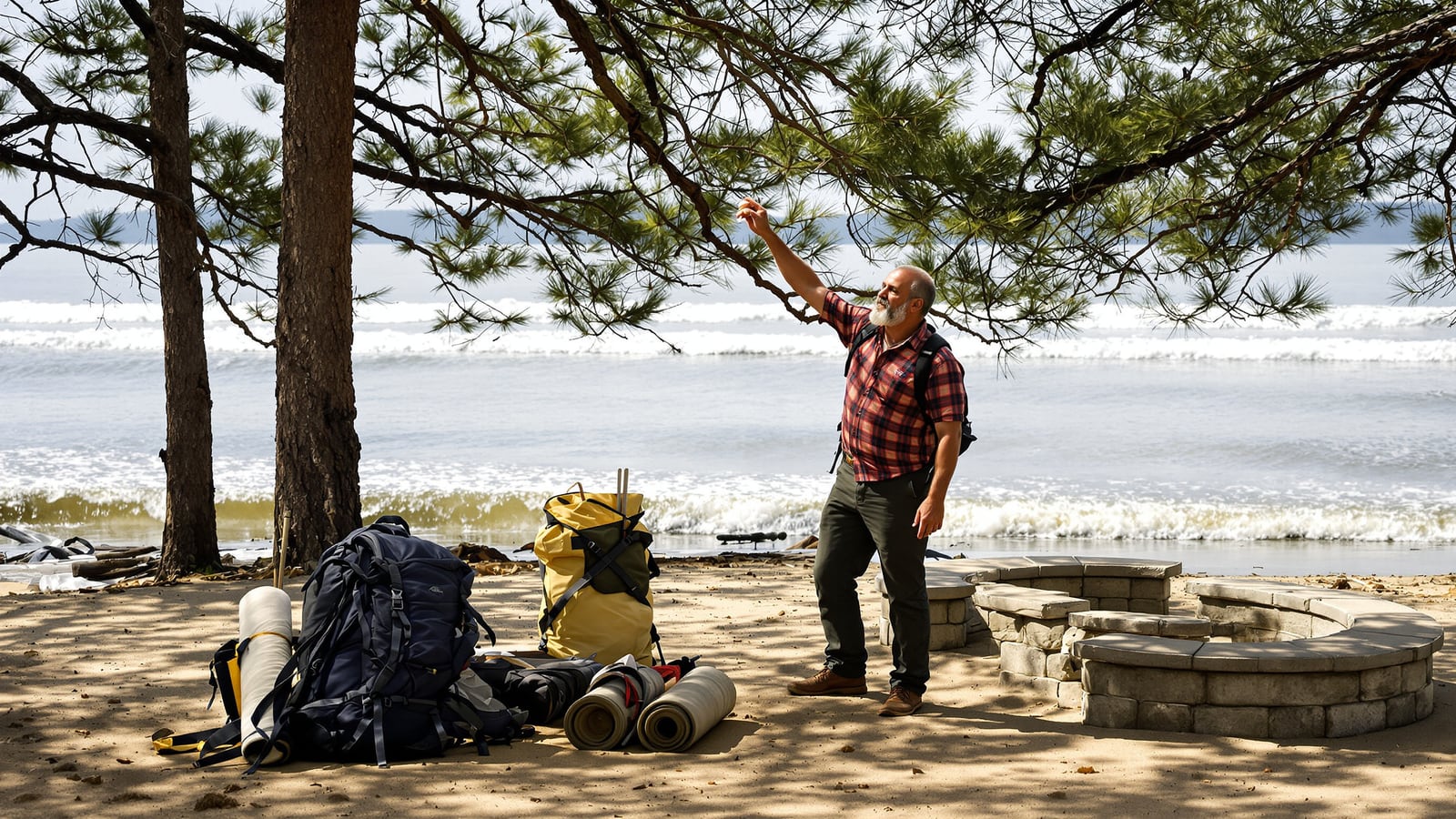
Picture a lakeshore site with a flat sandy pad, a view of the water and a fire ring somebody already built. You'll want it immediately. You'll also spend the night inside a drum. By 2 a.m. the rainfly is slapping, the stove is on its side in the dirt, and the guy who picked the spot is explaining to his kids that this is "part of the adventure."
It's part of the mistake. Most people choose a site for the view, the flat ground and the distance to the car. Wind gets a glance at best, and it decides more of your comfort than the thermometer does.
Why wind outranks temperature
Wind doesn't make anything colder than the air. It makes you colder, by stripping the warm layer off your skin, your jacket and the outside of your tent. That's all wind chill is. Forty degrees and still feels like a good evening. Forty degrees with a steady fifteen miles an hour feels like trouble, and you can't sleep through it.
It also runs everything else in camp. It decides whether your stove holds a flame, where your smoke goes, whether mosquitoes can land on you, and whether your tent stays quiet or flaps all night. Read it right and an average site becomes a good one. Read it wrong and a perfect site turns miserable.
Ten minutes of watching
You don't need an instrument. You need patience and a few cheap tells.
- Tie a strip of ribbon or a six-inch scrap of light cord to a trekking pole. Stick it in the ground. It shows direction better than a wet finger and it shows gusts, which matter more than the average.
- Watch the treetops, not the trunks. Canopy motion shows what the wind is doing above you. Calm at ground level with moving crowns means the air will drop in when conditions change.
- Look at the water. Dark, rough patches moving across a lake show you where the wind is coming from and how it's funneling.
- Check the ground. Bent, leaning trees and sand ripples show the prevailing direction. They've been recording it for years.
- Look at the wind itself. Smoke from a neighboring campfire, dust from a gravel road and a flag at a ranger station all give you a free reading.
Give it a real ten minutes. Wind comes in cycles. A single lull can fool you into thinking a spot is sheltered, and a single gust can scare you off a good one.
It will change after dark
This is the part people miss, and it's why a site that felt fine at 5 p.m. goes sideways at midnight.
In the mountains, air tends to move upslope during the day as the ground warms. At night the ground cools and the cold, heavy air drains downhill like water. If you've pitched in a low spot, a draw or the bottom of a gully, that cold air arrives and pools around you. It's colder there, and it moves. The ground steals heat before the air ever does, and a low pocket adds to the problem.
Coastlines and big lakes work the same way in reverse. Wind often blows in off the water in the afternoon, then eases or flips and blows off the land overnight. Count on the direction changing and pick the spot that works for both.
The practical answer is to move up off the bottom. Mid-slope on a bench, a few dozen feet above the lowest ground, is often the warmest, calmest piece of the landscape.
Putting the tent where it belongs
Once you know the wind, the layout almost does itself.
Point the narrow, low end into the wind. Most tents are built with a taller head end and a shorter foot end. Facing the foot into the wind gives it the smallest profile and the least leverage.
Keep the door off the wind side. A door facing straight into a gale lets in grit, rain and cold every time you unzip it. Put it at ninety degrees or downwind. Check that the vestibule is where you'll actually cook and change boots.
Use what's there. A boulder, a thick stand of live trees or a rise in the ground can cut the wind a lot. But don't tuck right up against a ridge crest or a cliff face. The air spills over the top and tumbles behind it, and the worst turbulence is often in the first stretch downwind. Back off from the obstacle instead of hugging it.
Stake like you mean it. Use every guy line, set at the angle the tent was designed for, and angle stakes away from the tent. In loose sand, bury a stuff sack full of dirt or a rock-weighted stick as a deadman. Walk around the tent once, tighten everything, and then tighten the windward lines again after the fabric settles.
If you want a camp you can leave quickly when the weather turns, pick a campsite you can bail from in forty minutes. Wind is often the first sign you'll need to.
Look up before you lie down
Sheltering under trees is smart. Sleeping under bad ones isn't. Before you commit, look up at the canopy over your tent footprint and the cooking area. Dead limbs, broken tops and leaning trunks are all reasons to move. Wind brings them down, and it doesn't ask first. The fix costs you thirty feet of walking, so there's no excuse for skipping it.
Cooking and fire
Put the kitchen in the lee of something, a few feet downwind of the tent's door but never inside the tent. A good windscreen saves fuel and boils water faster. But don't wrap a canister stove tightly in a reflective screen. The trapped heat can overheat the canister. Shield the flame, not the fuel.
Wind and open flame deserve respect. Before you light anything, check local fire restrictions, use the existing ring or a stove, and clear the ground around it. Keep water close. Embers travel farther than people think, and a dry meadow doesn't forgive carelessness. If the wind is steady and strong, skip the fire and cook on the stove. A marshmallow is not worth a burned hillside. Put it fully out, cold to the touch, before you sleep or leave.
Bugs, noise and the small fixes
A light breeze is the best bug spray there is. If mosquitoes are bad, favor the exposed edge of a site over the sheltered pocket and accept a little more air. If they're still bad, that's a trade worth making.
When the fly won't stop flapping, don't just endure it. Re-tension the guy lines, take out slack in the fly and reposition a loose stake. A quiet tent is a good night of sleep.
Leave it better
Wind scatters whatever's loose. Pack out every wrapper, every twist of foil and every bit of cord, and don't leave the stakes you hammered at a crooked angle. Look at the site once more as you walk off. If it looks like nobody was ever there, you did it right. If it looks better, that's the code.
Check the forecast for wind speed before you go, too. The weather that kills hikers is easier to read in time when you know what you're looking for. A sustained wind that's strong enough to push you around on open ground is a reason to pick the sheltered valley over the famous overlook.
The overlook will still be there next month. Your sleep won't.
Wes Dunbar
Country & Skills
Grew up on an acreage and never quite left. Covers trucks, trades, land, and how to do the thing yourself.

Watch
Worth an hour of your evening
More from Outdoors.
From channels we rate. Plays on YouTube.
Read next