

Start With the Truck Parked and the Engine Off
A dog that drools, whines or throws up on every ride isn't broken. Fix the truck first, then the stomach, then the miles.
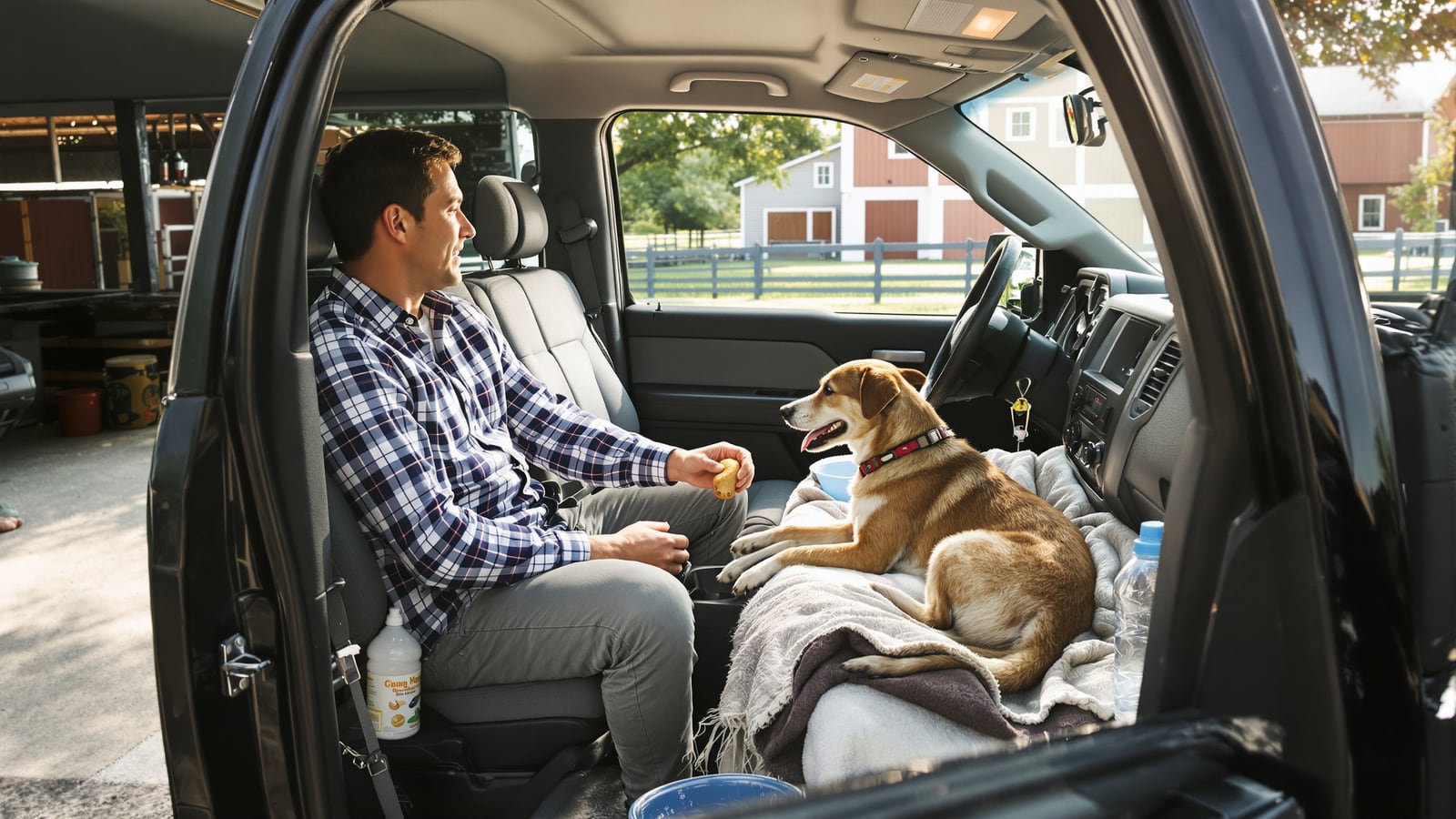
Quick answer: Carsick and scared look different and get fixed differently. Spend a week or two making the parked truck a boring, rewarding place. Then add the engine, the driveway, the block, and finally a destination the dog likes. Have your veterinarian look at any dog that vomits.
Most people do this backward. They load the dog, drive forty-five minutes to the lake, and hope. The dog arrives drooling and shaking, and the truck gets filed under "things that happen to me." Then the next trip starts with a dog who already expects the worst.
Work out which problem you've got
Two things get lumped together as "bad in the car," and they overlap.
Motion sickness shows up as drooling, lip licking, repeated yawning, going quiet and limp, and eventually vomiting. It's physical. The dog's balance system and eyes disagree, and the stomach loses.
Anxiety shows up as panting, whining, pacing, trembling, refusing to jump in, or hiding at the sight of the keys. It's emotional. The dog has learned that the truck means something bad.
The common case is both. A puppy gets sick on the first ride home, then dreads every ride after that, and the dread makes the nausea worse. Puppies often have more trouble than adult dogs, but don't count on a dog growing out of it. If yours has been sick more than once, call your vet. They can rule out other causes and talk to you about options, including prescription anti-nausea medication. Don't hand your dog human motion-sickness pills on your own. Dosing is a veterinary call.
Fix the setup before you fix the dog
A dog who's sliding around a bench seat is a nauseous dog. A dog who can see out the front window and feel stable often does better.
- Secure her. A loose dog in a cab is a hazard to her and to you, and a front seat with an airbag is no place for her. Use a crash-tested harness clipped into the seat belt system, or a crate strapped down so it can't shift. Look for independent crash-test certification, not just a "safety" label on the box. Never let her ride loose in the truck bed.
- Face her forward if she's prone to sickness. A raised seat or a crate placed so she can see out the windshield can help. Some dogs do better in a covered crate where they can't see anything move. Try both.
- Cool the cab. A stuffy truck makes nausea worse. Crack the windows an inch or two and run the air. Never leave a dog parked in a warm vehicle, even for a quick errand. What heat and cold actually do to dogs covers how fast it turns dangerous.
- Skip the big meal. Don't feed a heavy breakfast right before a ride. A few hours of empty stomach is a common rule of thumb, but ask your vet what's right for your dog's age and size.
- Protect the upholstery. A washable seat cover or an old blanket, plus a roll of paper towels and an enzyme cleaner in the glove box. You'll feel calmer when you're not worried about the seat, and the dog picks up on that.
The ladder
Each rung is short. Five minutes is plenty. Move up only when the dog is loose in the body and takes the treat without hesitating. If she turns down food, you climbed too fast. Go back one rung and stay there another day.
- Parked, engine off, door open. Toss a treat on the floor mat or seat. Let her hop in on her own, eat it, hop out. Do this a few times a day for several days. If she's too small or too scared to jump, lift her and keep it cheerful. She can leave whenever she wants.
- Door closed, dog secured, still parked. Hand her a chew or a stuffed toy. Sit with her for two minutes, then five, then ten. Say little. This is the dullest part of the whole project, and it's doing most of the work.
- Engine on, no movement. Start it, give a treat, shut it off, open the door. Repeat. Plenty of dogs flinch at the sound alone.
- Roll to the end of the driveway and back. Treat. Done. Unload her like nothing happened.
- Around the block. Slow stops, wide turns. Hard braking and fast corners are what turn a stomach.
- Five minutes to somewhere good. A park, a field, a gravel road with good smells. Then home.
That's the whole system. For a mildly nervous dog it might take a week. For one that's been sick a dozen times it could take a month. Don't rush it to hit a date. A trip you cut short costs you ten minutes. A trip that goes badly costs you the last two weeks.
Make the truck mean something good
Think about what the truck has meant to your dog so far. If every ride has ended at the vet or the groomer, she isn't being dramatic. She's reading the pattern correctly.
So change the pattern. For every ride to the vet, take several that end somewhere she loves. Run to the feed store that hands out biscuits. Drive to the creek and let her wade. A five-minute loop that ends in a game of fetch teaches more than any lecture on how the car is safe.
While you're driving, stay quiet and steady. A baby-talk voice and a lot of "it's okay, it's okay" tells her there's something to be worried about. Drive like you've got a full cup of coffee in the holder. Calm is contagious, and so is nerves.
If you're still working on basic manners, a solid "wait" at the door and a reliable "place" cue help enormously. Both are covered in Sit, Stay and Come in Fifteen Minutes a Day. A dog who waits for a release before jumping out is also a dog who won't launch into traffic at a gas station.
If it goes wrong anyway
It will, once. The dog throws up on the seat or panics at the first red light.
Pull over when it's safe. Clean up without drama, and don't scold. She can't help it, and a dog who gets yelled at for being sick learns to hide being sick. Give her air, a little water, and a minute. Then decide: finish the short trip or go home. Either way, drop back one rung of the ladder next time.
Bring your vet in if she's vomiting often, drooling heavily on short rides, seems truly panicked rather than uneasy, or if anything about her behavior has changed suddenly. Medical causes and anxiety can look alike, and only a vet can sort them out.
If you're starting with a new puppy, build this in from day one. What To Do The First Seven Days With A New Puppy covers the bigger picture, and the ride home is worth planning rather than improvising.
Leave it cleaner than you found it
One last habit. When the ride is over, wipe down the seat and shake out the blanket before you walk away. Keep a towel in the truck for muddy paws and a gallon of water for the dog. It's the same rule as returning a borrowed truck with a full tank: you leave the place better than it was.
You'll know it's working the day you reach for your keys and hear tags jingling at the door before you've found them.
Wes Dunbar
Country & Skills
Grew up on an acreage and never quite left. Covers trucks, trades, land, and how to do the thing yourself.

Watch
Worth an hour of your evening
More from Dogs & Pets.
From channels we rate. Plays on YouTube.
Read next