The case for a hobby that leaves sawdust on the floor
Ninety minutes, one small project, and a bench you never have to clear. How to pick a hands-on hobby that's still going in March.
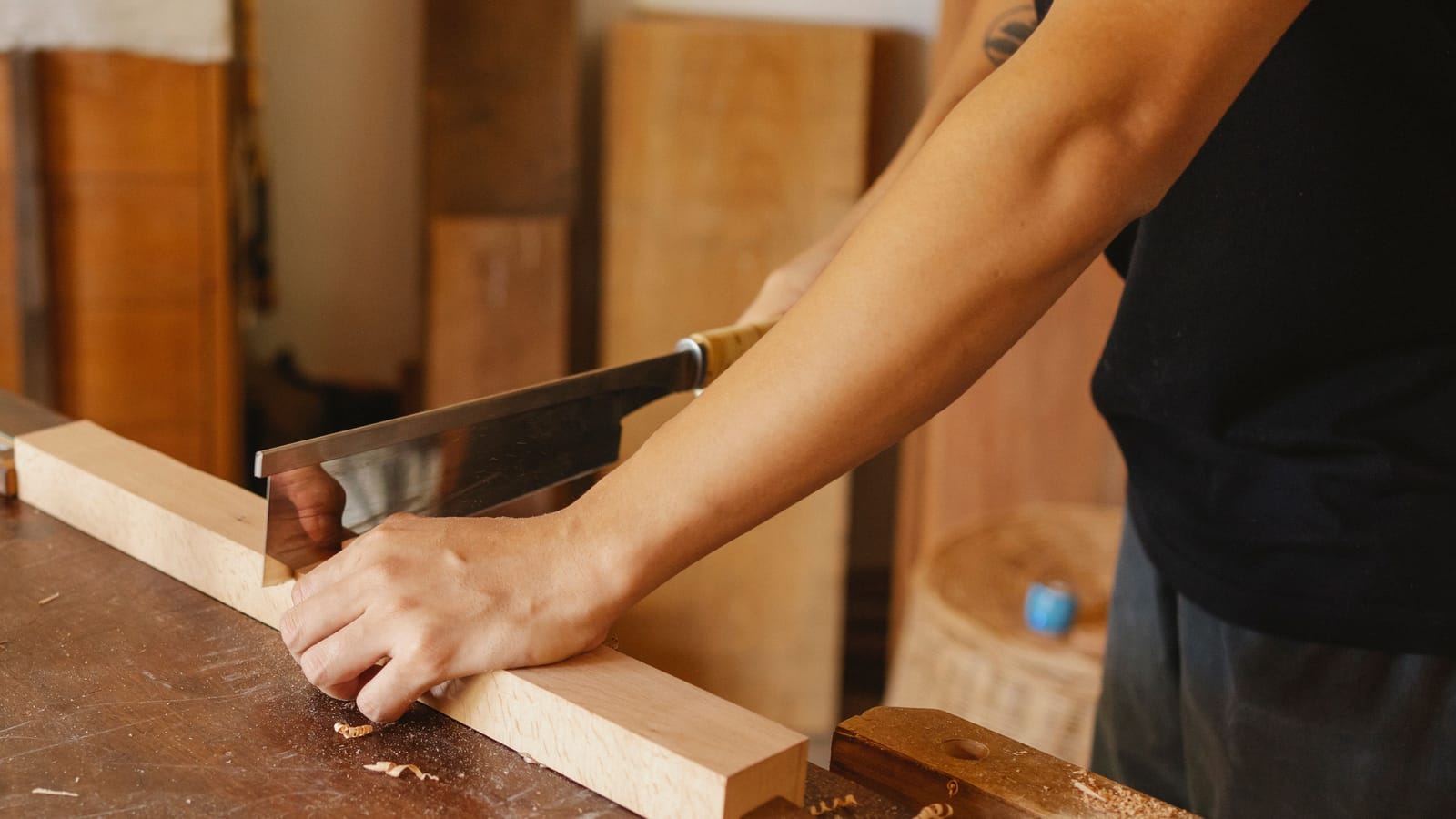
The test for a good hands-on hobby is simple. At the end of a session, is there an object on the bench that wasn't there when you sat down?
Not progress. Not a lap time. An object. A loaf, a sharpened knife, a joint that fits, a fly in the vise, a carburetor that's clean when it was filthy. Something you can pick up and hand to somebody.
That's the whole mechanism. Most of what you do in a week doesn't finish. Email doesn't finish. Parenting doesn't finish. The lawn finishes for about four days. A small made thing gives your brain the one signal it almost never gets on a Wednesday, which is done. And it does it with your hands, in silence, without a screen brokering the whole experience.
You don't need a workshop. You need about ninety minutes, once or twice a week, and a set of choices that don't sabotage you before you start.
Ninety minutes, and you can stop mid-sentence
The hobbies that survive have short sessions and cheap interruptions.
Ninety minutes is roughly what you'll actually get after dinner, after the kids are down, on a Saturday morning before the day gets claimed. Anything that needs a four-hour block will get done twice and then never again, because four-hour blocks don't exist in a normal life.
Just as important: you have to be able to walk away at minute forty. If somebody calls down the stairs and your project is ruined by stopping, that hobby will lose. Epoxy on a clock, glue-ups under pressure, anything with a curing window. Great once you're established. Terrible as the thing you're trying to make a habit.
Look for work that stacks. Sharpening stops fine. Carving stops fine. Bread has waiting built into it. Bike wrenching stops fine as long as you're not riding it tomorrow. Leatherwork stops fine. Building a model stops fine and then some.
The setup tax is what actually kills it
Nobody quits because they lost interest. They quit because it takes twenty-two minutes to get started and eighteen to put away, and a ninety-minute session becomes fifty minutes of real work.
So solve storage first, before you buy a single tool.
The standard that works: everything lives in one container or on one surface, and getting going takes under five minutes. A plastic tub with a lid. A shelf in the garage at chest height. A hinged board that folds down against the wall. If you have to move the car, clear the dining table, and find the extension cord, you'll do it three times.
If you live in an apartment, this narrows your options and that's fine. Sharpening, leather, fly tying, carving, model building, bread, small electronics repair — all of it happens on a square yard of table with a mat down. Dust and noise are the two things that get you evicted from your own house. Pick around them.
Choose one, then stop looking
The browsing phase is the trap. You can spend a month comparing hobbies and feel like you've started one. You haven't.
Some that reliably work for people with jobs and families:
- Hand-tool woodworking. Not the table-saw version. A saw, a couple of chisels, a plane, a mallet. Quiet, small footprint, endless depth.
- Sharpening. Knives, chisels, axes, lawnmower blades. Cheap entry, immediate feedback, and everyone you know will suddenly want to be your friend in January.
- Bread and fermentation. Feeds people. Built-in waiting. Your kids can be in the room.
- Fly tying. Fits in a drawer. Silent. Pairs with an outdoor thing you already do or want to.
- Bicycle mechanics. Start with your own bike. Cables, brakes, drivetrain. Saves real money and gets you riding more.
- Small engine repair. Mowers and string trimmers get thrown away over a ten-dollar part. Pick them up free, fix them, give them away.
- Leatherwork. Belts, sheaths, dog collars. Hand-stitched work looks impressive out of proportion to its difficulty.
- Garden beds. Seasonal, physical, and the kind of thing a five-year-old can genuinely help with.
Pick the one that made something twitch when you read it. That's the pick. There's no wrong answer here, because the skill transfers — patience, tolerance for a bad first attempt, knowing when a tool is dull.
Buy the small kit, not the wall
The instinct is to buy the full setup so you're not limited. Resist it, hard.
Buy the minimum to complete one specific project. Then buy the next tool only when a project actually stops because you don't have it. This does two things. It keeps the money small while you're finding out whether you like it. And it means every tool you own has a story about the day you needed it, which is a better collection than a wall of things bought in one click.
The one place to spend up front is the thing that touches the work. A sharp blade, a decent needle, a pan that heats evenly. Cheap tools at the point of contact make you think you're bad at the craft. You aren't. The tool is.
Used is usually the right call for anything with a cast body and no electronics. Old hand tools were made well and people give them away.
Your first project should be slightly embarrassing
Three sessions. Finishable. Something you'd be mildly reluctant to show a professional.
A cutting board. A simple box with nailed corners. A knife brought back from ruined to usable. One loaf, not a sourdough program. The point is to complete the whole arc — start, mess up, recover, finish — at small scale, so you learn what the arc feels like.
The mistake is choosing a project you actually want. The dining table, the guitar, the canoe. You'll get 30 percent in, hit a step you don't have the skill for, and the half-built thing will sit in the garage radiating guilt for a year. That's not a lack of discipline. That's a scoping error.
Also: pick one teacher. One book, one instructor, one series, and go through their beginner sequence in order before you start cross-referencing. Five sources disagreeing about grit progression will keep you off the stone for a month.
What it does to the other six days
Your hands get tired in a way that makes you sleep. That alone is worth it.
But the bigger change is quieter. You start noticing how things are made — the joint on a park bench, the stitching on a bag, why one door closes softly and another bangs. You become slightly harder to sell junk to. You get a subject to talk about that isn't work and isn't the news, which is worth more than it sounds when you're forty and your conversation has narrowed.
And you get a door to stand in. Kids drift toward a parent doing something with their hands in a way they never drift toward a parent on a laptop. They'll want to hold the mallet. Let them. Give them their own scrap and a real tool that's too big for them, and stay close.
The shelf in my hallway is out of square by a sixteenth at the left end. I built it badly, eight years ago, in about four evenings. Nobody who's stood under it has ever noticed.
I notice every single time I walk past, and I've never once wanted to replace it.
Marcus Vale
Editor-in-Chief
Twenty years in magazines, most of it deciding what to cut. Writes about work, discipline and the decisions that compound.

Watch
Watch how it's done
Picked for this article.
From channels we rate. Plays on YouTube.
Steve Ramsey - Woodworking for Mere Mortals
How to make a basic box. And why you need to know how | Woodworking BASICS | Power Tools
Rex Krueger
Getting Started with Hand Saws // Total beginner, hand tool woodworking.
Read next