A Tarp, a Hundred Feet of Paracord and Three Knots
It won't replace a real shelter, but it'll keep your people and your gear dry the night the roof opens up. Learn it in the backyard first.
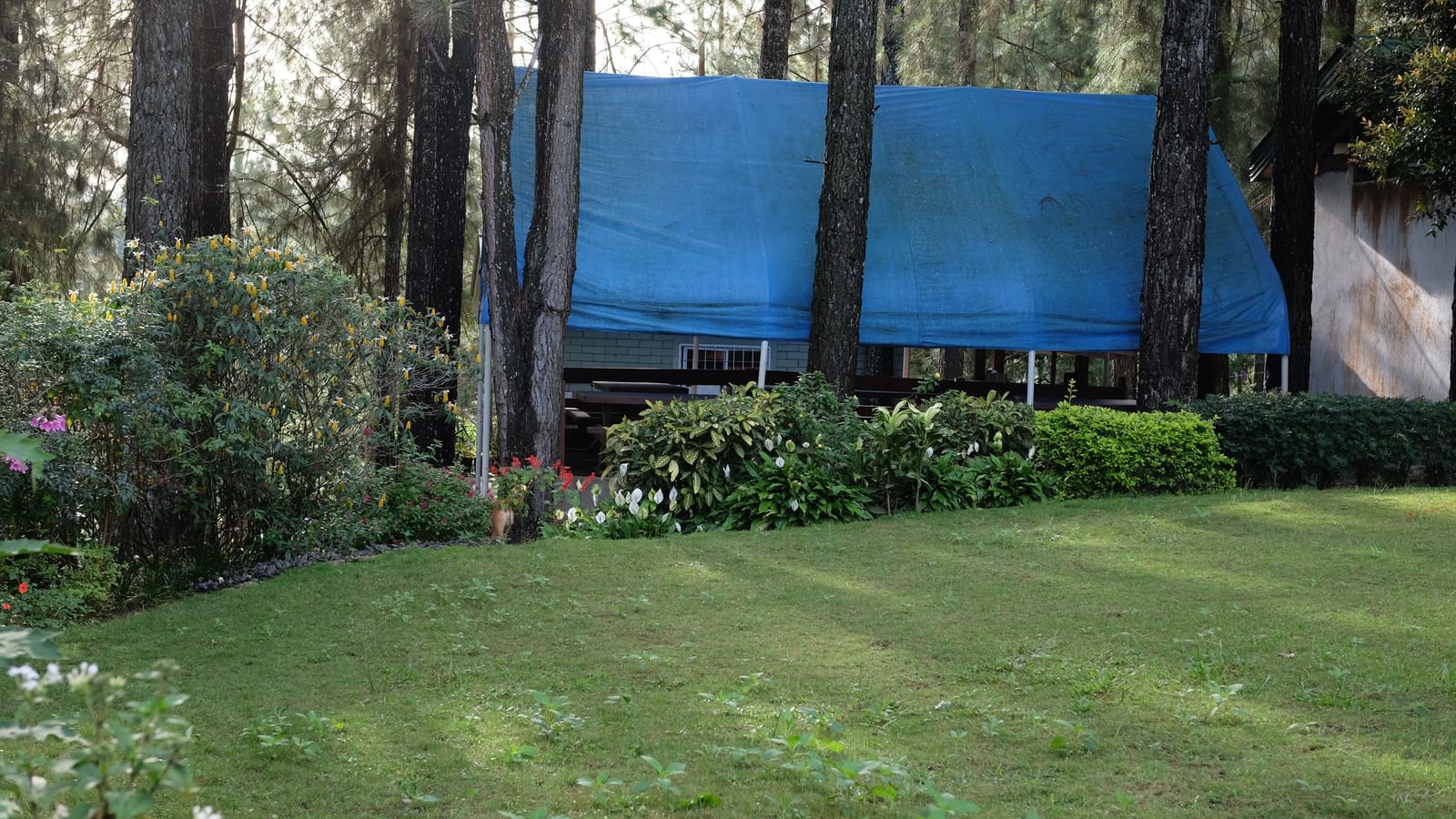
A 10x12 poly tarp, 100 feet of 550 paracord, eight steel stakes and a decent knife will run you somewhere around fifty to seventy dollars at any hardware store. That kit fits in a five-gallon bucket with the lid on. It's the cheapest useful thing in my garage, and the only reason it works is that I've put it up in the dark, in the rain, with cold hands, before I ever needed it.
That's the whole trick. The gear is easy. The practice is the part people skip.
A tarp isn't a house
Say this out loud before you buy anything: a tarp shelter isn't where you ride out a hurricane, a tornado or a hard freeze. Ready.gov and your county emergency management office will tell you the same thing, and they're right. When officials call an evacuation, you go. When the sirens sound, you get to an interior room on the lowest floor or a designated public shelter.
What a tarp is actually for, the day after: covering the hole where wind peeled shingles off the north side. Keeping rain off your tools and your generator fuel while you cut up the oak that came down across the driveway. Shade over a work area when the power's out and it's 96 degrees. A dry place for the kids and the dog to sit while you deal with the mess.
One hard rule while we're here. Never put a running generator, a camp stove, a charcoal grill or a propane heater under a tarp, even an open-sided one. Carbon monoxide pools where air doesn't move, and it kills people every single storm season. Generators go outside, well away from the house, windows and doors, with nothing over them but sky.
Buy the right tarp and the right cord
Tarp. A blue poly tarp is cheap, tough against abrasion and heavy enough to hold a shape in wind. A silnylon camping tarp is lighter, packs smaller and costs three or four times as much. For household emergencies, buy the poly. Get grommets along the whole hem, not just the corners, and check that the corners are reinforced. A 10x12 covers a two-person A-frame with room to spare or makes a generous lean-to. A 12x16 is better over a roof patch and heavier to wrestle alone.
Cord. Real 550 paracord, seven inner strands, not the bargain bin stuff that's basically shoelace. Buy 100 feet and don't cut it into pieces until you've used it a few times and know what lengths you actually want. Coil it, don't wad it.
Stakes. The six-inch plastic ones that come with tents bend the first time they hit clay. Buy steel or aluminum shepherd's hooks, nine or ten inches. Six stakes is thin, ten is comfortable.
Throw in a headlamp, work gloves and two carabiners. The carabiners aren't necessary. They're just fast, and at 2 a.m. fast counts.
Three knots, and that's it
Learn these on the couch with a piece of cord and a chair leg. Twenty minutes, one evening.
Bowline. A fixed loop that won't slip and still unties after it's been loaded hard. Make a small loop in the standing line, bring the working end up through it, around behind the standing line, back down through the loop. That's your anchor around a tree.
Trucker's hitch. Your tensioner. Tie a slipped overhand knot in the line to make a loop a few feet back from the anchor, run the working end around the anchor and back through that loop, then pull. You get roughly a three-to-one purchase, which is enough to make a ridgeline hum. Lock it off with two half hitches.
Taut-line hitch. An adjustable loop for guy lines. Two wraps around the standing part inside the loop, one more outside, snug it down. Slide it to add tension, and it grips when loaded. Paracord stretches when it's wet, so you'll be sliding these at midnight. That's normal.
If you want a fourth, learn the prusik so you can slide tarp attachment points along the ridgeline without untying anything.
Pitch it so water leaves
Run the ridgeline between two trees at chest height for a sleeping A-frame, or head height for a work shelter. Bowline on one end, trucker's hitch on the other. Tight. A sagging ridgeline guarantees a sagging tarp, and a sagging tarp collects water. Water weighs about 8.3 pounds per gallon. A puddle the size of a dinner plate will rip a grommet clean out by morning.
Steep beats roomy. A shallow pitch looks like more space and sheds rain like a dinner plate.
Tie a short length of cord around the ridgeline just outside each end of the tarp. Rain runs down that line, hits the knot, and drips on the ground instead of tracking inside. Two pieces of string, thirty seconds, and it's the difference between a dry night and a damp one.
Stake your guy lines out at about 45 degrees from the tarp edge, and drive the stakes at 45 degrees leaning away from the pull. Straight-up stakes walk out of wet ground.
If you tear out a grommet or need a tie-off where there isn't one, wrap a small smooth rock or an acorn in the tarp fabric from underneath and cinch a loop of cord behind it. That's a button, and it'll hold better than the grommet did.
Pick the spot before you pick the shape
Look up first. Dead limbs come down in wind, and they're called widowmakers for a reason. Check the trees you're tying to as hard as you check the ground under them.
Don't pitch in a low spot, a swale or anything resembling a dry creek bed. Water goes there. That's what makes it low.
Find the wind, then put your back to it. A lean-to with the open face downwind is warm and workable. The same lean-to turned around is a sail. If the wind's swirling or you just want maximum protection, go A-frame with both sides staked low. If you've only got one tree, try a plow point: stake one corner high on the trunk and pull the other three corners down and out. It's ugly and it's fast.
No trees at all? Two closet dowels, a pair of paddles or a broom handle and a shovel will work as poles if you guy them out in opposite directions. Or run your ridgeline from the truck's roof rack to two stakes and use the vehicle as one wall.
The ground steals more heat than the air
If anybody's going to sit or sleep under the thing, put something between them and the dirt. A closed-cell foam pad, a second tarp, flattened cardboard, a pile of dry leaves. Cold ground pulls heat out of a body faster than cold air does, and a perfect tarp over a bare wet lawn is still a miserable night.
Leave one end open for airflow. Sealed up tight, you'll wake up under a fine mist of your own breath condensed on the underside.
Put it up in the yard on a Saturday
Pick a windy afternoon, not a calm one. Hand the mallet to your ten-year-old and let him set stakes while you run the ridgeline. Time it. First attempt might take 25 minutes and look like laundry. Third attempt should be under ten and drum-tight.
Then take it down, coil the cord properly, and put the bucket back on the shelf where anyone in the house can find it without you.
Nobody grades your knots the night the oak comes through the garage roof. They just notice whether everything underneath stayed dry.
Wes Dunbar
Country & Skills
Grew up on an acreage and never quite left. Covers trucks, trades, land, and how to do the thing yourself.

Watch
Watch how it's done
Picked for this article.
From channels we rate. Plays on YouTube.
Jason's Knot Channel
3 Essential KNOTS for EASY Ridgelines & Tarps | Camping Knots
The Prepared
How to Tie Truckers Hitch Survival Knots — Tarp Shelter
Read next