

Pan-Seared Salmon With Lemon Butter Sauce in Thirty Minutes
Crisp skin, a center that flakes clean, and a pan sauce made in the same skillet. Dinner's on the table in 25 minutes, and it costs less than takeout.
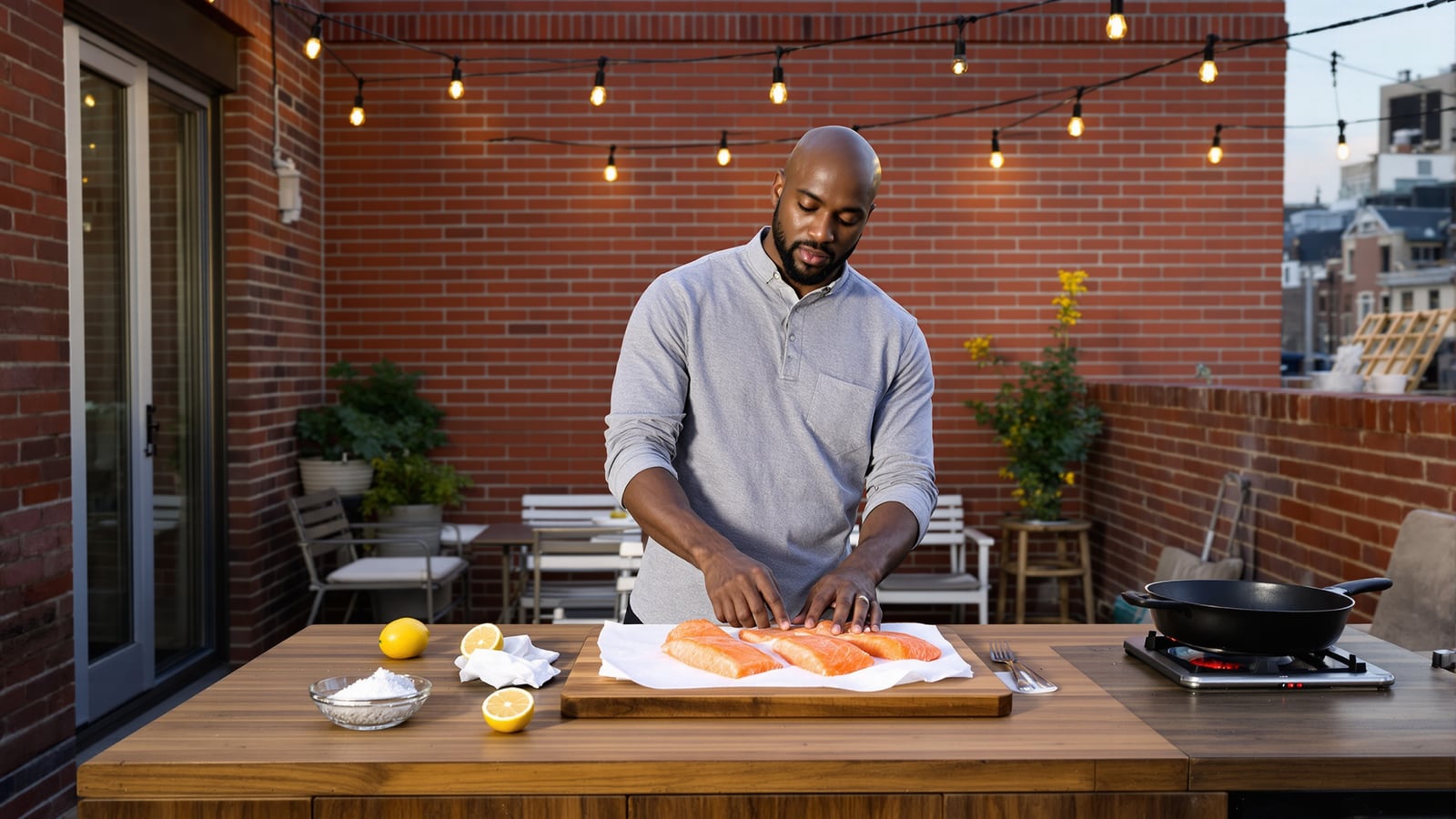
Quick answer: Dry the fish, get the pan hot, and leave the salmon alone for five minutes. Then build the sauce in the same skillet while the fish rests.
Most people ruin salmon by fiddling with it. They nudge it, peek at it, flip it early, and the skin stays behind on the pan. This recipe is mostly about keeping your hands off.
Servings: 4 Prep time: 10 minutes Cook time: 15 minutes Total time: 25 minutes
What you need
For the salmon:
- 4 skin-on salmon fillets, about 6 ounces each (1½ pounds total)
- ¾ teaspoon kosher salt
- ½ teaspoon black pepper
- 1 tablespoon avocado oil or any high-heat oil
For the lemon butter sauce:
- 2 cloves garlic, minced
- ¼ cup low-sodium chicken broth (water works if that's what you've got)
- 2 tablespoons fresh lemon juice (about 1 lemon)
- 1 teaspoon lemon zest
- 4 tablespoons cold unsalted butter, cut into 4 pieces
- ¼ teaspoon kosher salt
- 1 tablespoon chopped fresh parsley
- Lemon wedges, for serving
Use a 12-inch skillet. Stainless or cast iron gives the best crust. Nonstick works too, with a little less browning.
Get the fish ready
Pull the salmon from the fridge when you start. Fifteen minutes on the counter takes the chill off the center, so it cooks evenly.
Pat every side with paper towels. Then pat it again. Moisture is the enemy here. A wet fillet steams, and steamed skin is rubbery and clingy. Season both sides with the ¾ teaspoon salt and the pepper.
Zest and juice the lemon now, and mince the garlic. Once the fish is in the pan, you won't have time.
Cook it
- Set the skillet over medium-high heat for 2 minutes. Add the oil. When it shimmers and flows like water, it's ready.
- Lay the fillets skin-side down, placing each one away from you so the oil doesn't splash back. Press down on each with a spatula for 10 seconds. The skin curls up when it hits heat, and this keeps it flat.
- Cook without moving them for 5 to 6 minutes for fillets about an inch thick. Watch the side of the fish. The opaque, lighter color should climb about two-thirds of the way up. The skin should be deep golden and release when you nudge the spatula underneath. If it resists, give it another 30 seconds.
- Flip and cook 2 to 4 minutes more. Check with an instant-read thermometer in the thickest part.
- Move the fillets to a plate, skin-side up so the crust stays crisp.
On doneness: The USDA safe internal temperature for fish is 145°F, and that's where a fork flakes the fish easily all the way through. Plenty of home cooks pull salmon at 125°F to 130°F for a silkier, more tender center. That's your call for healthy adults. If you're feeding small children, someone pregnant, or older folks, go to 145°F.
Build the sauce
- Pour off all but a thin film of fat from the pan. Salmon gives up more than you'd think. Drop the heat to medium-low.
- Add the garlic and stir for 30 seconds, until fragrant but not browned.
- Pour in the broth and scrape up the browned bits with a wooden spoon. Those bits are the flavor. Simmer about 1 minute, until the liquid reduces by half.
- Add the lemon juice and take the pan off the heat.
- Whisk in the cold butter one piece at a time, waiting until each one melts before adding the next. The sauce turns glossy and slightly thick.
- Stir in the zest, ¼ teaspoon salt and parsley. Taste it. If it's flat, a few more drops of lemon fixes it.
Spoon the sauce over the fish and serve with lemon wedges.
What usually goes wrong
The skin sticks. Three causes: the fish was wet, the pan wasn't hot enough, or you tried to flip it too soon. Skin that's ready lets go on its own.
White goo seeps out the sides. That's albumin, a protein that squeezes out when the fish cooks too fast or too long. It's harmless but ugly. Lower the heat a notch next time and pull the fish a minute sooner.
The sauce looks greasy and split. The pan was too hot when the butter went in, or the butter was warm. Take it off the heat, add a tablespoon of cold water, and whisk hard. It usually comes back together.
The kitchen smells like a fish market. Good salmon smells like clean water. If it smells strongly fishy at the counter, don't cook it.
You crowded the pan. Four fillets in a 12-inch skillet is the limit. Using a smaller pan means you cook two at a time, so keep the first pair warm in a 200°F oven.
Make ahead, store, swap
The sauce can be made 20 minutes ahead. Leave it in the pan off the heat and whisk it before serving. Don't reheat it hard, or it breaks. The salmon itself is best straight from the skillet.
Leftover salmon goes in the fridge within two hours and keeps three days. Skip the microwave, which turns it dry and loud. Warm it in a 275°F oven for 10 to 15 minutes, or flake it cold over a salad or into a rice bowl. The sauce doesn't store well, so don't plan on it.
Frozen fillets are a smart budget move. Buy a bag, thaw what you need overnight in the fridge, and pat them extra dry, since thawed fish carries more water.
Swaps that work:
- Skinless fillets: Sear the first side 4 minutes instead of 5 to 6.
- Other fish: Arctic char or ocean trout cook the same way. Thicker cuts of steelhead need an extra minute or two.
- Butter: Ghee works for the oil in the pan. Keep real butter for the sauce.
- Bigger flavor: Add 1 tablespoon of capers or 1 teaspoon of Dijon mustard with the lemon juice.
- Citrus: Lime makes a good sauce, especially with rice.
For sides, rice and green beans are the obvious pair. The beans from the lemon garlic skillet chicken take the same lemon and don't need a second pan. If you want another fast fish night later in the week, the shrimp tacos with lime slaw take twenty minutes. And if you want more ideas after that, our sister site delicious.com has thousands more recipes.
Skin that crackles, a sauce you made in the pan you already dirtied, and a dinner that took less time than the drive to pick up food. Not bad for a guy who just kept his hands to himself.
Wes Dunbar
Country & Skills
Grew up on an acreage and never quite left. Covers trucks, trades, land, and how to do the thing yourself.

Watch
Worth an hour of your evening
More from Recipes.
From channels we rate. Plays on YouTube.
Read next