

Have the car conversation with yourself before the family does
Decide how you'll check your own driving, what your limits are, and who gets the final say. Then nobody has to corner you at the kitchen table.
Quick answer: Don't wait for someone else to raise it. Book an eye exam, ask your pharmacist about your medications, and consider an independent driving evaluation. Then tell your family the plan and the date you'll review it.
Your daughter has probably already rehearsed this. Maybe your son has too. It started with a scraped mirror or a story about you missing an exit on a road you've driven for thirty years. Now there's a phone call between siblings, and the word "worried" is getting a workout.
You can leave that conversation to them, and it will go badly. Or you can have it first, with yourself, and walk in with answers.
Why you go first
Once the family starts the argument, it's about control. You defend your independence, they defend your safety, and everybody says things they don't mean. Nobody wins, and the keys become a symbol instead of a tool.
When you go first, you're a capable adult reviewing a piece of equipment you depend on. You'd check the brakes on the truck. Check the driver the same way.
The same goes if you're the one worried about your husband or wife. Skip to the section on talking to a spouse. But read the next part too, because you may be doing the checking for both of you.
Look for patterns, not incidents
Everybody has dinged a bumper in a parking lot. One bad afternoon proves nothing. A pattern does.
Ask yourself honestly:
- Are there new scrapes or dents on the car, and can you explain every one?
- Do familiar roads feel confusing, or do you rely on the GPS for trips you used to do blind?
- Do left turns across traffic make you tense, or do you avoid them?
- Does night driving bother you, with glare from headlights or trouble reading signs?
- Do other drivers honk at you more than they used to?
- Do passengers grip the door handle or go quiet?
That last one matters most. Ask someone you trust to ride along and tell you the truth. Pick the person who won't flatter you and won't panic. Then ask a specific question: "Where did I make you nervous?"
Take the answer without arguing. You asked for it.
Three appointments worth making
The eye doctor. Cataracts, glare and a narrowing field of vision creep up slowly, and you adjust without noticing. A routine exam catches what you've stopped noticing. Many cataract fixes are routine, and plenty of people drive better afterward.
Your pharmacist. Bring every bottle, including the sleep aid and the allergy pill you pick up at the drugstore. Ask one question: "Does anything here affect driving?" Some medicines cause drowsiness or slow your reaction time, and the effect can stack when you take several. It's a ten-minute conversation and it costs nothing.
Your doctor. Mention the driving. Stiff joints, numb feet, poor sleep and changes in memory can all affect it, and some have treatments. Try this one at home too: sit in the driver's seat and turn your head to check the blind spot. If your neck or hips won't let you do it, that's worth fixing. What actually keeps knees and hips going past seventy covers the mobility side.
Consider a neutral referee
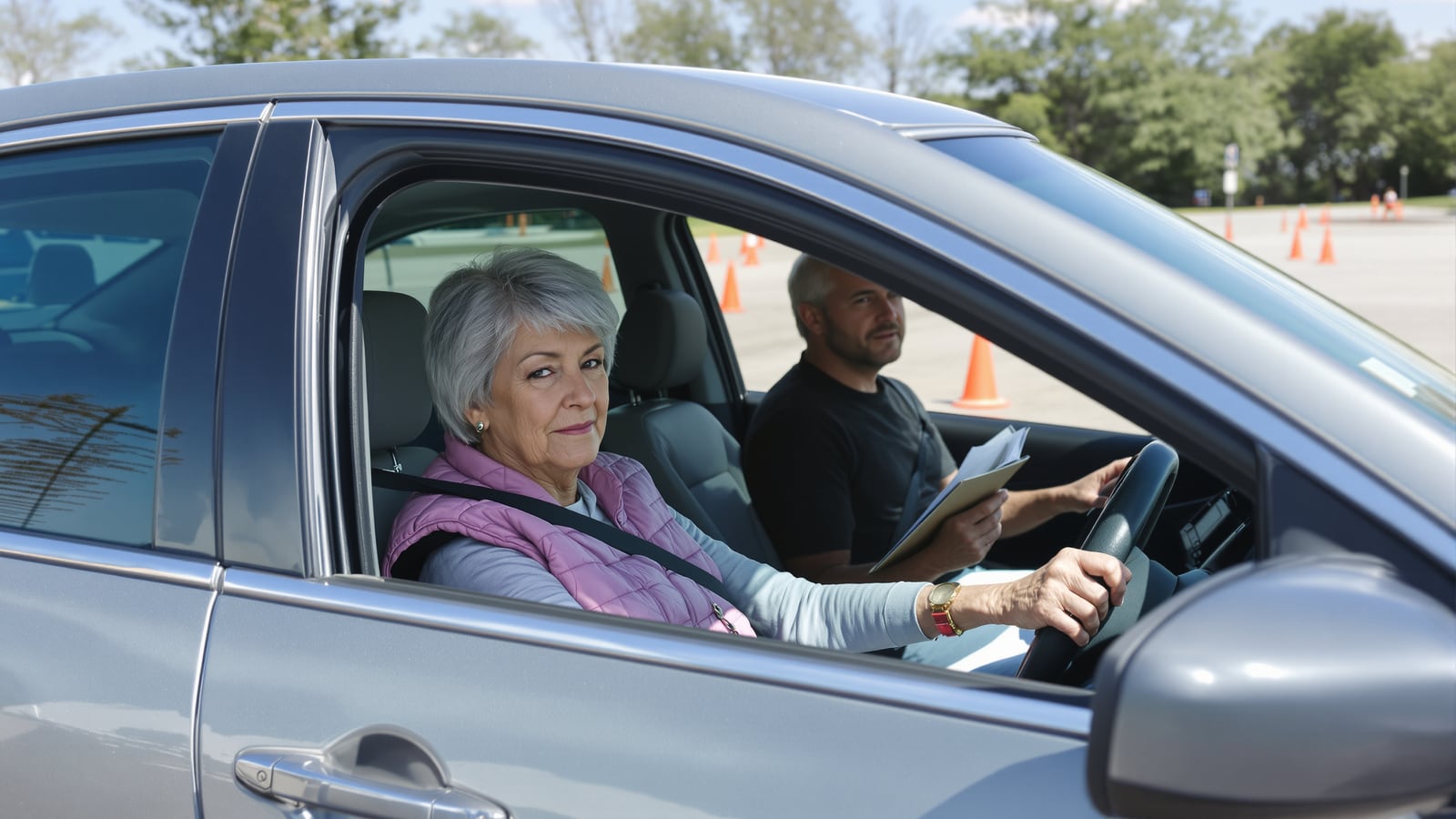
If you want a real answer rather than a family opinion, ask your doctor about a driving evaluation. These are done by occupational therapists who specialize in driver rehabilitation. They test vision, reaction time and judgment, then put you behind the wheel with an instructor.
The result belongs to you. It isn't a vote among relatives. If it says you're fine, you've got a clean bill of health to show the family. If it finds a weakness, it often comes with a fix, such as a mirror adjustment, a different seat position or a few lessons.
Ask what it costs and whether your plan covers it before you book. Prices vary and I won't guess at yours.
A refresher course for older drivers is a lighter option. Many insurers offer a discount for finishing an approved one, so ask your agent.
Narrow before you stop
Most people don't go from driving everywhere to driving nowhere. There's a middle, and you set it.
Maybe you drop night driving. Maybe you skip the interstate and rush hour. Maybe you keep the daylight runs to the pharmacy, the grocery store and your grandkids' school, and let someone else drive to the airport.
Say your limits out loud and keep them. It's the same discipline as keeping a firm budget. A rule you set yourself is easy to follow, and one handed down by your children isn't.
Do the math on the car
A car costs more than gas. Add insurance, registration, repairs, tires and the value it loses every year. Divide the total by the number of trips you actually take.
Then price the alternative: rideshares, taxis, a neighbor you pay for gas and lunch. For many people who drive a few times a week, the second number is lower than they expected. That's money you keep, and you don't have to think of it as giving anything up. If you're planning a spending order for your savings, How to draw down your savings without running out shows where a freed-up car budget fits.
For rides in your own area, the Eldercare Locator can point you to local transportation programs: 1-800-677-1116 or eldercare.acl.gov.
If it's your spouse's driving
Don't ambush them at a family dinner. Raise it privately, calmly, and about something specific you saw: "I noticed we drifted over the line on the way home. Did you feel that?"
Ask a question before you make a statement. Offer to ride along more, or to drive at night. Suggest the eye exam and the pharmacist visit for both of you, so it isn't an accusation. You're not their boss, and they're not a child. But you also shouldn't stay silent when you're in the passenger seat and scared.
If a conversation goes nowhere, the evaluation is the next step, and the doctor can order it. It takes the verdict out of your marriage.
Tell the family the plan
Once you've done the checks, call your kids. Tell them what you found, what you've changed and when you'll look at it again. Six months is a reasonable interval, or after any health change.
Also decide who you trust to tell you if it's time. Name that person while you're thinking clearly, and tell them they have your permission. Pair it with your paperwork: Your will and power of attorney, done in one afternoon is a good time to write down who speaks for you.
And if an evaluation or your doctor says it's time to stop, stop. Being independent also means keeping your word to yourself and to whoever rides with you.
When the car goes, whether it's sold or handed to a grandchild, do it the old way. Wash it, fill the tank and hand over the service records.
The keys are yours until you decide otherwise. The point of this conversation is to make sure the decision, when it comes, is yours too.
This is general information, not medical, financial or legal advice. For questions about your health or medications, ask your doctor or pharmacist, and for planning documents, an elder-law attorney.
Marcus Vale
Editor-in-Chief
Twenty years in magazines, most of it deciding what to cut. Writes about work, discipline and the decisions that compound.

Watch
Worth an hour of your evening
More from BRO Seniors.
From channels we rate. Plays on YouTube.
Read next