
Just Got Scammed? Call Your Bank Before Anyone Else
Money moves in minutes and reports can wait until after lunch. The first hour after a scam, step by step, with the right numbers in the right order.
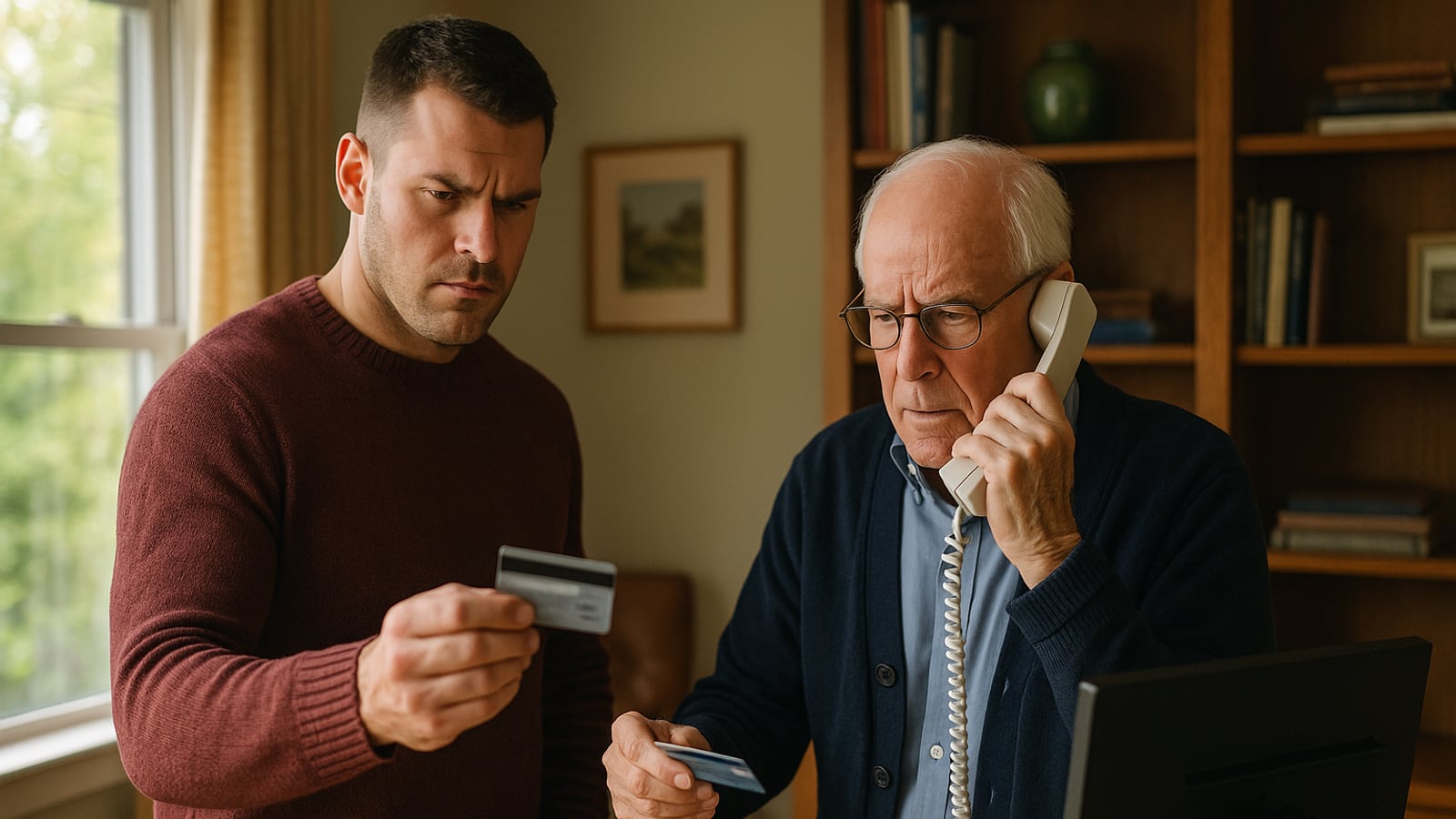
Quick answer: Call your bank or card company first, using the number printed on your card, before you report it anywhere. The money can still be stopped for a short while. The paperwork will keep until this afternoon.
Most scam advice is written for before. This is for after. Maybe the "grandson" who called crying from a jail turned out to be sitting in his dorm. Maybe the pop-up that said your computer was infected had you on the phone with "Microsoft" for forty minutes. Either way, you've just figured it out, and your stomach has dropped to your shoes.
Take one breath. Then work in the right order, because the order is what saves money.
Hang up and cut the line
If they're still on the phone, end the call. Don't argue. Don't let them know you've caught on. Just hang up, and don't answer if they call back.
If you let anyone into your computer or phone remotely, turn off the Wi-Fi or pull the internet cable, then shut the machine down. Don't log into your bank on that device again until someone you trust has checked it.
If someone's scheduled to come by and pick up cash, gold or a package, call the police and don't open the door. Couriers who collect cash at the door are one of the ways these crews operate now.
Call the money people, in this order
- Your bank or credit union. Use the number on the back of your card or on a paper statement. Never a number the scammer gave you, and never one from a text or email. Say the word "fraud" in your first sentence. Ask them to stop any pending transfers and flag the account. If you sent a wire, ask them to request a recall right now. Wires can sometimes be pulled back within hours. After a few days, almost never.
- Your credit card company, if you paid by credit card. This is the best way to have paid, because credit cards give you a strong right to dispute a charge. Call the number on the card and dispute it today.
- The gift card company, if you bought gift cards. Call the number on the back of the card or on the retailer's website. Have the card numbers and receipts in front of you. If the scammer hasn't spent the balance yet, it can sometimes be frozen. Keep the cards and receipts no matter what.
- Your payment app, if you used Zelle, Venmo or Cash App. Report it inside the app, and tell your bank too.
Now the honest part. If you sent the money yourself, even because you were lied to, your bank may not be required to refund it. Federal rules protect charges you never authorized much better than transfers you approved. Ask anyway. Be polite, be persistent, and ask for a supervisor if the first answer is no. Banks do sometimes make customers whole, especially long-time ones.
For debit cards, speed matters in a very specific way. Federal rules limit what you owe for unauthorized debit charges, and that limit is smallest when you report within two business days.
If you paid in cryptocurrency or at a Bitcoin ATM, getting it back is rare. Report it anyway. Those reports are how investigators trace where the money went.
Lock the doors they may still have keys to
Change your email password first, and do it from a different phone or computer than the one that was involved. Your email is the master key. Every "forgot my password" link for every other account lands there. After email, change your bank passwords, then anything else that used the same password.
Next, freeze your credit at each of the three national credit bureaus: Equifax, Experian and TransUnion. It's free by federal law and takes a few minutes per bureau online. A freeze stops anyone from opening a new credit card or loan in your name. You can lift it for a day when you need to apply for something yourself.
If you gave out your Social Security number, call Social Security at 1-800-772-1213 (TTY 1-800-325-0778) or go to SSA.gov. Sign in to your account and check that your payments still go to your bank, not a new one. Our piece on how to read your Social Security statement backward walks through the account pages if you haven't opened them in a while.
If you gave out your Medicare number, call 1-800-MEDICARE (1-800-633-4227). Then read every Medicare Summary Notice for the next few months and look for services you never received.
Write it down before it fades
Get a notepad and sit at the kitchen table. Write the time of the call, the phone number that showed up, the name they used, every amount, how you paid, and any card or confirmation numbers. Screenshot the texts. Don't delete a single message, even the ones that make you wince.
By tonight the details will be foggy. Every person you call next will ask for them.
Report it, this afternoon
Once the money calls are done, make the reports. None of these will wire your money back tomorrow. They do build the cases that shut these operations down, and a report number helps when you're disputing charges.
- National Elder Fraud Hotline (U.S. Department of Justice): 1-833-FRAUD-11 (1-833-372-8311). If you're sixty or over, start here. A case manager helps you work out where else to report and how.
- FTC: ReportFraud.ftc.gov or 1-877-382-4357.
- FBI: ic3.gov, for anything that happened online. There's no phone line, just the website.
- Your local police. Ask for a report number and keep it with your notes.
- AARP Fraud Watch Network Helpline: 877-908-3360. Trained volunteers who'll talk it through with you, whether or not you're a member.
Expect the second call
Within days or weeks, someone may call offering to get your money back. They'll say they're a government office, a lawyer, or a "recovery firm." There's a fee, of course.
That's the same crew, or friends of theirs, working from a list of people who've already paid once. No real agency charges you to recover stolen money. Hang up exactly the way you did the first time.
This is also the week to set up a few defenses. Our piece on why the best family code word is a wrong answer is worth ten minutes, especially if the scam involved a voice that sounded like family.
The part nobody wants to say out loud
It's embarrassing. That feeling is real, and it hits hardest for the capable ones: the retired bookkeeper, the former deputy, the grandmother who ran a school office for thirty years. You think you should have known.
Scammers are professionals. They work from scripts, all day, every day, and they're very good at pressure. They count on you staying quiet, because people who stay quiet don't call the bank in time.
So tell one person today. Your daughter, your brother, the neighbor you trust with a spare key. Getting fooled doesn't make you a fool. Hiding it's what costs people the second round.
And if the loss has left you feeling hopeless, you can call or text 988 and talk to someone. That's a strong call to make, not a weak one.
The scammer had one good hour. Make sure it's the only one they get.
This is general information, not financial or legal advice. For your own situation, talk with your bank, an elder-law attorney or a fee-only fiduciary adviser.
This is general information to help you think things through, not medical, legal or financial advice. Please check with your doctor, pharmacist or a qualified adviser before making a change.
Ray Okonkwo
Money & Business
Former commercial banker turned small-business owner. Covers salary, credit, margins and the arithmetic nobody does before signing.

Watch
Watch how it's done
Picked for this article.
From channels we rate. Plays on YouTube.
WKRG
I've Been Scammed! What Do I Do Now?
SeniorLiving.Org
Scammed? How To Get Your Scammed Money Back
Read next