

Sump pump work pays in April and goes quiet by August
Basement water work is a real spring side hustle, but only the small slice of it. Here are the hours, costs and risks nobody quotes you.
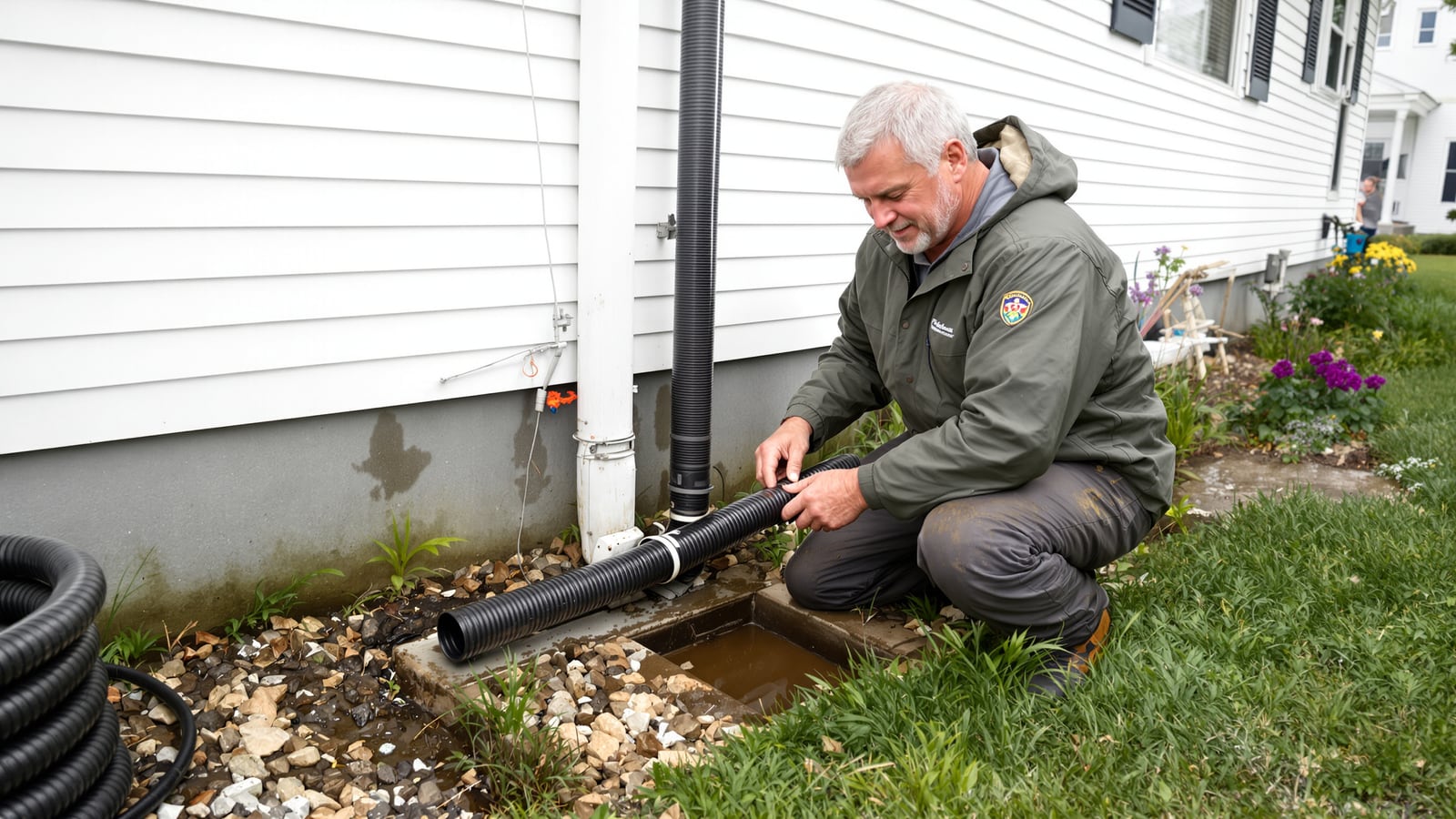
Quick answer: The side-hustle-sized part of this trade is sump pump swaps, battery backups and fixing the water problem outside the house. Interior drain tile and foundation excavation belong to licensed, insured contractors, and a weekend guy who tries them is one wet basement away from a lawsuit.
Never use the word "waterproofing"
A homeowner who hires a "waterproofing guy" hears one promise: the basement will never be wet again. You can't keep that promise. Groundwater doesn't read contracts.
So don't sell it. Sell water management. You're swapping a failing pump, adding a backup, pointing downspouts away from the foundation, fixing a window well. Put in writing exactly what you did and say plainly that you can't guarantee a dry basement. A good customer respects that. A bad one tells you who not to work for.
This is the mistake that ends these businesses. It's rarely the work. It's the sentence you said at the kitchen table before the work.
What you can actually sell
Start with the jobs that take hours, not days.
- Pump replacement. An old pit pump dies, usually on the one night it matters. Pull it, set a new one, add a fresh check valve, test it with a bucket of water. Two to four hours for someone who's done it before.
- Battery backup. A second pump that runs when the power goes out, which is exactly when storms hit. It's an easy upsell on a replacement call, and it's the product customers thank you for later.
- Downspout and grading work. Extend downspouts six to ten feet from the house. Rebuild the soil along the foundation so it slopes away. It's shovel work, and it fixes more wet basements than most people want to admit.
- Window well and gutter fixes. Clear drains, add covers, clean and re-hang gutters.
- Pit cleanouts and annual checks. Sell it as a yearly visit: clean the pit, test the float, check the discharge line. It's the closest thing in this trade to repeat income.
Leave out new pits cut through the slab, interior perimeter drains, exterior excavation and anything structural. Those jobs need a concrete saw, a crew, permits and real insurance. Crack injection and sealing can look like a weekend job, but if the wall is moving, you're not fixing a leak. You're masking a structural problem.
The numbers, with the caveat
Everything below is an illustration, not a promise. Prices vary a lot by region, so call two local plumbers and see what a pump swap runs where you live. Our handyman pricing piece walks through how to set a rate that survives the drive time.
Startup cost. If you already own a drill, a level and basic hand tools, figure $300 to $500 to start. That covers a wet/dry vac, a pipe cutter, PVC primer and cement, a spare check valve or two, a work light, tarps and buckets. You don't buy pumps ahead of time. You buy them per job.
One typical swap, illustrated. A decent 1/3 horsepower pump runs roughly $150 to $300 at a home center. Say the customer pays $550 all in.
- Pump: about $220
- Check valve, fittings, cement: about $25
- Your time: three hours on site, one more for the supply run and the drive
That leaves around $300 before insurance and taxes, for four hours. Call it $75 an hour, less than it sounds like once the rest of the bill arrives.
Monthly income. This is seasonal work. Spring thaw and heavy rain bring the calls. In a busy April you might do six jobs, call it $1,800 gross profit. In January you might do one. Over a year, a part-timer who works hard at it might land somewhere in the range of $8,000 to $10,000 before insurance and taxes. That's decent for weekend work. It isn't a salary.
Insurance and licensing
This is the part that separates a hustle from a hazard.
Licensing. Rules differ by state and often by city. Some states allow unlicensed handyman work below a dollar limit, and many treat plumbing and electrical work as licensed trades regardless. A pump swap that connects to a drain line or a new outlet can cross that line. Call your state licensing board and your local building department before you take the first job. Ask them directly. Don't guess.
Electrical. A sump pump plugs into a grounded outlet, ideally a GFCI. If the circuit needs to be added or changed, that's an electrician's job. Never work on a pump with power on, and never stand in standing water near a live cord. If a basement is flooded to the outlets, stay out and let an electrician or the utility handle the power first.
Liability insurance. Get general liability coverage before you go to work, not after the first complaint. Budget anywhere from a few hundred to a couple thousand dollars a year depending on your state and what you do. Get actual quotes. Also ask the agent plainly whether water damage claims from your work are covered, because some policies carve them out. And ask what your own homeowner's policy says about business activity. Most don't cover it.
A written agreement helps too: scope of work, price, a line saying you don't guarantee a dry basement, and a signature. Have a local attorney look over your template once.
Taxes
Once you're paid, it's self-employment income. In the U.S., that means self-employment tax of 15.3 percent on net earnings, on top of regular income tax. That surprises most first-year hustlers. Keep every receipt for pumps, parts and mileage, and set aside a share of every payment from the first one. Our piece on what to set aside for taxes on side income covers the habit. A local CPA can tell you what applies to your situation.
When it's not worth it
Skip this trade if:
- You've never set a pump and don't have a friend or a pro who'll show you one.
- You live somewhere dry, or where basements are rare. No water, no calls.
- You can't take a phone call at 6 a.m. on a stormy Saturday. Emergency calls are where the money is.
- You're planning to take structural or excavation jobs because they pay more. They do. They also bury people.
- You want steady income. This work comes in waves.
If you like the idea but not the risk, pair it with something that smooths out the year. Pressure washing runs in the warm months, so it fills the gaps. Our look at what pressure washing actually pays shows how the two seasons stack. If the calls ever outgrow your weekends, read this before you quit your job.
How to get the first five jobs
Don't advertise. Knock on the doors of people who already had water problems. Ask neighbors, relatives and your own church or club members what happened the last time it rained hard. Offer a free fifteen-minute pit check with a flashlight and a bucket of water. Most pumps that are about to fail will show it.
Show up on time, lay down a tarp, and leave the utility sink cleaner than you found it. Take a photo of the finished pit and send it with the invoice. Then ask for the next spring's check-up on the calendar.
The best water-management business isn't the one that fixes a flood. It's the one that gets a call in March, before there's anything to fix.
Ray Okonkwo
Money & Business
Former commercial banker turned small-business owner. Covers salary, credit, margins and the arithmetic nobody does before signing.

Watch
Worth an hour of your evening
More from Side Hustles.
From channels we rate. Plays on YouTube.
Read next