Cheap clothes give themselves away in four places
Fix the shoulder, the shine, the hem and the buttons, and nobody can tell what you paid. Everything else is just marketing.
A $14 shirt and an $80 shirt look identical from across a room. They stop looking identical at about six feet, and the thing that breaks the illusion is never the label. It's the shoulder seam sitting an inch out past the bone, or a sheen coming off the fabric like a rental tuxedo.
So stop shopping for value and start shopping for tells. There are four of them. Three you can fix for the price of lunch. One you can't fix at all, which is why it's the only one you have to get right in the store.
The shoulder is the one you can't buy your way out of
A tailor can take in a waist, shorten a sleeve, slim a leg, raise a hem. A tailor can't move your shoulder. Redoing a shoulder on a jacket means dismantling the whole top of the garment, and the labor costs more than most of the jackets you're looking at.
Put the jacket on and find the seam where the sleeve attaches. It should land on the outside edge of your shoulder bone, right where the flat part of your shoulder starts to turn down into your arm. If it's sitting out on your bicep, put it back. If there's a little divot or a ripple just below the seam, that jacket was built for a different man's frame.
Same rule on shirts. The seam should sit at the corner of your shoulder, not halfway to your elbow. A shirt with a dropped shoulder makes a 190-pound guy look soft and a 150-pound guy look like he's wearing his brother's clothes.
This is the whole reason fit comes before fabric and fabric comes before brand. Get the shoulder right and you've bought yourself permission to be cheap about everything else.
Sheen is what "cheap" actually looks like
When people say something looks cheap, nine times out of ten they're reacting to shine. Low-grade polyester reflects light in a way wool and cotton don't. Your eye clocks it instantly even if your brain doesn't name it.
Tilt the garment under the store lights. If a highlight slides across the fabric like it's slightly wet, walk. Matte reads expensive. Shiny reads costume.
You don't need pure natural fibers to avoid it. Plenty of blends are matte and they hold up better than cheap 100 percent cotton. Read the tag, sure, but trust your eyes first. A 60/40 cotton-poly oxford with a dry, flat surface will outclass a shiny "silk-touch" dress shirt every day of the week.
Texture buys you the same thing. Oxford cloth, flannel, tweed-ish wool, slubby knits, canvas. Textured fabric scatters light instead of bouncing it, so it hides both the price tag and the wrinkles from the back seat of your truck.
Length, and the twelve dollars that fix it
Almost nothing off the rack is the right length on you. Sleeves are long. Trousers are long. Shirt hems are cut for a man six inches taller so the shirt stays tucked, which is fine for dress shirts and terrible for anything you'd wear untucked.
A basic pants hem usually runs somewhere between $12 and $20 depending on your zip code. Shortening jacket sleeves runs more, maybe $25 to $40, and it's the single highest-return alteration in menswear. Half an inch of shirt cuff showing past the jacket sleeve. That's the target, and nobody hits it by accident.
Three things worth paying for:
- Trouser hem. One small break, or none. Puddling fabric at the ankle kills an outfit faster than anything else on this list.
- Jacket sleeve. Your wrist bone should be visible when your arms hang.
- Shirt body taper if you've got a big chest and a smaller waist. Two darts in the back, cheap, transforms the shirt.
Find a tailor before you find a sale. Ask the dry cleaner on your street who does their alterations. Bring one pair of pants first and see how it comes back.
Buttons and hardware are the tell nobody mentions
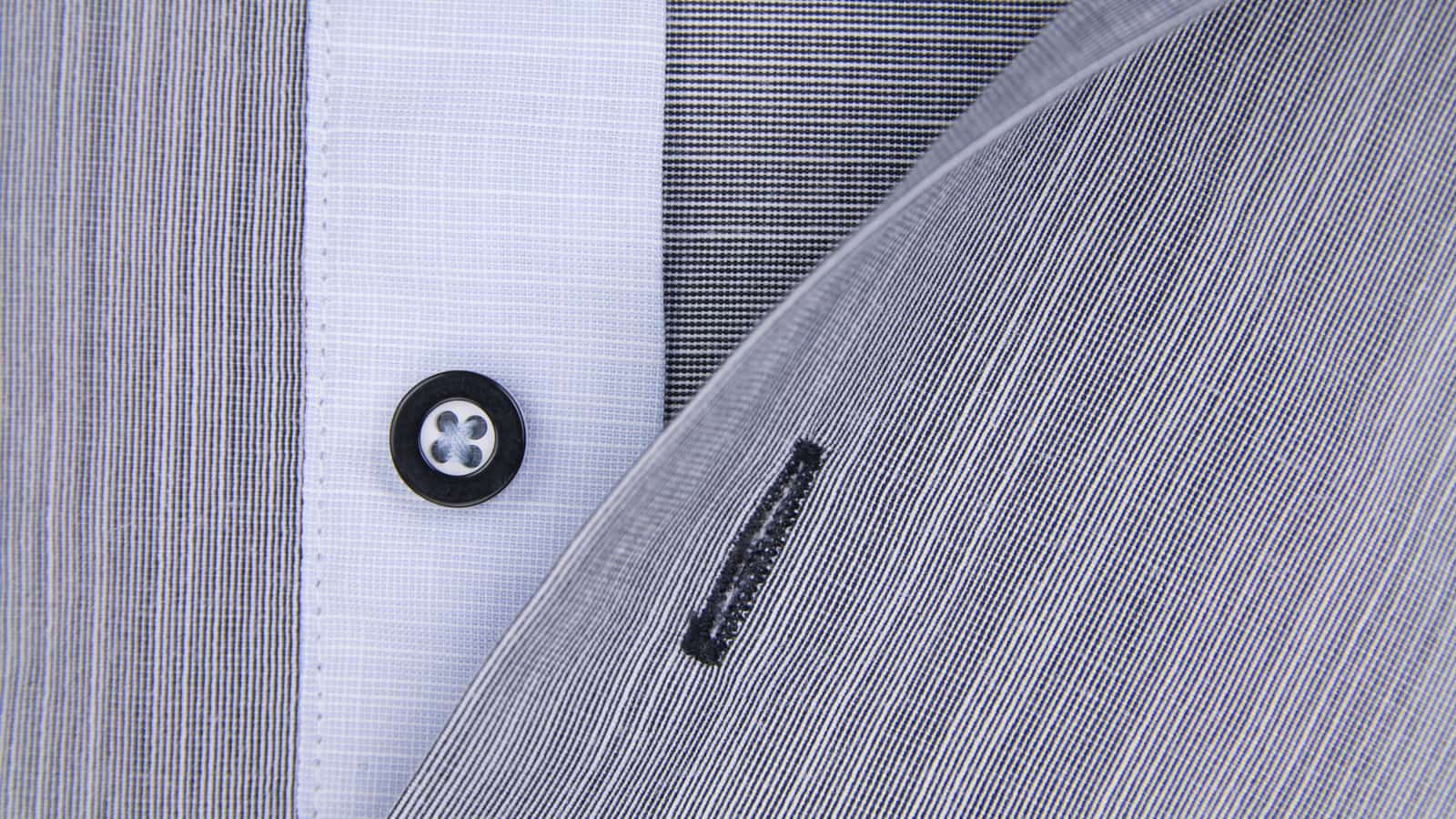
Manufacturers save money at the fastener. Thin, shiny, four-hole plastic buttons on a blazer. A zipper pull that feels like a soda tab. Those little pieces are doing more work on your behalf than the fabric is, because they sit at eye level and catch light.
A card of decent horn-look or corozo buttons costs a few dollars. Swapping the buttons on a thrifted navy blazer takes an evening and a YouTube video, and it's the closest thing to a cheat code in this whole business. Dark brown or smoke-gray buttons on navy. Dark horn on charcoal. Leave the shiny gold ones for people who own a yacht.
While you're in there, fix the two-inch hole in the pocket lining and cut the stitch holding the back vent closed. About a third of the sport coats I see in the wild still have the X-stitch in the vent and the basting thread on the shoulder. That thread is shipping packaging. Take it off.
What to buy used and what to buy new
Secondhand is where a tight budget actually turns into a good closet, but only for certain categories. Things that were built well and wear slowly are a steal. Things that pill, stretch or absorb aren't.
Buy used: wool overcoats, sport coats, leather shoes and belts, denim, flannel shirts, oxford cloth button-downs, wool sweaters.
Buy new: undershirts, socks, anything white, cheap cotton tees, knit polos, dress shoes with a visibly collapsed heel counter.
Leather shoes are the big one. A pair of resoleable welted shoes that cost $300 new can turn up for $40, and a cobbler will put new soles and heels on them for less than a cheap pair costs. Check the inside heel and the upper for deep cracking across the flex point. Creasing is fine. Cracking means the leather's done.
Set your alerts for the two dead seasons. Winter coats in late February, linen and lightweight chinos in September. Retailers would rather take 60 percent off than store it.
Where cheap stays cheap
I'm not going to pretend everything scales down. A $59 suit is a $59 suit. The canvas is glued instead of stitched, so after four dry cleanings the chest starts bubbling and there's no fixing it. If you need one suit and you need it to last, that's the place to spend, and secondhand is genuinely your friend there.
Same with a rain shell. Waterproofing is chemistry and you either paid for it or you didn't.
Everything else? Fair game. The best-dressed guy at most tables isn't the one who spent the most. He's the one whose shoulders fit, whose pants end where they should, and who doesn't look like he's thinking about it.
Nobody has ever leaned over to check your label. They've absolutely noticed your sleeves.
Tobias Reed
Style & Grooming
Spent a decade in menswear retail watching men buy the wrong size. Believes fit is ninety per cent of it and says so weekly.

Watch
Watch how it's done
Picked for this article.
From channels we rate. Plays on YouTube.
GIACCA (Confidence Through Clothing)
Shoulders & Sleeves: How Your Jacket Should Fit
The Style O.G.
How A Suit Jacket Should Fit
Read next