Quick-Access Safes That Actually Open When You Need Them
How to store a defensive handgun so a child can never reach it and you can, in the dark, in about three seconds.
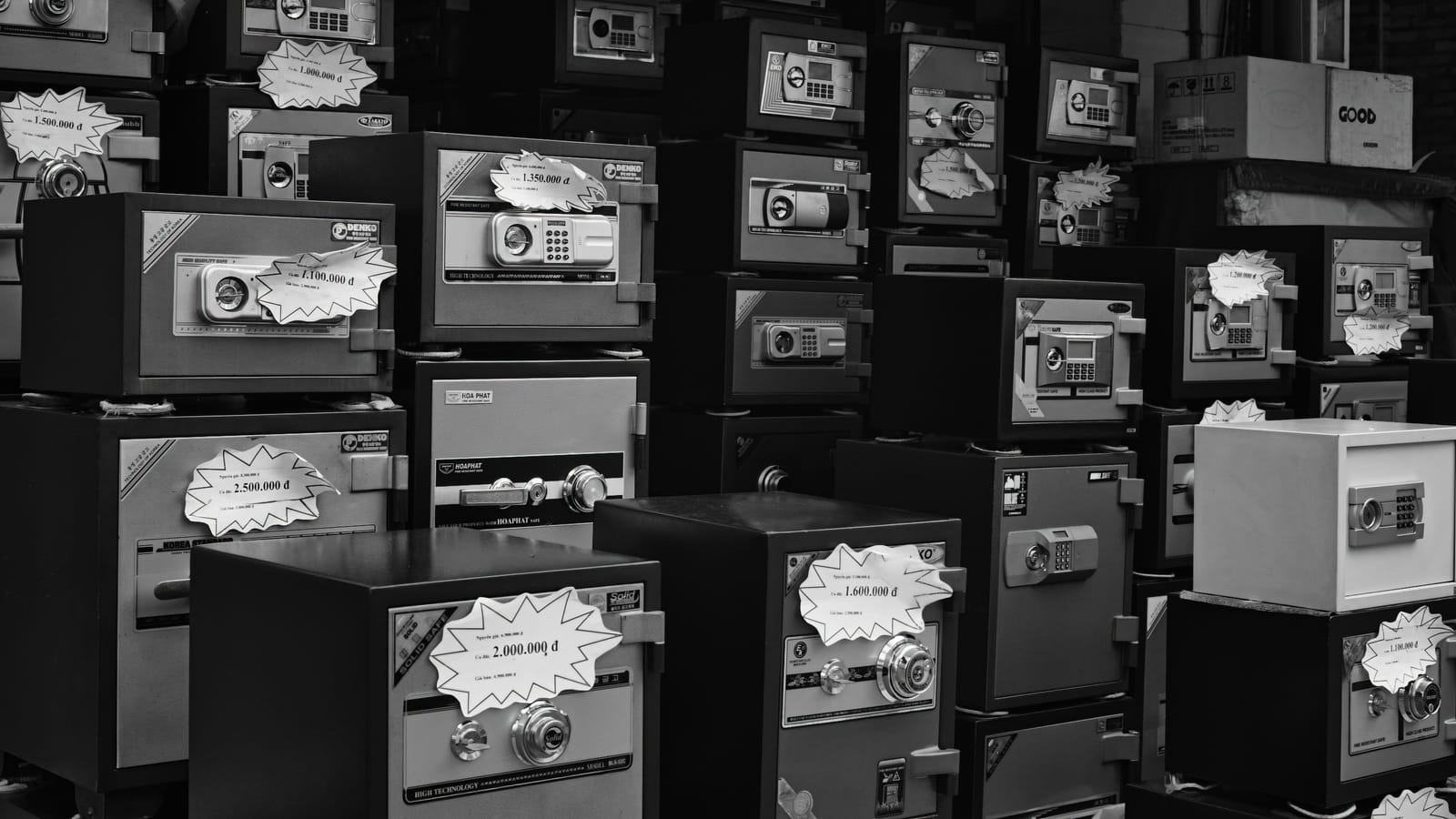
Pick one handgun to be the ready gun. One. Everything else in the house gets stored cold, unloaded, behind a lock, and you stop thinking about it. That single decision solves most of the storage problem, because now you're not trying to make five firearms both instantly available and absolutely unreachable at the same time. You're solving one clean problem: one gun, one container, one route to it.
Most people do this backwards. They buy a safe first, then figure out what goes in it, then discover the thing sits on the closet floor with a code they've never practiced in the dark.
The four rules don't take the night off
Storage is an extension of the same discipline you use on the range.
- Treat every firearm as loaded.
- Never let the muzzle cover anything you're not willing to destroy.
- Keep your finger off the trigger until your sights are on the target and you've decided to fire.
- Know your target and what's behind it.
Rule two and rule three are the ones storage breaks. A pistol tossed loose into a drawer safe, stuffed in a soft pouch, muzzle pointed at whatever the drawer faces, trigger uncovered. Keep the ready gun in a rigid holster that covers the trigger guard, sitting in a consistent orientation so your hand finds the grip the same way every time. A basic Kydex holster runs twenty to sixty dollars and it belongs inside the safe, not just on your belt.
What the containers actually cost, and what they're for
Quick-access boxes fall into three honest categories.
Mechanical push-button. The Fort Knox PB1 and the V-Line boxes use a Simplex-style five-button lock. No batteries, no circuit board, no firmware. You press a combination of buttons and the lid pops. Expect somewhere around $130 to $200 for a V-Line and $300 to $400 for the Fort Knox with its heavier steel. These are the ones I'd point a first-time buyer toward. Nothing to charge, nothing to update, and the combination lives in your fingers within a week.
Electronic keypad and biometric. Vaultek's VT-series and the Hornady RAPiD line sit roughly in the $200 to $500 range depending on size and features. The RAPiD opens with an RFID wristband, decal or fob, which is genuinely fast and genuinely useful mounted under a nightstand. The trade-off is that you've added batteries and electronics to the one piece of gear that has to work the first time.
Sheet-metal cabinets. A Stack-On style cabinet at around $150 to $250 keeps kids and casual hands out of long guns. It's not a burglary-resistant safe. Thin steel, pry-friendly door seam, be honest with yourself about what you bought. For real theft resistance you're looking at a proper safe with a thick body and a decent lock, and that starts in the high hundreds and climbs fast.
Cable locks and trigger locks are the cheap layer nobody uses. A Master Lock cable runs about fifteen dollars, and many police departments hand out free locks through Project ChildSafe. Cable through the action, action open, gun can't cycle. Perfect for the hunting rifle that lives in the closet eleven months a year.
Bolt it down or you bought a carrying case
Every quick-access box has mounting holes in the bottom for a reason. Use them.
A 25-pound box is a 25-pound box. It leaves with the burglar, gets opened at leisure in a garage across town, and now your handgun is in the wind and you're the guy who fed it to the street. Four 3/8-inch lag bolts into a stud or into the frame of a solid nightstand takes fifteen minutes and a stud finder. On a slab, use concrete sleeve anchors. If you're renting and can't drill, bolt the box to the underside of a heavy dresser drawer so the box and the furniture become one awkward, loud, 200-pound unit.
Here's the part the instructions skip: mount it where your hand goes, not where the box fits. Lying in bed, eyes closed, reach out. That's the spot. Mine is under the nightstand shelf, lid hinging toward me, so nothing has to be moved or lifted first.
The failures you'll actually have
Biometrics miss. Cold fingers, wet fingers, a hand that's been in the yard all afternoon, a print read at the wrong angle at the wrong hour. Any box you buy on a fingerprint should have a keypad or mechanical override you've practiced, not just one you know exists.
Batteries die quietly. Pick a date you'll remember, the first of the month, daylight saving time, whatever, and swap them on schedule instead of waiting for a low-battery chirp you'll sleep through. Keep the override key somewhere you can reach and a child can't.
Factory codes stay factory. If your keypad still opens on 1-2-3-4, so does your ten-year-old's curiosity. Change it, and don't use your ATM PIN or your address.
Keypads wear. Four buttons with the shine rubbed off tell a story. Wipe the pad down now and then.
And run the drill. Unload the gun completely, confirm it twice, move the live ammunition to another room, then practice in the dark. Open the box. Get a grip. Ten reps. Do five of them with your support hand only, because one arm might be busy holding a phone with 911 dialed or a door shut.
Kids need rules, not mystery
Secrecy fails. Kids find things, kids talk, and a gun that's forbidden and hidden is the most interesting object in the house.
Teach it plain and teach it early. Firearms aren't toys. You never touch one without an adult. If you find one, don't touch it, leave the room, tell an adult. If a friend wants to show you one at his house, you leave and you call me. Repeat it the way you repeat seat belts and swimming rules, with no drama.
Then take the mystery out. Bring them along to the range when they're ready. Let them see the whole process, the safety checks, the cleaning, the locking up. A kid who has fired a .22 under supervision and been taught the four rules is a kid with knowledge instead of fascination.
Combinations belong to adults. Not the babysitter, not the teenager who's "responsible enough." And if someone in your home is going through a hard season, mentally or emotionally, the capable move is temporary distance. Ask a trusted friend or family member to hold your firearms, or look into storage at a local range, and check your state's rules on transfers before you hand anything to anybody. That's not weakness. That's the same judgment that makes you trustworthy with the right in the first place.
The safe is the last layer, not the first
Locked doors, exterior lights, a phone within arm's reach and a dog that barks do more work on an average night than anything in your nightstand. Avoidance first. Distance first. Call for help first. Force is the last option on the list, and the law in your state, province or city decides when it's lawful at all.
Storage requirements, carry rules and use-of-force standards vary enormously by jurisdiction, and some states mandate specific locking devices or approved containers. None of this is legal advice. Read your own state's statutes, and talk to a qualified attorney and a certified instructor before you settle your plan. Then get hands-on training from a real instructor, live, with feedback, not from a screen.
Owning a firearm is a right. Keeping it where a child can never reach it and you can, half asleep, in the dark, without fumbling, is what earns you the respect that comes with it.
Your kids should find your safe boring. That's the goal.
Marcus Vale
Editor-in-Chief
Twenty years in magazines, most of it deciding what to cut. Writes about work, discipline and the decisions that compound.

Watch
Watch how it's done
Picked for this article.
From channels we rate. Plays on YouTube.
LockPickingLawyer
[1044] Opened With FORK: Vaultek LifePod Gun Safe
Chrispy Things [EDC]
Is The Vaultek DS5i The ULTIMATE Modern Home Safe? (First Impressions)
Read next