

When your buddy stops making sense and sweats through his shirt
Slurred words, cold sweat and a stubborn "I'm fine" can mean dangerously low blood sugar. Sugar goes in first, and you get help second.
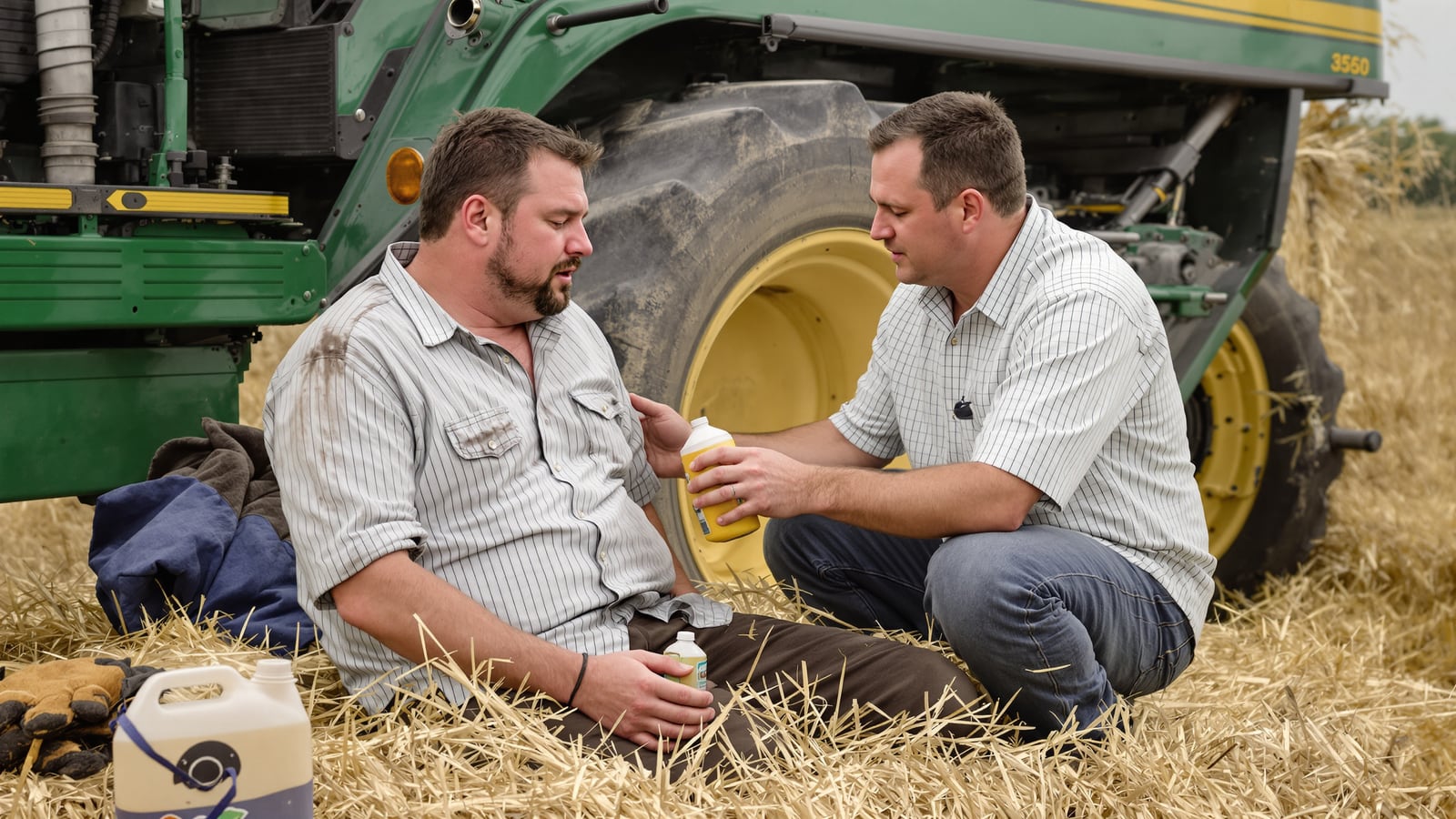
Quick answer: If a man you know has diabetes, or you can't rule it out, and he turns confused, shaky, pale and drenched in sweat, treat it as low blood sugar. If he's awake and can swallow, give about 15 grams of fast sugar, wait 15 minutes, and repeat if he's not improving. If he can't swallow or won't stay awake, put nothing in his mouth and get emergency responders moving.
The scene
It's day two of a three-day elk hunt. Your buddy Dan has been quiet since the morning climb. Now he's walking in a slow zigzag, answering questions with the wrong words, and his shirt is soaked even though it's 45 degrees out. His hands shake when he tries to unzip his pack.
You ask if he's okay. He snaps that he's fine. He's never snapped at you before.
That's the picture. People call it "diabetic shock" or "insulin shock." Medically it's severe hypoglycemia, which just means the brain is running out of fuel. It's one of the more fixable emergencies you'll meet in the field, and it kills people mainly because nobody recognizes it in time.
What you're looking at
Early signs usually come in a cluster:
- Cold, clammy sweat, often heavy, with pale skin
- Shaking, a pounding heartbeat, sudden hunger
- Irritability or a personality change
- Confusion, slurred speech, clumsy movement
Later it gets worse. He may look drunk, get combative, have a seizure, or pass out.
If he carries a glucose meter, check it. Below 70 mg/dL counts as low. Don't wait on a number if he's already stumbling and the meter's buried in his pack. The signs are enough to act on.
Why he'll fight you
A brain short on sugar doesn't judge itself well. A man in this state will often insist he's fine, wave off the juice, and get angry that you're fussing. He isn't being stubborn. His judgment is the part that's failing.
So don't argue and don't ask permission. Stay calm, keep your voice low and steady, and put the sugar in his hand. "Drink this for me, Dan." Say it like you mean it. Being the servant with a backbone means you look after him and you don't let him talk you out of it.
Sugar first, in this order
If he's awake, upright and can swallow on his own:
- Stop him. Sit him down. No more hiking.
- Give about 15 grams of fast sugar. That's roughly four ounces of regular juice or soda, three to four glucose tablets (read the label), or a tablespoon of sugar or honey stirred into water.
- Skip the chocolate and the peanut butter. Fat slows absorption. You want it quick.
- Wait 15 minutes and watch. Check his meter again if he has one.
- Repeat if he's still shaky or confused.
- Feed him real food once he's clear-headed: carbs with some protein. A sandwich works.
Recovery can look almost magic. Ten or fifteen minutes later he's embarrassed and asking what happened. Keep him sitting, keep him eating, and don't let him hike out alone or drive afterward. Lows can return, especially hours later. He needs to tell his doctor what happened.
When he can't swallow
This is where people get hurt. If he's unconscious, seizing, or too confused to swallow safely, don't put food or drink in his mouth. He can choke.
Instead:
- Roll him onto his side in the recovery position and keep his airway clear.
- If he carries glucagon (a prescription rescue medication, sometimes a nasal spray), and you've been shown how to use it, use it. Ask him about it before the trip so you know where it is.
- Get emergency help moving right away. That means a satellite messenger SOS, sending a runner to where there's signal, or whatever the fastest honest route is where you are.
- Stay with him. Don't leave an unconscious man to go find help if someone else can go.
Severe lows are medical emergencies even if he wakes up. Evacuation and a doctor's visit follow.
What else it could look like
Sweating and confusion in the field aren't exclusive to blood sugar. Heat illness looks similar. So can a head injury, hypothermia, too much alcohol, or simple exhaustion.
If you know he's diabetic, assume low sugar first. If you don't know, and he's awake and can swallow, sugar is still the sensible first move, because it's a small risk next to missing a true low. If it's a hot day, get him into shade and cool him down while you do it.
The opposite problem exists too. Very high blood sugar can cause its own emergency, with heavy thirst, frequent urination, fast deep breathing and a fruity smell on the breath. It develops slowly, not over a few minutes of sudden shakes. That's one more reason you want a trained eye on him quickly, and not a guess from a stranger.
If there's a rifle in the picture
A confused man on a hunting trip may be holding a loaded gun. That's the first problem, before the sugar.
The four rules don't pause for an emergency. Treat every firearm as loaded. Keep the muzzle pointed somewhere safe. Keep your finger off the trigger. Know your target and what's beyond it.
Stay out of his line of fire. Speak calmly. Ask him to unload and set the rifle down, and take custody of it once it's safe, unloaded and cased. Never wrestle a confused armed man for his weapon. If he won't hand it over and he's unsteady, put distance and cover between you and him, and bring in other people.
This is also why locked storage and good habits matter at camp. Firearms laws vary by state, province and city, so check local law and talk to a qualified instructor for hunting transport rules.
Gear that covers this
- Glucose tablets or gel, about $5 to $10 a tube or bottle. Pack more than you think. Put some in your pack and some in your vehicle.
- Sugar packets or honey sticks, a few dollars. They're light and they don't spoil.
- Juice boxes or a sealed sports drink, a couple of dollars each. Don't freeze them.
- A satellite messenger, roughly $300 to $400 for the unit plus a monthly plan. For remote country it's the difference between a message and a long walk.
- A basic first aid kit with a recovery-position card. Sort it out before you leave, not at the trailhead. Our look at what to do in the first hour you're lost in the woods covers what to do while you wait for help.
Before the trip
Ask your hunting partners one blunt question: does anyone have a condition we should know about? Diabetes, a heart condition, a severe allergy. It takes thirty seconds and it's not rude. It's what a man who looks after his team does.
If someone does, ask where the glucose meter and rescue medication are kept, what a low looks like for him, and what he wants you to do. Then make sure two people know.
Then get trained. A wilderness first aid course runs about two days and a couple hundred dollars from a qualified provider, and it teaches you to practice this on a person, not read about it. Like any skill that matters, it only works under pressure if you've done it before. That's the same lesson in what real defensive gun uses teach about training. Nothing here's medical advice for any one person. It's general education, and a qualified instructor and your own doctor are the people to ask about your situation.
When your buddy stops making sense, don't wait for a diagnosis. Hand him the juice.
Wes Dunbar
Country & Skills
Grew up on an acreage and never quite left. Covers trucks, trades, land, and how to do the thing yourself.

Watch
Worth an hour of your evening
More from Survival & Self-Defense.
From channels we rate. Plays on YouTube.
Read next