What to Spend on a Drill and Impact Driver, and What to Skip
A brushless two-tool kit for around $200 does 95 percent of what a homeowner needs, and the bits matter more than the badge.
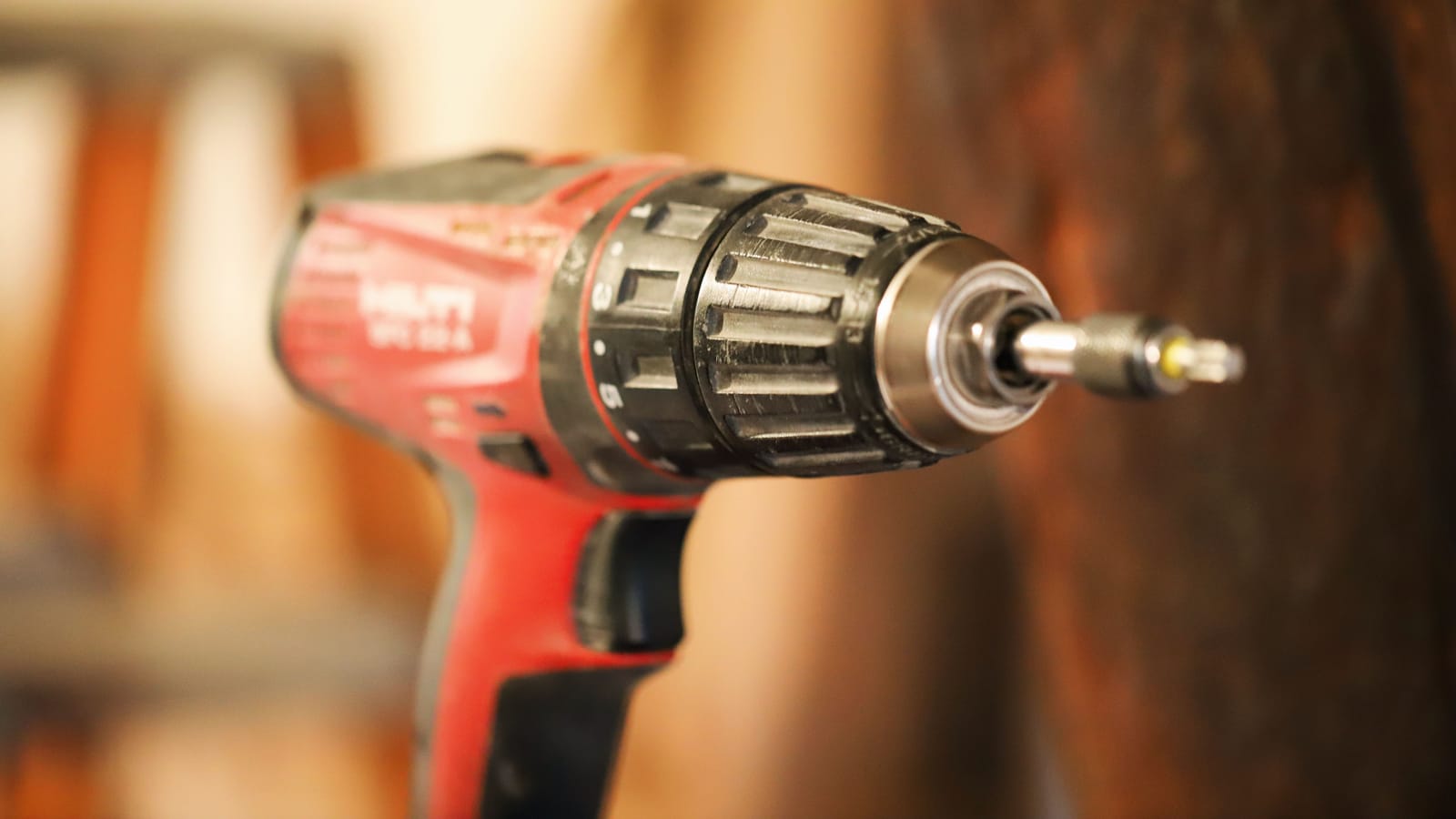
Two hundred dollars, give or take, is the sweet spot for a brushless drill and impact driver kit with two batteries and a charger. Below about $120 you start giving up things you'll notice every weekend. Above about $350 you're buying speed and durability that matter enormously on a jobsite and almost not at all when you're hanging a gate on a Saturday.
That's the whole answer. The rest is how to spend it well.
The two-tool kit is the right shape
Buy them together. Drill-only kits look like a deal until the third time you stop mid-project to swap a driver bit for a pilot bit. The drill bores the hole and sets screws where you need control. The impact driver runs the long screws home without chewing the head off or twisting your wrist.
A real example. You're building a 12-foot gate out of pressure-treated 2x4s with eighty 3-inch structural screws. With a drill alone, you'll cam out, strip heads, and burn through a battery by screw fifty. With the impact driver, those screws go in at a rate of about one every four seconds and you'll never lean on it. Two tools, no swapping, done before lunch.
What the cheap one gets right
Ryobi's ONE+ HP brushless combo usually lands somewhere between $150 and $200 at Home Depot, and it goes on sale hard around Father's Day and Black Friday. Craftsman's V20 brushless combo sits in the same neighborhood at Lowe's. Bauer, Harbor Freight's house brand, runs cheaper still, often near $130 for a kit.
What these get right is more than most snobs admit. Brushless motors, real torque, LED lights, belt clips, and battery platforms with a hundred-plus tools hanging off them. The Ryobi platform in particular is absurdly deep. If your projects are furniture, fence pickets, drywall anchors, cabinet hardware and the occasional deck board, a $170 Ryobi kit will never once be the reason your project went badly.
What they get wrong: the chucks. Budget drills use cheaper single-sleeve chucks that slip under load with big spade bits and hole saws. You'll feel the bit spin free in the jaws and have to crank it down again. They also run hotter, the batteries sag faster under heavy draw, and the clutch settings are coarse enough that "setting 8" and "setting 9" feel like the same thing.
And skip the brushed versions entirely. If a kit is under $100 with two batteries, it's brushed, and you're buying a tool with less power, shorter runtime and a motor with a wear part in it. The $50 you save isn't worth it.
What the expensive one actually buys you
Milwaukee M18 Fuel and DeWalt's XR line run $300 to $400 for a two-tool kit. Makita's 18V LXT sits in the same band. Here's the honest accounting of what the extra money gets.
Better chucks that hold a 1-inch spade bit without slipping. Impact drivers with three or four speed modes, including a self-tapping screw mode that throttles down so you don't snap the fastener. Batteries that don't fall off a cliff at 40 degrees. Housings that survive a drop from a ladder onto concrete. And service networks, which matters if you use these for work.
If you're a contractor, a remodeler, or a guy who's genuinely out there four days a week, buy the premium kit and stop reading. If you're a homeowner with a decent list of projects, the premium kit is a nice thing, not a necessary thing.
The middle ground is real, by the way. DeWalt's Atomic line and Milwaukee's non-Fuel M18 kits often run $180 to $250 and give you the brand's battery ecosystem at Ryobi money. Watch for those on sale.
The 12V class isn't a toy
A Milwaukee M12 Fuel or Bosch 12V combo runs roughly $200 to $280 and weighs about half what the 18V does. If most of your work is cabinets, trim, electrical boxes, furniture assembly, or anything above your head, the 12V is the tool you'll actually reach for. Tight spaces, overhead work, and long sessions all favor the smaller tool.
The trade-off is genuine. A 12V drill will bog down in a 2-inch hole saw through a stud, and it won't run a 4-inch auger through a floor joist at all. Plenty of households end up with a 12V for daily use and an 18V for the heavy jobs, and that's a completely rational way to spend the money.
Buy good bits or the tool doesn't matter
This is where most people waste their upgrade. A $400 impact driver with a $6 gas-station bit set will strip more screws than a $150 kit with proper bits.
- Impact-rated driver bits. Wera, Makita Impact Gold, DeWalt Maxfit. A solid set runs $25 to $40. Non-impact bits shatter, and the shards are sharp.
- A magnetic bit holder with a sleeve that locks. Around $10 and it saves you a hundred dropped screws.
- Titanium or cobalt twist bit set for metal, $30 to $60. Black oxide bits are fine for wood and useless in steel.
- A countersink set with an adjustable stop collar, about $15. Makes every screw you drive look intentional.
- Spade bits with a threaded tip rather than the flat old-school kind. They pull themselves through instead of making you push.
Buy those first. Upgrade the tool later.
When to rent instead
Don't buy a rotary hammer. A cordless SDS rotary hammer is a $300 to $500 tool that you'll use for one afternoon when you anchor a shed to a slab or run a line through a foundation wall. Home Depot and most local rental yards will rent you a Bosch or Hilti SDS hammer for roughly $40 to $60 a day, and it'll drill a half-inch hole through 6 inches of concrete in about fifteen seconds. A hammer drill, the kind built into a combo kit, will take four minutes and one very hot bit to do the same hole.
Same logic for right-angle drills, mixing drills for mortar and thinset, and core drills. Rent, return, spend the savings on lumber.
The one corded tool still worth owning: a basic 1/2-inch corded drill. A DeWalt DWD112 or Milwaukee Magnum runs $90 to $140, weighs nothing in a drawer, and will never be dead when you need it.
Two safety things people learn the hard way
Use the side handle when you put anything bigger than about 1 inch in the chuck. A 2-1/8 hole saw that binds in a stud will stop dead and hand the entire motor's torque to your wrist. That's a sprain, sometimes worse, and it takes half a second.
And know that an impact driver has no clutch. It will happily keep going until the screw head snaps off in the wood or the fastener pulls through the material. For anything delicate, cabinet hinges, appliance panels, soft pine trim, use the drill on a low clutch setting instead. The impact is a hammer. Treat it like one.
Buy the kit on sale, spend the first $40 on bits, and let the rental counter own the concrete.
Dean Shaw
Gear & Garage
Reads the warranty, the parts list and the long-term owner reviews before anything else. Trucks, tools, watches, and the cheap version that costs more.

Watch
Watch how it's done
Picked for this article.
From channels we rate. Plays on YouTube.
This Old House
Impact Driver vs Drill | Ask This Old House
Essential Craftsman
Impact Driver Vs. Drill Driver
Read next