Walk the apartment like it's yours before you sign for it
The walkthrough decides your deposit, your repair headaches and your sleep. Here's how to do it right, with a phone, a flashlight and twenty minutes.
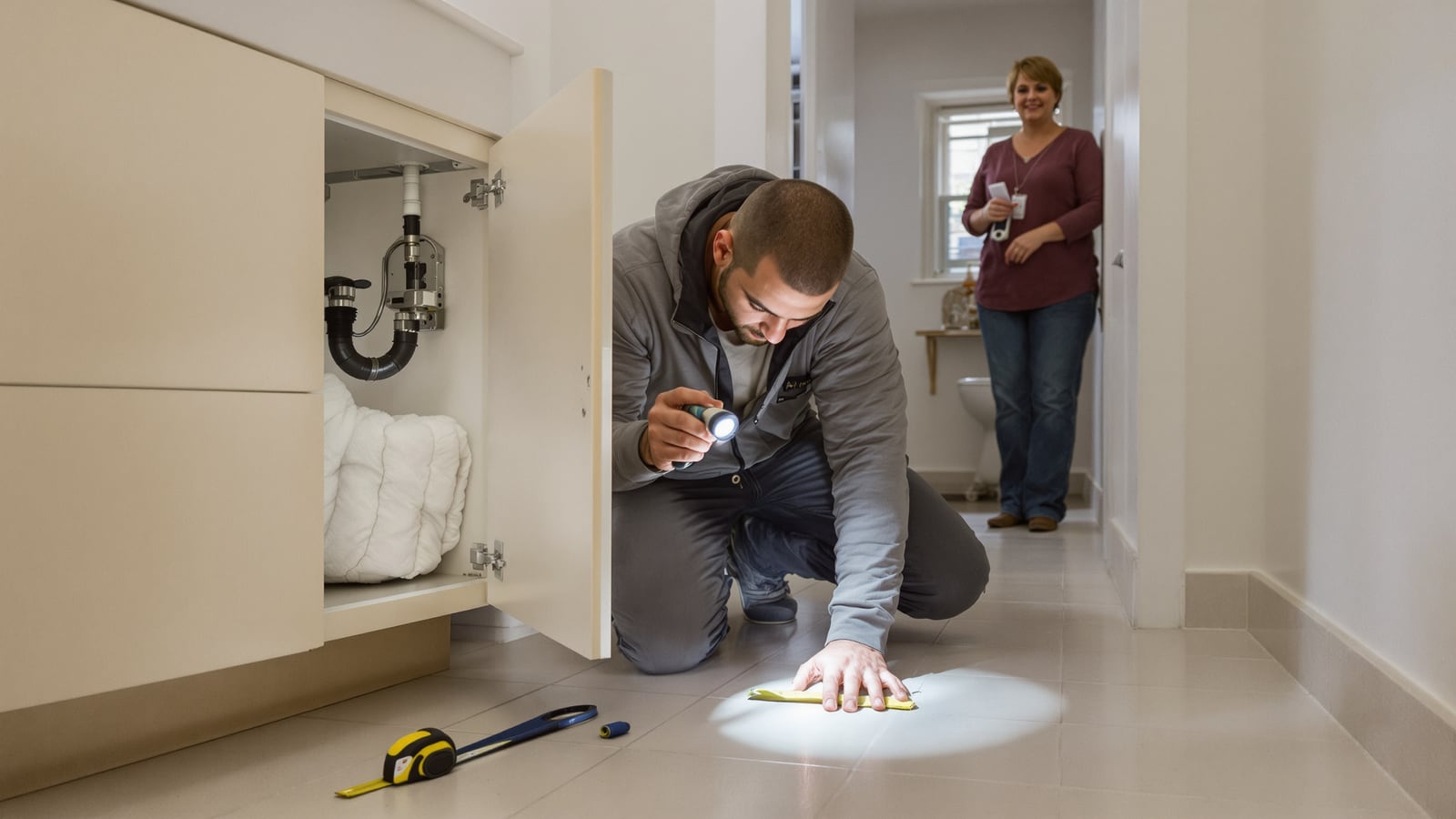
Quick answer: Tour it twice, once in daylight and once after dark. Test every faucet, outlet, window and lock yourself. Photograph every flaw. Get anything the landlord promises to fix put in writing before you sign.
Why this matters more than the granite countertops
The leasing office is built to show you the best ninety seconds of the building: the staged model unit, the fresh paint, the gym nobody uses. You're there to see the other nine hundred and ninety seconds.
You're also negotiating, whether it feels like it or not. Once you sign, the condition of the place is whatever the paperwork says it was on day one. Every scratch, stain and dead outlet you don't document is a possible charge against your deposit when you leave.
So go in like a man inspecting a used truck. Polite. Unhurried. Not impressed by the paint.
What to bring
You don't need much.
- Your phone, fully charged. It's your camera, your flashlight backup and your outlet tester.
- A real flashlight. Under sinks and in closets, your phone light won't cut it.
- A tape measure. Your bed, your couch and your desk have dimensions. Find out now whether they fit through the door and into the room.
- A cheap outlet tester, a few dollars at any hardware store. It plugs in and tells you if an outlet is wired wrong. A phone charger works in a pinch, but it won't catch everything.
- A short list of questions (below).
The room-by-room walk
Do this in order, and don't let the agent rush you. If they hover, that's their job. Keep going.
Water. Run the kitchen faucet hot until it's actually hot and note how long that takes. Do the same in the bathroom. Run the shower for a full two minutes. Weak pressure and slow heat are the things you'll live with every morning. Flush the toilet and watch how it refills. Fill the sink and pull the plug to see how it drains.
Under the sinks. Flashlight, on your knees. You're looking for water stains, warped wood, a musty smell or a bucket someone left behind. A leak that's been patched with caulk is still a leak.
Power. Test every outlet. Flip every switch. Open the breaker panel and check that the labels exist and make sense. Count the outlets in the bedroom. Three is a good number, one is a problem.
Windows and doors. Open and close every one. Do they lock? Do they seal, or can you feel a draft with your hand? Check the screens. Look at the sliding door track for a bent frame or a missing security bar.
Walls, ceiling, floor. Look up. Brown rings on the ceiling mean water came through at some point. Check corners and the area behind doors for mold or fresh paint over something. Walk the floors in socks if you can. Soft spots near the bathroom and kitchen are bad news.
Appliances. Open the fridge and check the seals. Run the oven for a few minutes and see if it heats. Turn on every burner. Run the dishwasher if there's one, and run the garbage disposal. If the place has a washer and dryer, ask whether they come with the unit or belong to someone else.
Heat and air. Turn the system on. Heat in August and cooling in January aren't possible, but you can at least confirm it fires up and blows something. Ask where the filter is and who changes it.
Smell. Close your eyes for a moment in each room. Smoke, pets, mildew and a heavy air freshener all tell you something. Air freshener on a Tuesday afternoon usually means the building is covering something up.
Safety and security
Look for a smoke detector in the hallway and one in the bedroom area, and press the test button on each. Look for a carbon monoxide detector if there's any gas appliance or an attached garage.
Check the front door. A deadbolt is the minimum. Ask when the locks were last changed or rekeyed between tenants, and ask for it to be done before you move in if it hasn't been. A good landlord says yes without blinking.
Then check the outside. Is the parking lot lit? Does the entry door actually latch behind you, or can anyone follow you in?
If you own firearms, read the lease for any clause on storage, ownership or transport on the property, and know the rules before you sign. They vary by state and by landlord. If something reads unclear, a local attorney or your state's tenant legal aid office can tell you where you stand.
The visit nobody does: after dark
Come back at 9 p.m. on a weeknight, and again on a Saturday morning if you can swing it.
You're listening for the neighbor's bass through the wall, the highway, the dog next door. You're checking whether you can find parking. You're deciding whether you'd feel comfortable walking from your car to your door with groceries.
And check your phone. Two bars in the bedroom is something you want to know before you sign a twelve-month lease.
Questions to ask out loud
- What's the total monthly cost, including trash, water, parking and pet or amenity fees?
- What does the security deposit cover, and when and how is it returned?
- How do I submit a repair request, and how fast do you usually respond?
- Who pays for what: water, gas, electric, internet?
- What happens if I need to break the lease early?
- Has the unit had any pest or water problems?
Write down the answers. A man who takes notes gets straighter answers.
The paper that decides your deposit
Most landlords hand you a move-in condition form. Fill it out as if you're a very picky person. Write down every chip, scuff, stain and burn mark, even the small ones. "Carpet stain, bedroom, near window, about the size of a dinner plate" is better than "carpet worn."
Then take photos and video. Walk the whole place with the camera rolling, then shoot close-ups of every flaw with something in frame for scale, like your tape measure. Make sure the files are dated. Email copies of the form and the photos to the landlord and to yourself so there's a timestamp neither side can argue with.
Check your lease for any deadline on turning in the form. Some give you only a few days.
When they say "we'll fix it after you move in"
This is where you hold the line without being a jerk. If the stove is broken, the lock is bad or there's a leak, say it calmly: "I'd like that fixed before move-in, and I'd like it in writing with a date."
If they won't put it in writing, that tells you what the promise is worth. A decent landlord will. A bad one will give you a speech about how good their reputation is. You can walk away. Lots of apartments exist. The one you sign for is the one you'll be stuck with for a year.
This isn't legal advice. Rules on deposits, repairs and entry vary by state and city. If a dispute gets serious, your local housing authority or a tenant attorney is the right call.
For the budget side of all this, the first-month math is in what moving out costs and what to do in the first month, and once the lease is signed, the first twelve months of earning, month by month will help you keep paying it without panic.
Leave it better
Do the same walkthrough in reverse on your last day. Clean the oven, wipe the baseboards, patch your nail holes and take another set of dated photos. A place you leave cleaner than you found it's a deposit you get back, and a landlord's reference you can use.
Twenty minutes with a flashlight now saves an argument later. Nobody ever lost a deposit by being too thorough.
Sam Ortiz
Dads & Family
Father of three. Writes about presence, discipline and the long game, without pretending any of it's tidy.

Watch
Watch how it's done
Picked for this article.
From channels we rate. Plays on YouTube.
Redoin Life
Rental apartment viewing / tour and inspection tips
NotJustNinjas
Apartment Move In Day Inspection (Don't Get Burned!) | First Apartment? WATCH NOW
Read next