

Esther never names God, and He's on every page
The book of Esther has 167 verses and no mention of God. It may be the clearest picture in Scripture of how He works on the days He's quiet.
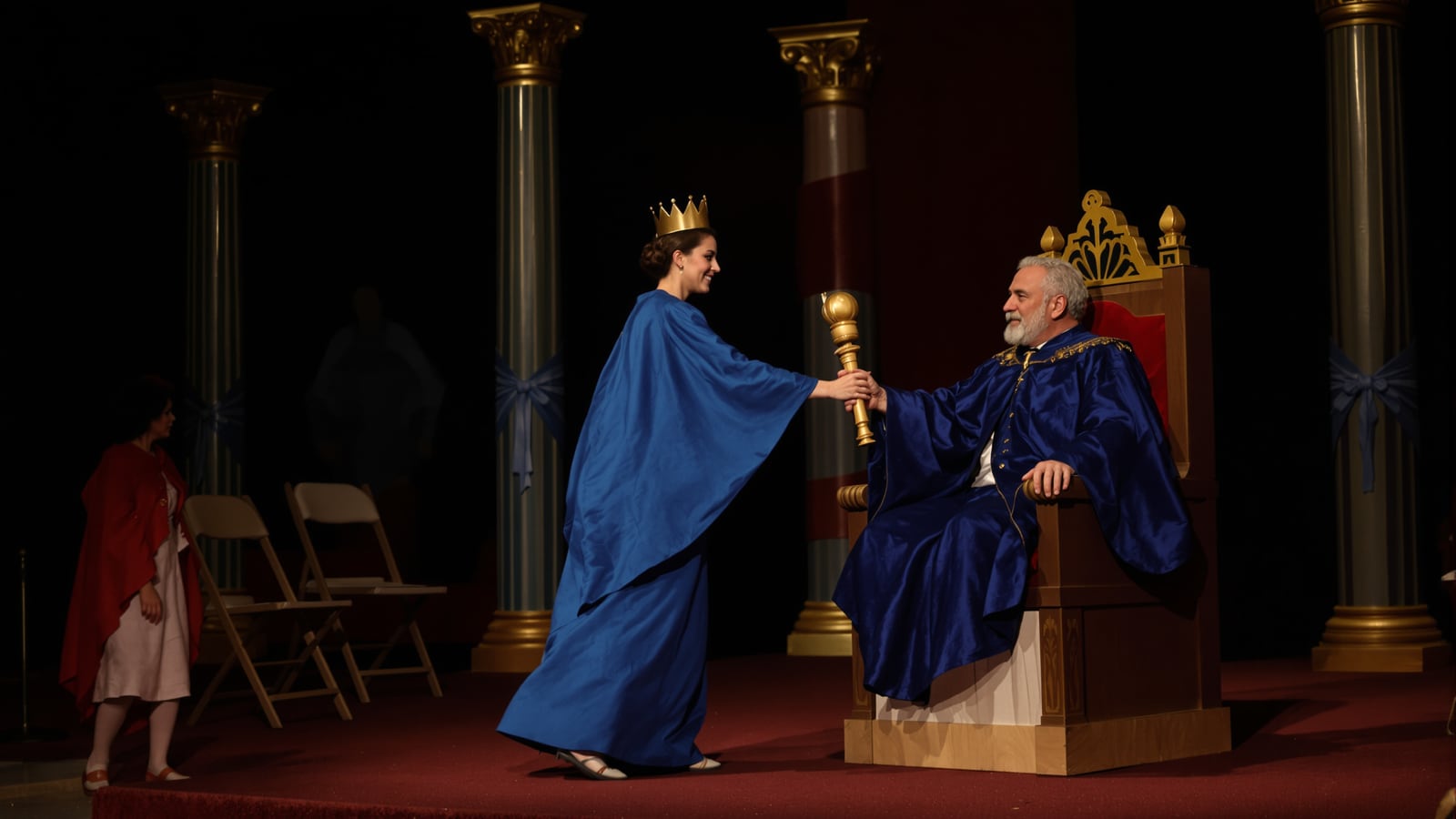
Quick answer: The book of Esther never uses the name of God, never records a prayer, and never mentions the Law or the temple. The author left Him out on purpose. The story is built so that you can't miss His hand anyway, and that's the lesson for any season when heaven seems silent.
Go looking for Him
Read all ten chapters in one sitting. It takes about half an hour. Mark every place God is named.
You'll finish with a clean page.
That's strange for a book in the Bible, and readers have noticed for centuries. Esther is set in Susa, a Persian capital, under King Ahasuerus (the Xerxes of Greek history). The Jews in the story are exiles. Many of them had stayed in Persia even after the door to Jerusalem opened. Nobody gets a vision, an angel or a burning bush. Nothing parts. Nobody hears a voice.
What you get instead is a series of events that are individually ordinary and collectively impossible.
The coincidences pile up
A queen is deposed after a drunken banquet. A search for her replacement lands on a Jewish orphan who is hiding her heritage on her cousin Mordecai's advice. She wins the king's favor. Mordecai, sitting at the gate, overhears a plot against the king and reports it through Esther (Esther 2:21-23). He's written into the royal record and then forgotten for years.
Meanwhile Haman, the king's top official, is offended that Mordecai won't bow. He decides one man isn't enough. He wants every Jew in the empire dead. To pick the day, he casts lots, called pur, which is where the feast of Purim gets its name.
Then the pivot. Proverbs 16:33 says, "The lot is cast into the lap, but its every decision is from the Lord" (ESV). Haman rolled the dice, and the author lets that verse sit unspoken under the whole scene.
The turning point comes in chapter 6, and it's one sentence: "On that night the king could not sleep. And he gave orders to bring the book of memorable deeds, the chronicles, and they were read before the king" (Esther 6:1, ESV).
Of every book in the Persian archives, the reader lands on the page recording Mordecai's unrewarded loyalty. Haman walks in at that moment to ask permission to hang Mordecai. Instead, he ends up leading Mordecai through the city on the king's horse, announcing his honor.
A sleepless night. A random page. A man arriving fifteen minutes too early. The author never says "God did this." He doesn't have to.
The line the whole book turns on
When Mordecai learns of the decree, he tells Esther she has to go to the king uninvited, which could cost her life. She hesitates. His answer is the center of the book:
"For if you keep silent at this time, relief and deliverance will rise for the Jews from another place, but you and your father's house will perish. And who knows whether you have not come to the kingdom for such a time as this?" (Esther 4:14, ESV)
Look at what he assumes. Deliverance is coming "from another place." He doesn't say where. He doesn't have to. He's counting on a promise God made to His people long before Persia existed. He's also telling Esther that God's plan won't depend on her, but her part in it still matters, and she can refuse it.
She doesn't. She asks the Jews of Susa to fast for three days and says, "I and my young women will also fast as you do. Then I will go to the king, though it is against the law, and if I perish, I perish" (Esther 4:16, ESV).
Fasting in Scripture is almost always tied to seeking God. The author gives you the act and withholds the word. Esther isn't acting like a woman who believes nobody is listening. She's acting like a woman who's decided to move before she can see the ground.
Where Christians differ
This book has been argued over for a long time, and sincere believers land in different places.
Why the silence? Some read it as deliberate: a picture of God's hidden providence, written for a people living far from Jerusalem. Others note the author may have been writing in a setting where open religious language was risky. Both can be true. Neither changes the plain point that the story runs on a design larger than any character's.
Esther herself. She hides her identity, enters the king's harem and eats at a pagan court. Some teachers hold her up as a model of faithful courage under constraint. Others say the book describes what happened without endorsing every choice, and they read her early compromises as part of the tension the story has to resolve. You'll hear sound pastors say both.
The Greek additions. Ancient Greek versions of Esther add prayers and open references to God. Catholic and Orthodox Bibles include that material. Protestant Bibles, including the ESV, don't treat those additions as Scripture. Notice what the difference tells you: even the ancient church felt the silence and wanted to fill it.
What it asks of you
Plenty of Christians live in an Esther season. Nothing audible. No sign. A job that's falling apart, a marriage under strain, a diagnosis, a prodigal who isn't calling. You pray and the sky stays the color of a parking lot.
Esther doesn't tell you God is absent in those seasons. It says He doesn't need to announce Himself to be at work, and that "we know that for those who love God all things work together for good, for those who are called according to his purpose" (Romans 8:28, ESV) is sometimes visible only in the rearview mirror.
I'd take three things from it.
- Go back over the coincidences in your own life. The job you almost didn't take. The conversation you almost skipped. Write them down. You'll be surprised how many there are.
- Act inside what you can see. Esther didn't wait for a sign. She fasted, then walked into the throne room.
- Do the next right thing even when it costs you. "If I perish, I perish" isn't recklessness. It's a person who's decided that obedience is worth more than safety.
The book is also honest about its limits. It doesn't promise every gallows gets turned around, and it doesn't explain why other generations of God's people suffered without a sleepless king to save them. Those questions are real. Scripture answers them elsewhere, and in the end at the cross, where God wasn't silent at all.
That's also why the preservation of the Jewish people matters beyond Persia. The Messiah was to come through them. When Haman set the date for their destruction, he was aiming at more than one nation. Jesus Christ, the only way to the Father (John 14:6), was born into the very line Haman wanted erased.
For further reading on Esther's courage in context, see Ruth, Esther and Deborah Did Not Wait to Feel Brave. For other believers who held firm in foreign courts, read Three Men Who Kept Their Integrity Far From Home. And if you want to work through Esther yourself, The Inductive Bible Study Method in Twenty Minutes a Day is a good way in.
God ran an empire through a sleepless king and a misfiled scroll without once being named. Your Tuesday isn't going to be a problem for Him.
Josh Halloran
Christian Bro
Leads a mid-week mens group and has done for eleven years. Writes about faith as a practice rather than a position.

Watch
Watch how it's done
Picked for this article.
From channels we rate. Plays on YouTube.
Gospel in Life
Discovering the Gospel in Esther – Tim Keller
Read next