Colon cancer screening starts at 45 and men keep skipping it
Three ways to get it done, what the prep actually involves, and how to fit the whole thing around work, kids and your training week.
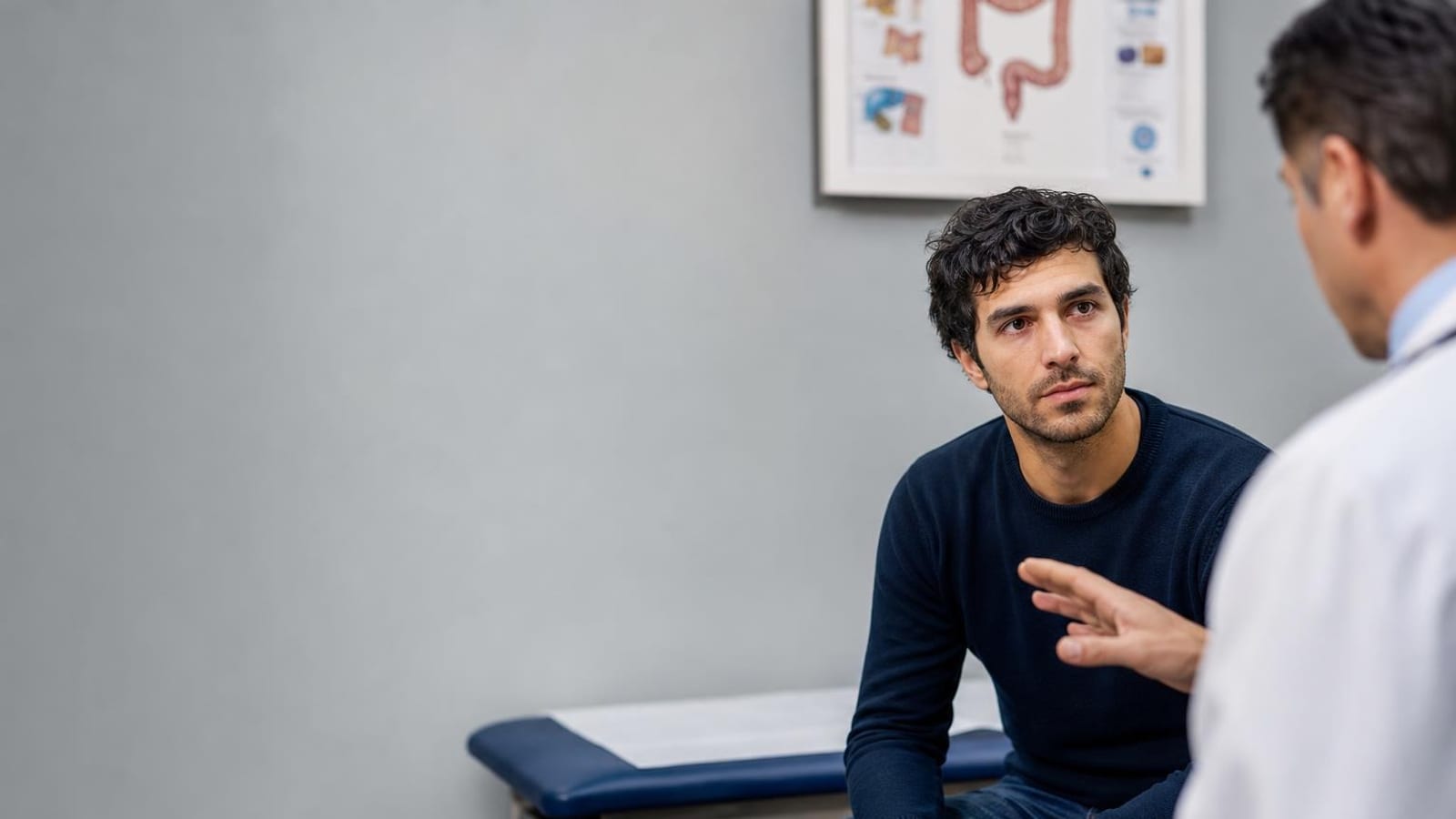
The number is 45. Not 50. The American Cancer Society moved its recommended starting age for average-risk adults down to 45 back in 2018, and the U.S. Preventive Services Task Force followed in 2021. If you're 45 or older and you've never been screened, you're behind. Not catastrophically. Just behind.
And you know it. That's the part worth saying out loud. Most guys who haven't been screened aren't unaware of colonoscopies. They've got a father-in-law who talks about his. They've seen the commercials with the dancing box. They know. It just keeps landing on the list underneath the water heater, the travel team schedule and the quarter-end close.
Colorectal cancer is one of the leading causes of cancer death in the United States, and rates in adults under 50 have been climbing for years. It's also one of the few cancers where screening doesn't just catch it early — it can stop it from ever happening, because the polyp that would have become cancer gets snipped out in the same appointment. That's a rare deal in medicine. Most screening finds problems. This one removes them.
Why it gets pushed
Ask ten men and you'll get four honest answers.
The prep. Everybody's heard the stories. The stories are exaggerated, but they're not made up.
The sedation and the driver. You need a human being to take you home. That means telling somebody, which means admitting you're doing it, which for some guys is the actual obstacle.
The cost, or the fear of it. A surprise bill for something you felt fine walking into stings worse than one for a broken arm.
And the last one, which nobody says at the gym: you don't want to know. You've been quietly ignoring something for eight months and a test that could confirm it feels worse than the eight months did.
That fourth one is the expensive one. It's also the dumbest, and I say that with affection, because I've done it.
Three real options, not one
The mistake is thinking screening means colonoscopy or nothing. It doesn't. Talk to your doctor about which fits you, but these are the ones on the table for average-risk adults.
The FIT test. An at-home stool test you do once a year. You get a kit in the mail, you collect a sample with a little stick, you mail it back. No prep. No diet change. No day off. It looks for blood you can't see. If it's positive, you get a colonoscopy. If you have never been screened and the word "colonoscopy" is why, order this one. A yearly test you actually do beats a ten-year test you never schedule.
Stool DNA testing. The mail-order box, done every three years instead of every year. It looks for blood and for altered DNA shed by polyps and tumors. More sensitive than FIT for some things, more false positives too, which means more follow-up colonoscopies. Still no prep.
Colonoscopy. Once every ten years if it's clean. It's the only one that finds and removes polyps in the same visit, and it's the one every other test eventually sends you to if something shows up. It costs you a day and a half.
Your family history changes the math. A parent or sibling with colorectal cancer, a history of inflammatory bowel disease, certain genetic syndromes — any of those and you may need to start earlier and go with colonoscopy directly. Your doctor decides that, not an article.
The prep, handled properly
The prep is the whole objection, so let's deal with it like adults.
You'll spend the day before on clear liquids and the evening drinking a prep solution that empties you out. Most centers now use a split dose — half at night, half early the next morning. It works better and it's easier than the old single-dose version. Some people get a tablet-based prep instead of a jug. Ask if you're eligible.
What actually helps:
- Chill the prep and drink it through a straw. Cold and past the tongue. Both help.
- Have a chaser ready that's allowed on your clear-liquid list. Lemon-lime soda, ginger ale, clear broth between rounds.
- Buy the barrier cream and the wet wipes before the day. Diaper cream, the thick zinc oxide kind. This is the single tip men skip and regret.
- Start the low-residue eating two or three days out if your center allows it. Less fiber going in means less work coming out.
- Block the evening. Don't prep and then try to coach practice. You won't make it.
The hunger is real and it's boring. The night is long. Then you wake up, finish the second dose, get driven in, and the procedure itself takes maybe half an hour and you sleep through it. Nobody comes out of that room saying it was the worst thing they've been through. They come out asking when they can eat.
The money part
Under current federal rules, most insurance plans have to cover recommended colorectal cancer screening for people 45 and up with no cost sharing. Rules also now treat a follow-up colonoscopy after a positive stool test as part of the screening, which closed a gap where men were getting billed for the second step.
Two things still trip people up. Out-of-network anesthesia, and the way a screening colonoscopy can get coded differently if a polyp is removed. Call your insurer before you book, ask specifically whether the facility, the physician and the anesthesia provider are all in network, and ask what happens to coverage if a polyp is found. Write down who you spoke to. Uninsured and paying cash, the FIT kit is cheap enough that there's no excuse at all.
Don't wait for a birthday
Screening is for people with no symptoms. If you've got symptoms, that's not screening anymore, and the age number doesn't apply to you. Blood in the stool or on the paper. A change in your bowel habits that's stuck around for weeks. Unexplained weight loss. Persistent cramping or a feeling that you're not emptying. Iron deficiency showing up in bloodwork for no reason.
Any of those, at any age, you call this week. Not after the season. Young men are getting diagnosed with this disease and a fair number of them spent a year being told it was hemorrhoids or stress. Push.
The week around it
Training-wise, this costs less than you think. The prep day, skip the session. You're fasting and losing fluid, and a heavy squat under those conditions is a stupid way to find out how much you'd lost. Do some walking.
Procedure day is a write-off. Sedation means no driving, no decisions, no lifting. Eat a real meal, drink water with electrolytes, and go to bed early.
If they removed polyps, read the discharge sheet before you do anything. It'll tell you what to avoid and for how long, and it usually includes a few days without heavy lifting or straining. Follow it exactly. That paper is worth more than whatever your program says that week.
Then you're back. Same bar, same numbers, and a ten-year date on the calendar instead of a low hum of avoidance.
You've got a training log going back years. You know your best pull, your resting heart rate, probably your body weight to the half pound. Add one line to the file. It takes a phone call.
This is general information, not medical advice. Your doctor decides what screening you need and when.
Cal Brennan
Fitness
Strength coach. Trains fathers, tradesmen and desk workers, which means programs that survive a bad week.

Watch
Watch how it's done
Picked for this article.
From channels we rate. Plays on YouTube.
UCLA Health
Colorectal cancer screening options – Pick a test, get it done! I UCLA Health
Dr Zaid Fadul (MD)
Which Colon Cancer Test is Best For You?
Read next