How to keep training when you've got 40 minutes and two kids
Three short sessions a week, five movements, and a deload you didn't plan. The program that survives a sick toddler is the one that works.
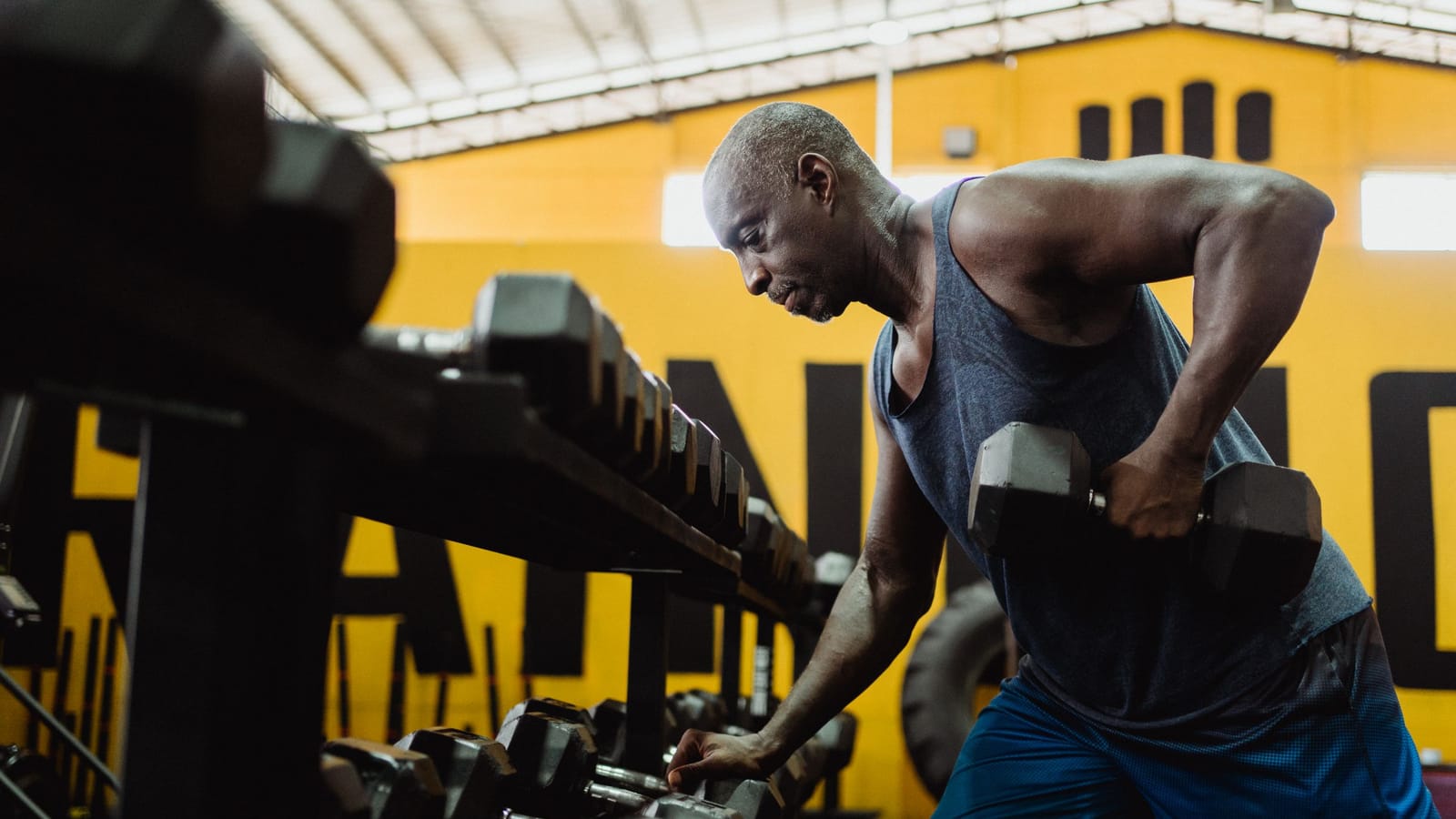
At 24 you could train six days a week, eat gas station food, sleep five hours, and still add ten pounds to your bench. At 34 you have a mortgage, a job that follows you home, and a four-year-old who wakes up at 5:12 a.m. with opinions. The program that worked then doesn't fit now. Not because your body fell apart. Because your calendar did.
So build the program around the calendar.
Three sessions a week, 40 minutes each, done for two years straight, will make you stronger than any six-day split you abandon in March. That's the whole argument. Everything below is just plumbing.
Two sessions is the floor, not the failure
Write the week as three. Plan for two. If you hit three, good. If a kid gets strep and you get one, you didn't fall off, you had a light week.
The reason this matters is psychological, not physiological. Guys quit when they miss. They miss Wednesday, then Friday feels pointless, then it's been a month and the bar in the garage has a bicycle leaning on it. Set the bar at two and you almost never miss, and you almost never quit. Strength is embarrassingly loyal to people who just keep showing up.
Put the sessions on the shared family calendar with a start time and an end time, like a dentist appointment. "Gym, 6:00–6:45." Vague intentions lose every negotiation with a Tuesday.
Five movements, and that's the list
Squat something. Hinge something. Push something. Pull something. Carry something heavy for 40 yards.
That's the menu. You don't need a lat pulldown and a pec deck and a rear-delt fly. Those are fine. They're also the reason your workout takes 90 minutes.
A session that fits in 40 minutes looks like this:
- A1. Main lift, 3 work sets of 5. Squat, deadlift, bench, or overhead press. Pick one per day.
- A2. Second lift, 3 sets of 8. Opposite pattern. Bench day gets rows. Squat day gets a Romanian deadlift.
- B. Two accessories, 2–3 sets of 10–12. Split squat, dip, chin-up, curl, whatever your shoulders and elbows like.
- C. Carry. Two trips, 40 yards, heavy enough that you're glad it's over.
Rotate the main lift across three days so everything gets hit weekly. Deadlift Monday, bench Wednesday, squat Friday. Next week press instead of bench. It's not clever. Clever is for people with time.
Your first set is your warm-up
The 20-minute mobility routine is the single biggest thief of a short session. You don't need it. You need the bar, then 95, then 135, then work.
Five minutes total: walk in, do a set of ten bodyweight squats or arm circles, then ramp the actual lift in three jumps. If something's genuinely cranky, give that joint two minutes of specific work and move on. A hip that hurts on set one usually feels fine by set three. A hip that hurts worse on set three is telling you to go home, and you should listen.
Rest 90 seconds between accessory sets and two to three minutes between heavy sets. Yes, that eats the clock. That's why there are only four exercises.
Leave two reps in the tank, every time
The thirties rule that saves the most training days: stop each set when you could still do two more clean reps. No grinders. No missed lifts. No "let me just try one more single" at 8:40 p.m. when the house is quiet and you feel like a hero.
Progress by adding a rep before you add weight. Three sets of five at 225 becomes three sets of six, then seven, then back to five at 235. It's slow. It's also the version where you're still lifting in October.
The single fastest way to lose eight weeks at 35 is an ego single on a day you slept badly. The second fastest is coming back from a layoff at the weight you used to lift. Start 20 percent lighter than you think and earn it back in three weeks. You'll get there faster than the guy nursing a strained pec.
Home gym math, and when it's the wrong answer
If the gym is more than about 12 minutes from your door, your 40-minute session is really a 70-minute commitment, and it dies the first time bedtime runs long. Drive time is the hidden killer.
A used barbell, 300 pounds of plates, a squat stand, an adjustable bench, and a pull-up bar can usually be assembled off local classifieds over a few months for less than a year of a nice gym membership. Buy the plates used. Buy the bar new-ish. Rubber horse stall mats from a farm supply store cost a fraction of "gym flooring" and are the same thing.
The honest trade-off: a garage in Minnesota in January is miserable, and a garage in Phoenix in July is worse. Some guys need the social pull of a real gym or they'll never go. If the commercial gym sits on your drive home from work, that's a genuinely better setup than a cold garage you walk past. Know which kind of person you are.
Conditioning that doesn't eat your recovery
Walk. A lot. Push a stroller up hills. Twenty to thirty minutes most days, and it doesn't have to be one block of time.
Then add one hard finisher per week, 8 to 10 minutes. Hill sprints, a sled, a rower, kettlebell swings on the minute. One. Not four. Two hard conditioning sessions a week on top of three lifting sessions is a great way to feel flat, sleep badly, and blame your age.
You can't fix sleep, so lower the volume instead
If there's a baby in the house, your sleep isn't negotiable and no amount of magnesium is fixing it. The lever you actually control is how much work you ask your body to absorb.
During a bad stretch, cut to two sessions, drop the accessories, keep the main lifts at a comfortable weight, and keep walking. Maintaining is a real goal. You'll come out the other side in six months and pick up almost exactly where you left off, which isn't true if you'd spent those six months doing nothing.
Get protein in at breakfast rather than backloading it all onto dinner. Eggs, cottage cheese, a scoop of whey in coffee if that's what it takes. Skip the supplement aisle beyond creatine, which is cheap and boring and fine for most healthy adults. Anything you're taking for a medical reason, or any pain that doesn't quit after a couple weeks, is a conversation with your doctor, not with the internet.
Deload when life deloads you
Every fourth week, or any week that goes sideways, cut your sets in half and keep the weight. You'll feel better on week five. Thanksgiving, a work trip, a stomach bug that runs the household in sequence for nine days, all of these are deloads. Call them what they're instead of calling them failures.
The part nobody puts in the program
Your wife needs her window too. If you're taking 6:00 to 6:45 on Monday, Wednesday, and Friday, she gets the equivalent, and you cover it without being asked twice. A training schedule that runs on your spouse's silent resentment has a shelf life of about five weeks.
And let the kids in. A three-year-old counting your reps out loud, badly, is better company than a podcast. Load the sled with the six-year-old on it. They're watching what a grown man does with his Tuesday evening, and they're filing it away.
Forty minutes, three times a week, for the next decade. Do the math on that. It's roughly 1,500 hours of a man getting harder to kill while everyone around him gets softer.
Cal Brennan
Fitness
Strength coach. Trains fathers, tradesmen and desk workers, which means programs that survive a bad week.

Watch
Watch how it's done
Picked for this article.
From channels we rate. Plays on YouTube.
Forged FATHER
My 40 Min Training Framework For BUSY DADS
Read next