Why the twenty-minute nap beats the hour you'd rather take
Sleep researchers keep landing on the same short window, and the reason has everything to do with how groggy you feel when you stand up.
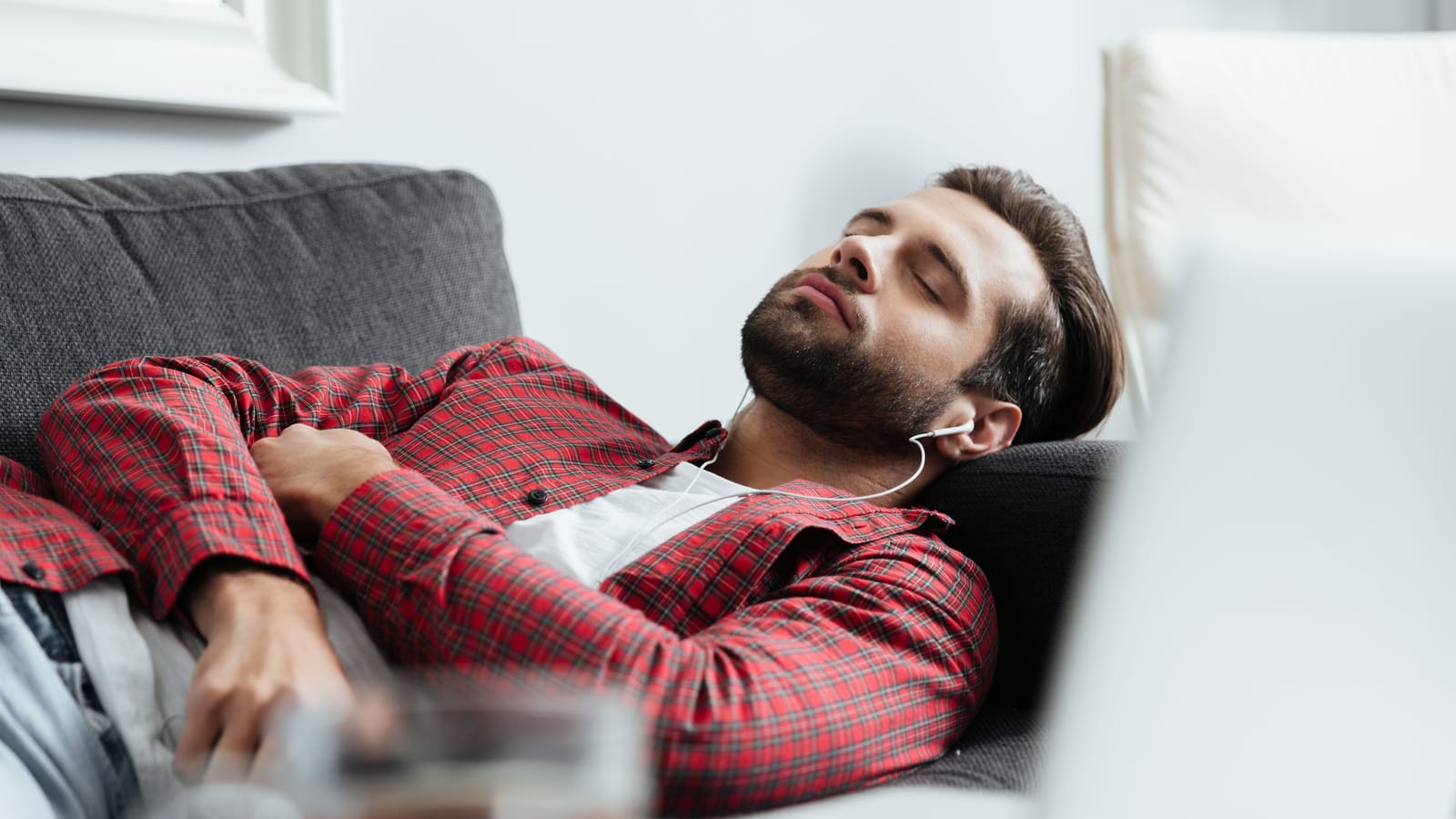
Twenty minutes. Shoes off, timer on, flat on the couch or reclined in the driver's seat, and you get up when the alarm goes even though every part of you wants five more. That's the whole protocol. The hard part isn't falling asleep, it's the standing up.
Most people who say naps don't work for them have never actually napped short. They lie down at 2:30, wake at 4:10 with a crease in their face and a mouth like carpet, decide the whole enterprise is a scam, and go back to drinking coffee at 5 p.m. What went wrong wasn't the nap. It was the length.
The afternoon dip isn't the sandwich
There's a slump built into the day. Body temperature and alertness don't fall in a straight line from morning to night. They dip in the early afternoon, roughly seven to nine hours after you woke up, and then climb back for a stretch in the evening. Shift workers feel it. So do people who ate nothing but black coffee for lunch. It's circadian, not caloric.
That dip is the window. If you're going to sleep in the middle of the day, this is when your body is most willing, and also when it does the least damage to tonight.
Which is the whole game for anybody with a job and children. You're not optimizing. You're trying to get through Tuesday without borrowing from Wednesday.
What happens in the first thirty minutes
Sleep isn't one thing. You pass down through lighter stages into slow-wave sleep, the deep stuff, and in a normal afternoon nap that transition starts somewhere around the twenty to thirty minute mark. Before it, you're in the shallow end. Waking up is easy.
Once you're into deep sleep, waking up is a different experience entirely. That fog is called sleep inertia, and it's a real, measurable thing with a name, not a personal failing. It can hang on your performance for fifteen to thirty minutes, and in a bad case longer. So the twenty-minute nap gets you the alertness benefit and skips the toll booth on the way out.
NASA's work with long-haul flight crews is the study everybody cites, and it's worth knowing why. Pilots given a planned rest opportunity in the cockpit slept about twenty-six minutes on average, and their alertness and reaction time on the back end of the flight held up better than the crews who powered through. Short, planned, in the dip. Not an hour and a half on the break room couch.
The long nap isn't evil, it just costs something
Ninety minutes gets you a full cycle and you'll usually come out of it cleanly, because you're surfacing through the light stages again rather than getting yanked out of the deep. If you had a newborn night, or you drove home at 2 a.m., a ninety-minute nap is the honest answer and you should take it.
The cost is tonight. Sleep pressure is a tank that fills all day and empties when you sleep. Drain a big chunk of it at 3 p.m. and you'll be staring at the ceiling at 11. For a parent whose only quiet hour is after bedtime, that trade can be worth it. Just make the trade on purpose instead of discovering it at midnight.
One more thing on long naps. You'll see observational research linking habitual daytime napping of an hour or more with worse cardiovascular outcomes, and it gets reported as though the nap did the damage. Read those studies carefully and the direction is murky. People who need long naps every day are often already sick, already carrying excess weight, already dealing with untreated sleep apnea. The nap may be the smoke, not the fire.
Coffee first, then lie down
Caffeine takes roughly twenty to thirty minutes to show up in your blood. So drink the cup, then set the timer, then nap. The alarm and the caffeine arrive at about the same moment and you skip most of the grogginess.
It sounds like a party trick. It's the single most useful thing on this page if your afternoon involves a commute, a table saw, or a toddler and a set of stairs.
Don't do this after about 2 p.m. if you're in bed by ten. Caffeine's half-life runs somewhere around five hours in most adults, longer in some, which means a 3 p.m. cup is still working on you at bedtime whether you feel it or not.
The cutoff, and the one rule that overrides everything
Rough guide: no naps inside about seven hours of your bedtime. Ten o'clock lights out means you're done napping by three.
And the override. If you have trouble falling asleep or staying asleep at night, stop napping entirely. Not shorten it. Stop. Insomnia treatment runs on building sleep pressure and keeping the bed associated with sleeping, and daytime naps work directly against both. This is the one place where the nap isn't a neutral tool. Give it six weeks off and see what your nights do.
Where a parent actually does this
The couch at 1 p.m. on a Saturday is the obvious one, and it's also the one that gets negotiated away. Some options that survive contact with real life:
- The parking lot. Recline the seat, crack the window, phone timer, keys in your pocket. Twelve minutes is enough to be worth it.
- The overlap. If the kids still nap, the first twenty minutes of theirs is yours. The dishes will keep. They've always kept.
- The floor of the office with the door shut. Awkward. Effective. Nobody has ever once asked me about it.
- The Sunday sanctioned nap. Tell your wife or your husband you're taking twenty and will be up at 2:15. Trade it. Give them theirs.
Skip getting fully under the covers and skip changing clothes. You're aiming for a rest, not a bedtime, and every ritual you add makes it likelier you sleep ninety minutes instead of twenty.
When the nap is a symptom
A nap should feel like a choice. If you're fighting sleep at your desk, nodding off at red lights, or sleeping eight hours and waking up like you didn't, that's not a nap deficit. Loud snoring, gasping, morning headaches, or being told you stop breathing all point the same direction, and sleep apnea is both common and very treatable. Take it to your doctor and ask specifically about a sleep study. Same goes for new, unexplained daytime sleepiness that shows up without a cause.
The one you should take instead of the workout
Pick a week where you slept badly three nights running and your training session is already the fourth priority. Take the nap. A twenty-minute rest and a walk will do more for you that day than a mediocre hour under a bar with a nervous system that's running on fumes, and it costs nothing you'll have to make up later.
The nap isn't a reward for finishing your work. It's a tool for finishing your work. Set the timer.
Cal Brennan
Fitness
Strength coach. Trains fathers, tradesmen and desk workers, which means programs that survive a bad week.

Watch
Watch how it's done
Picked for this article.
From channels we rate. Plays on YouTube.
Dr. Marc Milstein
How To Power Nap Based on Brain Science | A Dose of Science | Dr. Marc Milstein
9NEWS
Health expert explains the importance of 'power naps'
Read next