

Fish the Shade Line Before the Sun Gets Over the Dock
A dock is a ready-made bass hotel. Fish it in the right order, in the first hour of light, and you'll be home before the heat shuts it down.
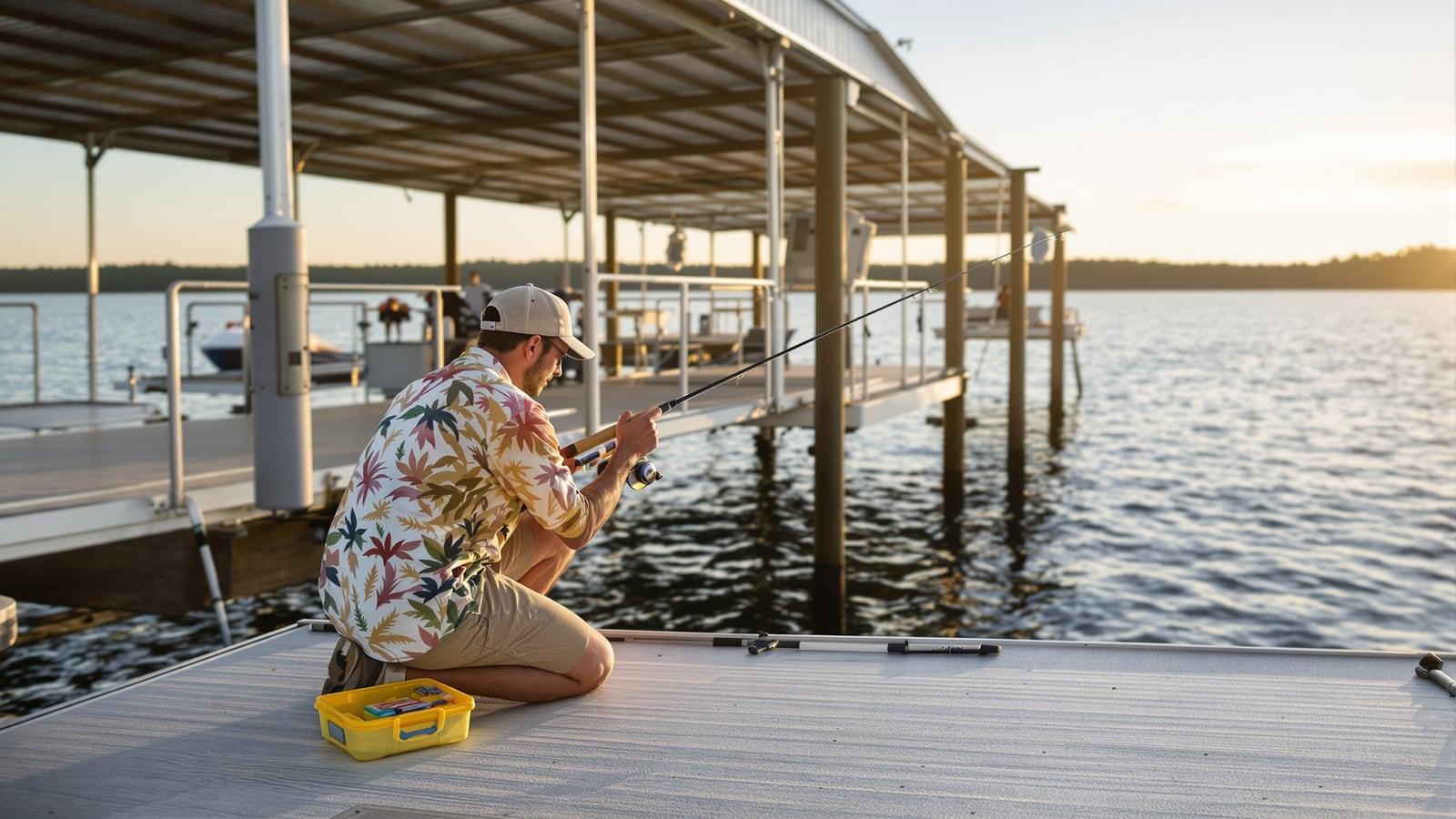
Quick answer: Start with a topwater bait in the first half hour of light. Switch to a weightless stick worm or a small jig when the sun clears the trees. Fish the shade, the pilings and the deep corner, and cast past the dock, not at it. Check your state or provincial rules before you go, because licenses, limits and pier exemptions all vary.
The dock is the structure
Most people walk out to the end of a dock and cast straight out into open water. That's the one place bass aren't.
A dock is shade, cover and an ambush point in one package. Baitfish hang in the shade. Bass hang just inside it, facing out, waiting for something to drift past. Your job is to put a bait where the dinner would be, which means you're fishing the edges of the dock itself, not the lake it sits on.
Walk the dock slowly and look before you cast. Know what you're looking for.
- The shade line. Wherever the dock's shadow ends on the water, that edge is a feeding lane. It moves as the sun climbs, so you'll chase it.
- Pilings. Every post is a place for a bass to tuck in. Wood and concrete both hold algae and small prey.
- The deep corner. Walk to the end of the dock and look at how the water color changes. Darker means deeper. A bass that's been in six feet all night will slide toward that deeper corner as the light comes up.
- Anything hanging off it. Boat lifts, swim ladders, floating platforms, tied-off jon boats. Each one is more shade and more edges.
- What's on the bottom. On clear water in the right light, you can see brush piles and sunken cinder blocks that someone dropped by the dock. Those are gold.
Why dawn, and what the heat does
Bass in warm water don't want to work hard in a hot afternoon. In the first hour of light the water is at its coolest, the baitfish are active and the fish are still in feeding mode after a night of low light. Once the sun is high and the water on top is warm, bass push deeper or settle into the thickest shade and mostly sit.
So the window is real, and it's short. Plan on about two hours. Be on the dock with your first cast ready when there's enough light to see your line. That's earlier than you want to be, and that's the point.
The order of baits
Don't tie on one lure and fish it all morning. Run the dock in order, from fast and loud to slow and quiet.
First light: a topwater. A walking bait or a small popper, cast parallel to the dock about a foot or two off the edge. Retrieve it with a steady, lazy rhythm. A bass will come up from underneath, and some of them will miss it the first time. Don't set the hook on the splash. Wait until you feel the weight, then lean into it.
Once the sun's over the trees: a stick worm. A soft plastic stick bait rigged weightless and wacky style, hooked through the middle, is as good a dock bait as there is. Cast it past a piling, let it fall on a slack line and watch the line, not the rod tip. If it twitches or swims off sideways, reel down and set.
When the bite slows: a small jig or a shaky head. These go straight down the face of a piling or into the deep corner. Drop it, let it hit bottom, shake it in place for ten seconds, then move on. Slow is the whole technique here.
The cast that does the work
The skip cast is the one skill that separates dock fishermen who catch bass from dock fishermen who watch them. You're trying to slide a bait under the dock, past the boards, into the shade where the big ones sit.
Keep the rod low and sidearm. Use a flick of the wrist, not your whole arm, and aim for the water a few feet in front of the dock so the bait skips under like a flat stone. A weightless worm or a light jig skips best. A bait with a hook that's riding up on the surface will skip even better. It takes an hour of practice to get decent, and you'll lose a few baits to the boards. That's the price.
When a fish hits under a dock, it's going to try to wrap you around a piling. Fish heavier than you think you need: a medium-heavy rod of about seven feet, with braid and a fluorocarbon leader, or straight fluorocarbon in the 12 to 17 pound range. Set the hook and keep the rod up. Don't give it any slack to get the line around a post.
Move quietly
Bass in shallow water under a dock are spooky. A man in boots stomping down the planks will empty the water before he casts. Walk softly, keep your shadow off the water and don't drop the tackle box. Fishing from the back edge of a dock and casting forward often works better than walking to the front.
If you're fishing someone else's private dock, ask first. A phone call or a knock on the door the evening before costs nothing and buys you a lot of goodwill. Then leave the place better than you found it: pick up every inch of line, every empty bait package and any trash that was there before you showed up.
Rules, keepers and releases
Licenses and regulations vary by state and province, and so do size limits, slot limits and bag limits on bass. Some public piers fall under a license exemption in some places and not in others. Check your wildlife agency's current regulations before the trip, not at the dock. The piece on size limits and slot limits walks through how to read the rules.
What you do with the fish is your call. A bass that's legal and that you plan to eat is a fair keeper, and there's nothing wrong with a fish fry. Plenty of anglers release every bass they catch, and that's a respectable choice too. If you're letting it go, wet your hands, keep it in the water as much as you can and support it properly. How to release a fish so it actually lives covers the details.
A few practical things
Wet boards are slick at dawn, so wear shoes with grip. Bring a headlamp for the walk out. If kids are with you, put a life jacket on them before they step on the dock. And if you've got a young one who isn't ready for bass, a bluegill outing fits the same dock and a shorter attention span. Here's how to run one.
Be on the water at first light, work the shade and the posts, and quit when the sun's high and the bites stop. You'll be back at the house before the heat gets going, with the whole day still ahead of you.
Wes Dunbar
Country & Skills
Grew up on an acreage and never quite left. Covers trucks, trades, land, and how to do the thing yourself.

Watch
Worth an hour of your evening
More from Fishing.
From channels we rate. Plays on YouTube.
Read next