

Bacon fat is the cheapest upgrade in your kitchen
Most guys cook the bacon and wash the best part down the sink. Render it low, strain it, and every pan you own gets better.
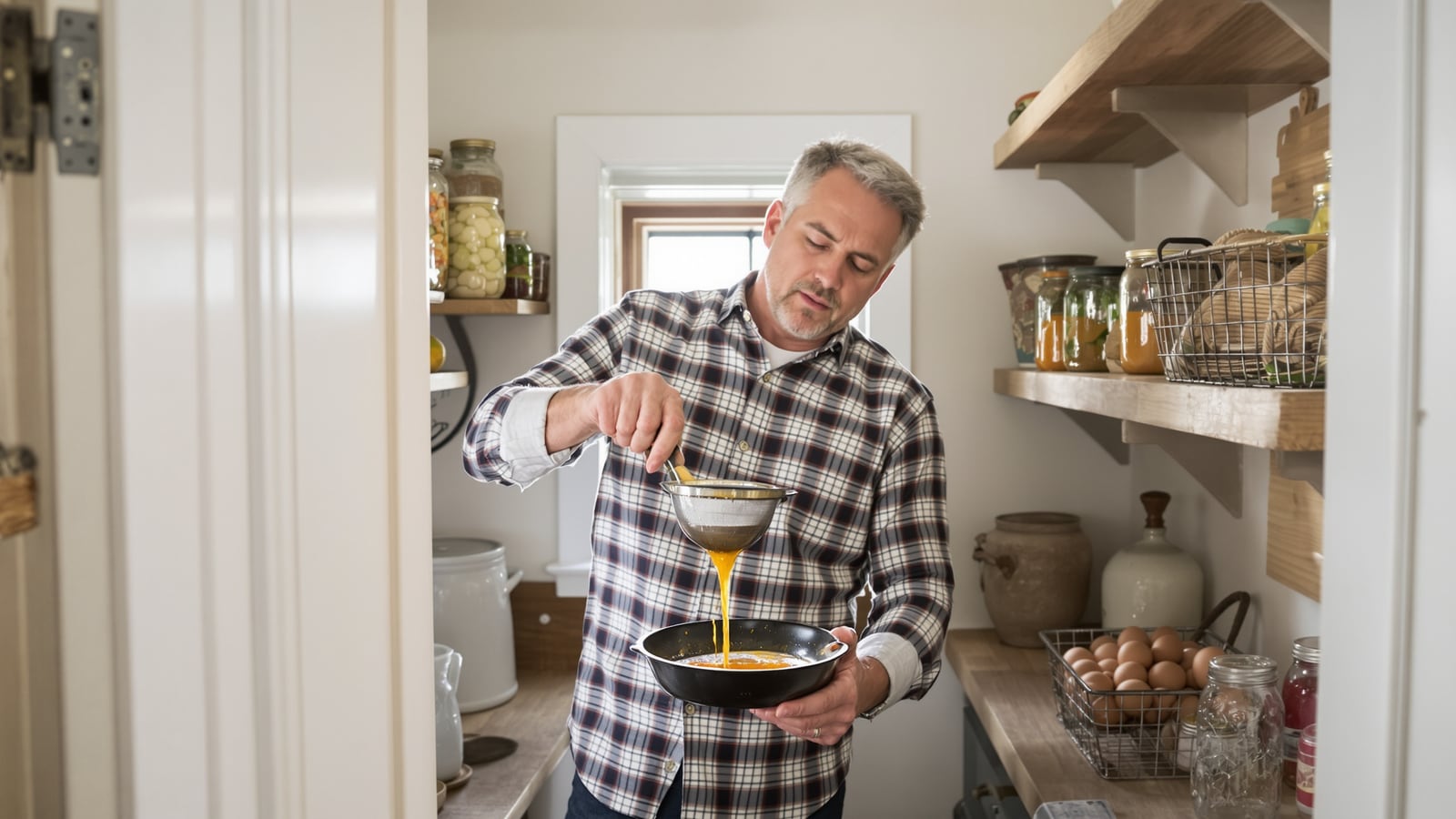
Quick answer: Start the bacon in a cold pan over medium-low heat and don't rush it. Pour off the fat as it builds, strain it through a fine mesh sieve into a jar, and keep it in the fridge. Cook your eggs, potatoes, greens and cornbread in it, and cut back on the salt.
Where most people lose it
The usual breakfast goes like this. Pan hot, bacon in, grease spitting, smoke alarm sulking. The strips curl, the edges go black before the middle's done, and the fat in the pan is scorched and bitter. So it goes in the trash or down the drain.
That's the whole problem. You didn't ruin the fat because bacon fat is bad. You ruined it because you cooked it like a steak.
Bacon is mostly a rendering job. The fat has to melt out slowly, and the meat crisps in what's left. High heat browns the surface and the cure long before the fat has gone anywhere. You get chewy streaks, burnt edges and a pan full of fat you can't use.
And the drain is the wrong place for it anyway. It cools and hardens in the pipe, and a plumber is a pricey way to learn that.
How to render it right
Lay the strips in a cold skillet. Cast iron is ideal, and if yours has seen better days, it's probably not ruined. Overlap them a little at first. They'll shrink.
Turn the burner to medium-low. Now leave it alone for a few minutes. You want a lazy sizzle, not a roar. If the pan is spitting, you're too hot.
Flip every couple of minutes. A pound of regular-cut bacon in a 12-inch skillet usually takes ten to fifteen minutes to crisp properly. Thick-cut takes longer. Trust color and sound, not the clock. When the sizzle quiets down and the edges are deep amber, the water's gone and it's done.
Cooking more than half a pound? Pour the fat off between batches into a heatproof container. Bacon sitting in a deep pool of fat stops crisping and starts frying in its own bath, which makes it greasy instead of crisp.
The oven works too. Put the strips on a rimmed sheet pan in a 400°F oven for about fifteen to twenty minutes. It's hands-off and the strips come out flat. The trade-off is that you've got a pan of hot fat to carry, and it slops. Use both hands and take your time.
Strain it, store it
Let the fat cool for a few minutes. It should still be liquid, but not scalding. Pour it through a fine mesh sieve, or a paper coffee filter set in a funnel, into a clean glass jar. A canning jar is perfect.
Two warnings. Don't pour smoking-hot fat into a cold jar, because glass cracks and hot fat on a counter is a bad morning. And don't skip the straining. The little brown bits in the fat are what go off first and what burn first when you cook with it. Clean fat keeps. Dirty fat doesn't.
Cover it and put it in the fridge. It'll set up white and firm, and it's good for a good while that way. Keep a clean spoon for scooping so you don't carry crumbs back in. If it ever smells sour, rancid or off, throw it out. Your nose is the test. If you won't use it within a couple of months, freeze it in an ice cube tray and drop the cubes in a bag. Each cube is about a tablespoon, which is handy.
What it's good for
Think of it as a seasoning that happens to be a fat. A little goes a long way.
- Eggs. A teaspoon in a hot skillet. Fried eggs with crisp, lacy edges. Scrambled eggs that taste like someone cared.
- Roasted potatoes. Toss cubed potatoes in two tablespoons per pound, salt lightly, and roast hot on a sheet pan. The outsides go glassy and brown.
- Cornbread. Melt a spoonful in the cast iron pan while the oven heats, then pour the batter into the sizzling fat. The crust is the reason to bother.
- Greens and cabbage. Wilt collards, kale or shredded cabbage in it with a splash of vinegar. It's the old Southern move because it works.
- Brussels sprouts and green beans. Sear them cut-side down in a spoonful of fat. Even the kids who hate vegetables go back for seconds.
- Burgers and grilled cheese. Fry the sandwich in a thin film of it instead of butter. Smash burgers in a skillet come out beautifully browned.
- Popcorn. Pop the kernels in it on the stove. Salt after, not before.
- Seasoning your skillet. A thin wipe after cleaning keeps the surface protected. It's a perfectly good seasoning fat.
Where it doesn't belong
Be honest about what it is. It's smoky and salty, and that flavor goes everywhere. Pancakes in bacon fat sound clever until the syrup meets it. Cakes and delicate sauces get no help from it.
It also has a lower smoke point than refined oils like peanut or avocado. So don't use it for the hardest, hottest sear of your life. Medium-high is fine. If it's smoking heavily, you're asking too much of it.
Sugar-cured and maple bacon needs a lower flame still. The sugar scorches fast, and burnt sugar tastes like regret. The fat from those slabs is still usable, but strain it carefully and expect a sweeter edge.
Salt, and what to do about it
Cured bacon is salty, and so is its fat. Cook with it and your food starts out seasoned. Hold the salt until the end and taste first. Nobody ever un-salted a pot of greens.
If the fat tastes too aggressive on its own, cut it. Use half bacon fat and half neutral oil in the pan. You get the flavor without it taking over the plate.
The money part
A good pound of bacon isn't cheap, and the fat comes free with it. That's the quiet pull of this habit. Every strip you cook for breakfast ends up flavoring Tuesday's potatoes and Thursday's greens, which stretches a grocery budget without anyone noticing. If you're cooking for a family on a tight number, it sits comfortably next to the rest of how to feed a family well when the food budget is tight.
It also fits the Sunday-prep habit. When you cook components, not meals, a jar of seasoned fat in the fridge door turns a plain pile of rice or roasted vegetables into something worth eating on a weeknight.
Fry the bacon slowly this weekend. Strain it into a jar. By Wednesday, you'll wonder how many jars you've thrown away.
Wes Dunbar
Country & Skills
Grew up on an acreage and never quite left. Covers trucks, trades, land, and how to do the thing yourself.

Watch
Worth an hour of your evening
More from Food.
From channels we rate. Plays on YouTube.
Read next