

Save a mug of pasta water and your sauce stops being soup
The cloudy water you pour down the sink is the cheapest ingredient in your kitchen. Here's how to use it so the sauce clings instead of puddling.
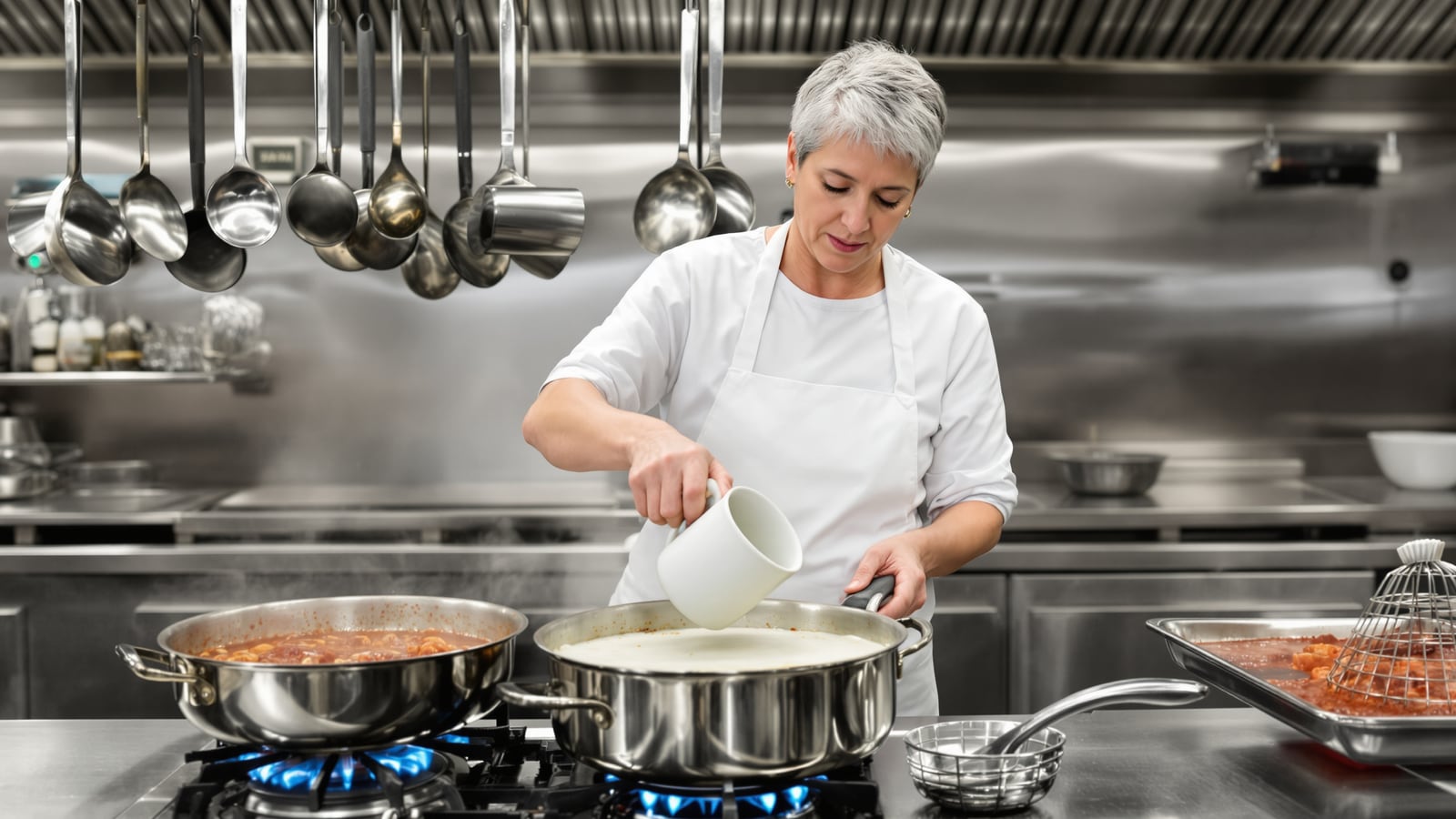
Quick answer: Before you drain, scoop out a mug of the cooking water. Pull the pasta about two minutes early, finish it in the sauce pan with a splash of that water, and stir hard over medium heat for a minute or two. The starch in the water binds the sauce to the noodles.
You've had the bad version. A jar of marinara gets warmed up, the noodles go on a plate, the sauce goes on top like a hat. By the third bite there's a red puddle on the plate and plain noodles on your fork.
That puddle is the problem, and the fix is already sitting in your pot.
What's in that cloudy water
Dried pasta is mostly starch. While it boils, some of that starch leaves the noodles and goes into the water, which is why the water turns hazy. Starch is a thickener. It's the same idea as flour in gravy, only gentler.
Stir that water into a sauce with some fat in it, whether olive oil, butter, rendered sausage fat or cheese, and the starch holds the fat and the liquid together instead of letting them separate. You get a glossy sauce that coats the pasta. Restaurants do this on every plate. They just don't make a speech about it.
It costs nothing, because you were going to dump it anyway.
The method, start to finish
1. Use less water than the box says. Four quarts for a pound of pasta is plenty. Six or eight is a lot of water to dilute your starch with. A smaller pot gives you cloudier, more useful water.
2. Salt it properly. Two tablespoons of kosher salt in four quarts is a fair starting point if you use Diamond Crystal. Morton's is denser, so use closer to one. The water should taste like a mild broth, not the ocean. Salting the water is the only chance you get to season the pasta itself.
3. Start the sauce while the pasta cooks. You want the sauce in a wide pan, big enough to hold the noodles later. A 12-inch skillet works. So does a cast iron pan, as long as the sauce isn't a long-simmered tomato one that sits in it for an hour.
4. Pull the pasta two minutes before the package says. Bite one. It should still be chalky in the very center. It's going to finish cooking in the sauce.
5. Scoop before you drain. This is the step everybody forgets. Put a heatproof mug right next to the pot, dip it in, then drain. Once the colander is in the sink, it's too late. Pasta water goes from asset to drain cleaner in about four seconds.
6. Move the noodles straight into the sauce. Tongs or a spider strainer, or dump from the colander if you must. Don't rinse. Rinsing washes off the starch you worked to keep.
7. Add a quarter cup of the water and stir like you mean it. Medium heat. Keep the pasta moving for a minute or two. The sauce will tighten and turn glossy, and you'll see it grab the noodles. If it's too thick, add a splash more. If it's still loose, give it another thirty seconds and the extra water cooks off.
8. Finish off the heat. Cheese, butter, a handful of chopped parsley. Stir once more and eat.
What goes wrong
The sauce is too salty. You salted the water hard, then added more water with the sauce, then a salty cheese. It stacks. Taste the sauce before the pasta water goes in. If you're cooking with Parmesan or pecorino, go easy on salt in the sauce itself. And never reduce a big pot of pasta water down on its own. That's how you end up with brine.
The sauce is gluey. You used too much water, or you let it all boil down with the pasta sitting in it. The cure is a splash of fresh hot tap water and a quick stir. Starchy water is a tool, not a bath.
The cheese clumps. Cheese gets stringy and grainy when the pan is too hot. Pull the pan off the burner, let it calm down for ten seconds, then stir in the cheese with a few tablespoons of pasta water. Add the cheese in small handfuls rather than all at once.
The sauce still slides off. Check that there's some fat in it. A plain jar of crushed tomatoes with no oil won't emulsify like one with a few tablespoons of olive oil or a knob of butter. Add a spoonful and stir again.
You used a huge pot. A pot of ten quarts for one pound of spaghetti gives you thin water. Not useless, just weaker. Use more water to start with and you'll need less of it later, so you'll have to compensate by cooking the sauce down a bit more.
Where it earns its keep
Jarred sauce is the easiest place to prove it to yourself. Warm the jar sauce in the skillet. Add the pasta and a ladle of water. Stir for ninety seconds. It will taste like somebody cooked it, because somebody did. You did. A jar of marinara costs a few dollars, and this is how you make it worth more than that. That's useful math when you're feeding a family on a tight budget.
Simple sauces improve the most. Garlic and olive oil. Butter and black pepper. Sausage browned in the pan, with its fat left behind, then pasta and water tossed through. These sauces are almost nothing without the water. With it, they're dinner.
If you're already cooking components ahead of time, keep your sauce in the fridge and reheat it in the skillet with the fresh pasta and a little of the water. Leftover sauce tastes a lot less like leftovers that way.
When it won't help
Pasta water doesn't rescue a bad sauce. A flat, sour, watery tomato sauce will be a glossy, flat, sour, watery tomato sauce. It also does nothing for baked pasta or cold pasta salad, where the noodles sit in sauce for a long time anyway.
And if you cook fresh egg pasta, the water carries less starch and you'll need less of it. Start with two tablespoons and go from there.
The habit to build
Put the mug next to the pot before you ever turn on the heat. Some people tape a note to the colander. It sounds silly until the third time you pour it all down the sink and say a word your mother wouldn't like.
Save a mug. Keep the starch in the dinner. It's a small thing that makes the plate look like you meant it.
Wes Dunbar
Country & Skills
Grew up on an acreage and never quite left. Covers trucks, trades, land, and how to do the thing yourself.

Watch
Worth an hour of your evening
More from Food.
From channels we rate. Plays on YouTube.
Read next