How to read unit prices so the big box is actually cheaper
The small number on the shelf tag lies more often than you'd think. Here's how to check it in five seconds and stop paying more to buy more.
Stand in the coffee aisle and you'll see the whole problem in one glance. The 12-ounce bag has a tag in cents per ounce. The 32-ounce can next to it's priced per pound. The single-serve pods down the shelf are priced per each. Three different denominators, three different sizes, and one guy trying to do fraction math while his kid asks for cereal.
That little number in the corner of the shelf tag is the most useful thing in the store. It's also the most commonly misread. Depending on your state and your chain, it might be required, it might be store policy, and it might be wrong. Learn to check it in five seconds and you'll stop paying a premium for the privilege of hauling home more.
Get everything onto one denominator before you compare anything
The single move that fixes most of it: convert to the same unit in your head before you look at the price.
Sixteen ounces in a pound. So a tag that says 31 cents per ounce is $4.96 a pound. A tag that says $4.49 a pound is 28 cents an ounce. That's the entire trick, and it's the reason the bigger box wins about three-quarters of the time and loses the rest.
Liquids are where stores get creative. One brand of broth prices per quart, the store brand prices per fluid ounce, and the concentrate prices per ounce of concentrate, which is meaningless until you factor in the water you add at home. If a label says it makes eight cups, divide by eight cups, not by what's in the carton.
Counted goods are worse. Eggs go per dozen or per each. Tortillas go per ounce, which tells you nothing about how many taco nights you get. When a unit price is useless, make your own: price divided by the number of meals it produces. That number's uglier and more honest.
Drained weight is the only weight that matters in a can
Canned tomatoes, beans, tuna, olives, artichokes. The net weight on the front includes brine, water, and packing juice that goes down the drain.
Look for the drained weight, usually in smaller print on the back or side panel. Two cans of chickpeas can share a net weight and differ meaningfully in what's actually in your colander. The store's unit price is calculated off net weight every time, because that's the number printed on the label.
Same logic on meat, and this one costs real money. Chicken breasts and pork loin are often sold "enhanced," meaning injected with a saltwater solution. The label tells you the percentage right there on the front. You're paying per pound for that brine, and you're also getting meat that weeps in the pan instead of browning. Check the fine print. If two packs are close on price and one says it contains a solution, the plain one is cheaper per pound of actual chicken and cooks better.
Do the yield math once, then trust it
Bone-in chicken thighs look cheaper per pound than boneless. Sometimes they are. Sometimes you're buying bone at chicken prices.
Don't guess and don't take my number for it. Cook a pack the way you normally cook it, and put the bones and skin on a kitchen scale before you toss them. Now you know what fraction of that package you're actually eating, and you can apply it forever. Do the same with a whole chicken, a bone-in pork shoulder, a bag of unpeeled shrimp. It takes one dinner's worth of curiosity and it settles the argument permanently.
A digital scale that reads in ounces and grams costs less than a decent bag of coffee. It's the highest-return tool in the kitchen for anybody trying to cut a grocery bill.
Two things that never win on the yield math: pre-shredded cheese, which is cut with starch or cellulose so it doesn't clump and therefore melts into a grainy mess, and pre-cut vegetables, which run double or more per pound and go slimy in four days. Buy the block. Buy the whole carrot.
Price per pound you throw away is still price per pound
The warehouse club sells five pounds of ground beef for less per pound than anywhere else in town. That's real. It's also irrelevant if two of those pounds end up gray and freezer-burned behind the ice cream in March.
The honest formula is the unit price divided by the fraction you actually eat. Toss a third of it and you've raised your real cost by half. That turns a lot of bulk wins into losses.
So before you load the cart, answer three questions honestly. Where's it going to live. How long does it actually keep. Will you eat it at the rate you're buying it.
The things that reliably survive bulk buying: rice, dried beans, oats, pasta, flour in an airtight container, canned tomatoes, frozen vegetables, toilet paper. Meat, if you break it down into meal-sized portions the day you get home, press the air out, label it with a date in marker, and freeze it flat so it stacks and thaws fast.
The things that quietly go bad on you: big jugs of cooking oil, which turn rancid and taste like crayons; club-size ground spices, which lose their punch in a matter of months; nuts, unless they go in the freezer; whole wheat flour, same; brown sugar, which turns into masonry. A fifty-pound bag of rice is a fine idea right up until you meet your first pantry moth, at which point you'll wish you'd decanted it into sealed buckets.
Watch the tag for the three tricks
The sale price isn't in the unit price. The permanent shelf tag is usually calculated off the regular price. The yellow sale tag has its own unit price, or it doesn't and you have to do the math. Same with loyalty-card pricing, digital coupons, and buy-two deals. The number in the corner often hasn't caught up.
The comparison unit changes between sizes. Little jar per ounce, big jar per pound. Same shelf, same brand, different denominator. That's not always malice, but it always works in the store's favor.
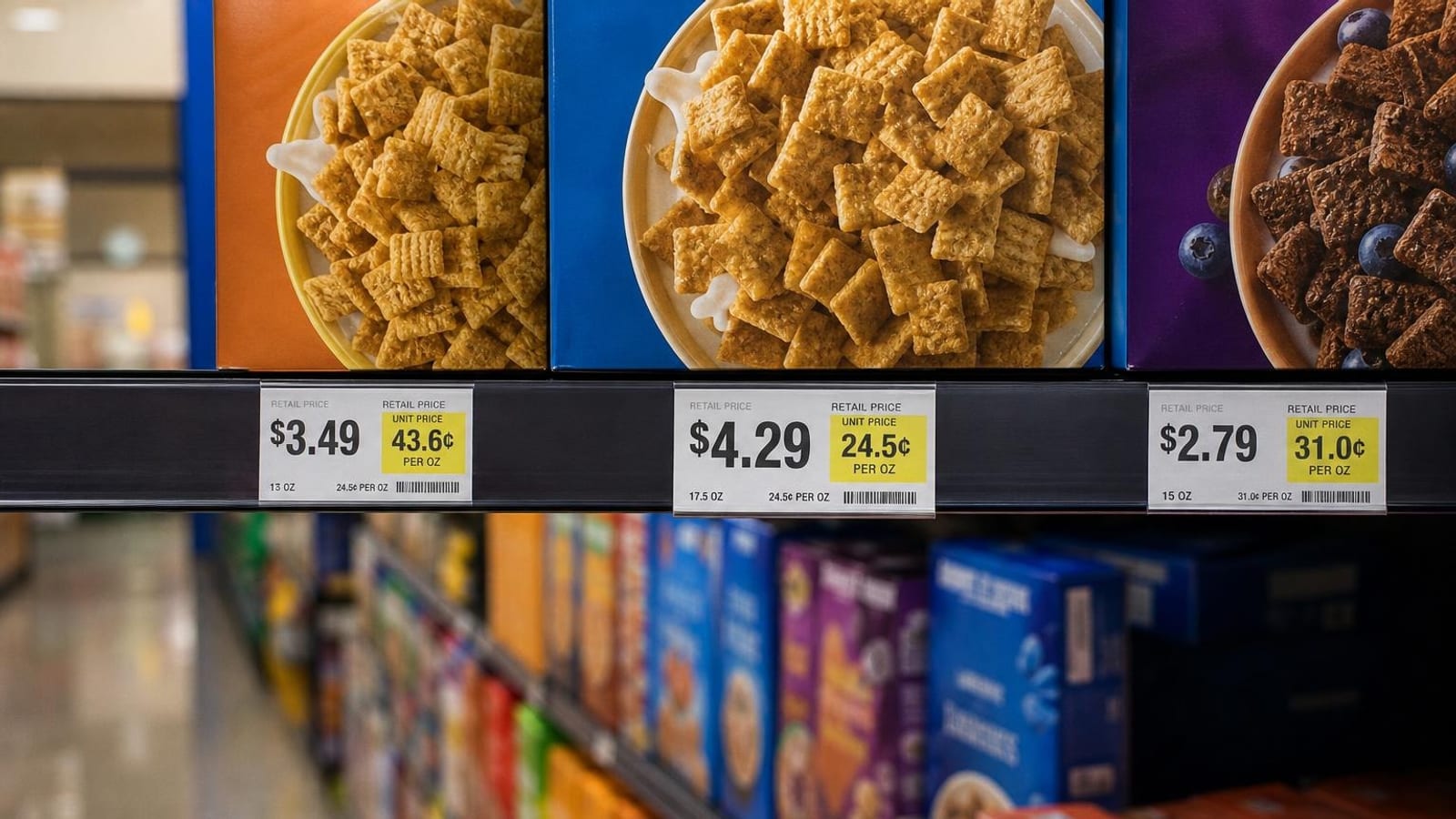
The bigger package sometimes just costs more. It happens more than people believe, especially on cereal, laundry detergent, and anything in a novelty-size container. Check it. The family size is a marketing category, not a discount.
And if you shop a warehouse club, put the membership fee in the math. Divide it by the number of trips you'll realistically make in a year, and add that to each trip's total. Two trips a year and it's a rough deal. Twice a month and it disappears.
Build a price book and stop deciding in the aisle
Open the notes app on your phone. Type out the fifteen things your family actually eats every week: chicken thighs, ground beef, eggs, rice, oats, butter, cheddar, bananas, coffee, whatever yours are. Next to each one, write the best per-unit price you've genuinely seen, with the store name.
Now you have a threshold instead of a feeling. Chicken thighs under your number, buy three packs. Over it, buy one and move on. No agonizing, no getting talked into a fifteen-pound bag by a sign with an exclamation point.
Update it every couple of months, because prices move and your memory doesn't. The whole file takes ten minutes to make and it will outperform every coupon app you've ever downloaded.
The cheapest pound of food in the store is the pound that ends up on a plate.
Wes Dunbar
Country & Skills
Grew up on an acreage and never quite left. Covers trucks, trades, land, and how to do the thing yourself.

Watch
Worth an hour of your evening
More from Food.
From channels we rate. Plays on YouTube.
Read next