

Set the tomato stake the day you plant, not the day it falls
Stake after the plant sprawls and you'll spear roots, snap stems and lose fruit. Match the support to the tomato, set it at planting, and tie it right.
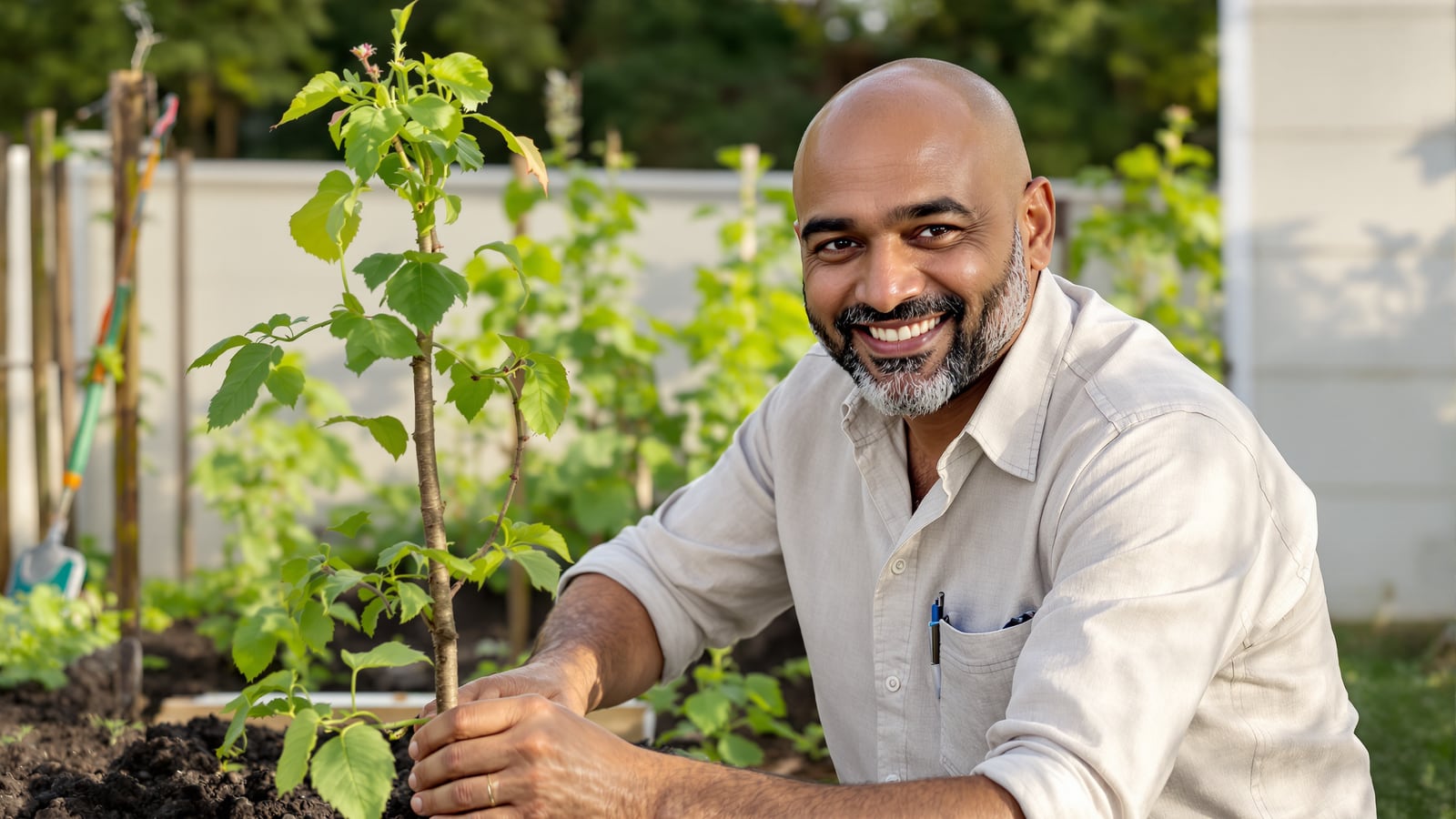
Quick answer: Find out whether your tomato is determinate or indeterminate. Drive a tall, sturdy support into the ground within a few inches of the plant the day you set it out. Tie with soft material, loosely, every foot or so as it grows.
That's the whole job. The rest is what goes wrong when you skip it.
The July morning everybody gets once
The plant looked fine in June. Then it set fruit, a thunderstorm came through, and now it's lying across the bed like a drunk on a porch. The stems that held up well enough at three feet are folding at six. Tomatoes are touching the soil, and the ones touching soil are the ones the slugs found first.
So you grab a stake and hammer it in next to a loaded plant. You hit something. That something is a root, and you've just cut it in the middle of the heaviest-demand stretch of the season.
Staking late isn't a small mistake. It costs you roots, stems and fruit all at once. Staking at planting costs you nothing but five minutes and a mallet.
Know what you planted
Everything depends on this, and the tag in the pot usually says it.
Determinate varieties grow to a set height, often three to four feet, set most of their fruit in a stretch, and quit. A sturdy cage works well here. Don't prune them heavily, because the suckers carry fruit.
Indeterminate varieties keep growing until frost kills them. In a long, hot season they'll pass eight feet. They need real height, and they're the reason the little cone cages from the garden center fail by mid-July. Those cages are sized for a plant half the size of the one you're growing.
If the tag doesn't say and you've lost the receipt, look up the variety name. Guessing is how you end up with a six-foot vine on a three-foot cage.
Three systems that hold up
The single stake. Best for a few plants and tight spaces. Use an 8-foot wooden stake or a 7-foot steel T-post, and sink it a foot to a foot and a half so the top stands about six and a half feet above the soil. A 2x2 hardwood stake costs a few dollars at a lumberyard. A steel post runs somewhat more at a farm store but will outlast you. Prices vary by region, so check before you plan a budget.
You prune to one or two main stems, tie as you go, and pinch the suckers that sprout in the leaf joints when they're small. It's more work in July and the cleanest fruit in August.
The Florida weave. Best for a row. Set a post every two to three plants and run twine down one side of the row, around each post and back along the other side, so the plants sit in a corridor. Add a new run of twine every eight to ten inches of growth. It costs a roll of twine and a few posts, and nothing tangles. The trade-off is that you have to keep up with it. Miss two weeks in peak growth and you're re-threading a lot of twine.
The heavy cage. Best if you don't want to prune or tie. Build it from concrete reinforcing mesh, the stiff wire with six-inch squares, rolled into a cylinder about two feet across and five feet tall. It's more money up front than a stack of garden-center cages, and the garden-center cages fall over in the first wind. The mesh version lasts decades. You can reach through the squares to pick, and you stake the cage itself with a T-post so it doesn't go over with a full plant inside.
What doesn't work: the thin spiral stakes, the flimsy folding cages, and the bamboo cane you meant to upgrade later. Later is July.
Setting it right
Put the support in before or at planting. If you're using a post, set it three to four inches from the stem, on the side away from the prevailing wind so the plant leans into the post rather than away from it.
Tie with something soft and wide. Strips of old cotton T-shirt, soft garden tape, or cloth ties all work. Fishing line and thin wire cut into stems as they thicken.
Use a figure-eight. Loop around the post, cross over, then loop around the stem. The cross keeps the stem from rubbing the post, and it leaves room to grow. Tie just below a flower cluster, since that's where the weight will hang. Start when the plant is about a foot tall, and add a tie roughly every foot after that.
Tight ties are the second most common mistake. A stem needs to move a little. If you can't slide a finger between the tie and the stem, redo it.
Zone and season change the plan
Your hardiness zone and your frost dates decide how tall the plant gets and how much of it you can afford to feed. If you're not sure where you sit, the zone piece covers it.
In zones 8 through 10, with a long, hot season, indeterminates can reach the top of an 8-foot stake by midsummer. Plan for it, and expect to top them. In zones 3 through 5, where the season is short, the plant may never reach the top. The smarter move there's to cut off the growing tip about a month before your first expected frost, so the plant puts its energy into ripening what it already has instead of setting fruit that will never make it.
Wind matters as much as height. In open country with strong gusts, a taller cage and a second T-post per cage is cheap insurance. In a sheltered backyard, a single stake is plenty.
Spacing matters too, because crowded plants are harder to tie and let disease spread. A raised bed with posts planned from day one keeps rows tidy. And if the fruit that does ripen still tastes flat, that's a separate problem, covered in why your tomatoes taste like water.
What it saves you
Fruit off the ground means fewer rotten bottoms, fewer slug-bitten tomatoes and less soil splashing up onto leaves, which is how a lot of foliage disease gets started. Air moving through a staked plant dries leaves faster after rain.
And your back. A staked plant lets you pick standing up. An unstaked one sends you crawling in the dirt in August, lifting heavy vines to find the ripe ones underneath.
Leave it cleaner than you found it
At the end of the season, pull the stakes and cages. Knock off the dirt, scrub them with soap and water, and let them dry. A soak in a diluted bleach solution is common practice if you had disease. Store them off the ground. Wooden stakes will rot where they sit in damp soil, so check the bottoms and replace any that are soft.
Do that, and next May the hardest part of the job is already waiting in the shed. Set the posts first, plant second, and you'll be eating tomatoes while the neighbor is still propping up his.
Wes Dunbar
Country & Skills
Grew up on an acreage and never quite left. Covers trucks, trades, land, and how to do the thing yourself.

Watch
Worth an hour of your evening
More from Garden & Yard.
From channels we rate. Plays on YouTube.
Read next