

A good adjustable wrench has no wiggle. Check before you buy.
Most rounded bolt heads blame the wrench, and about half the time the wrench has earned it. Here's how to tell the one that grips from the one that slips.
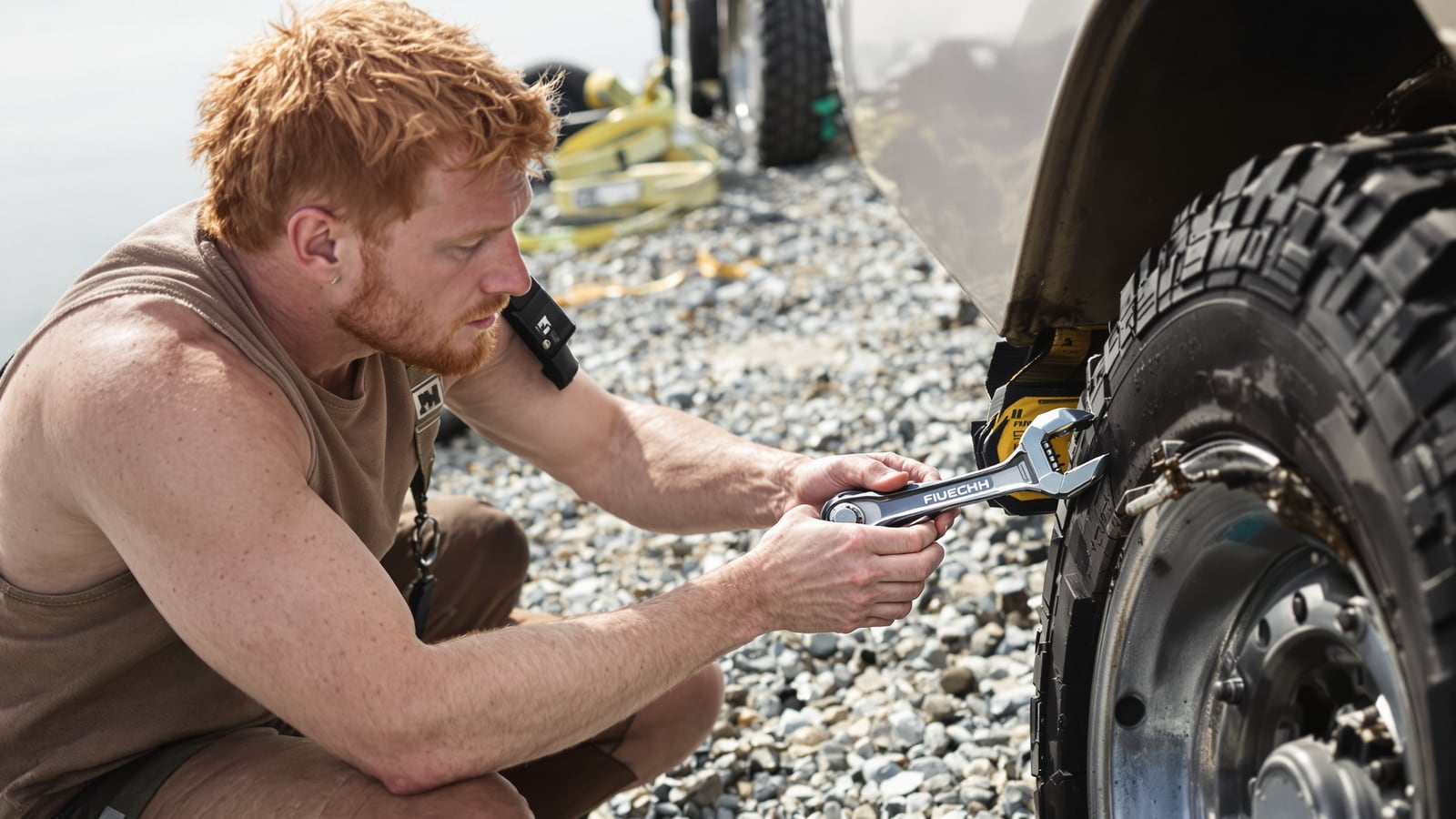
Quick answer: Buy a 10-inch adjustable wrench from a name-brand maker and spend two minutes checking for jaw wobble before you pay. Use it only when you don't own the right-size socket or box wrench. Keep a cheap one around for the jobs where it holds and nothing turns.
The nut was a half-inch brass fitting under a bathroom sink, and the wrench was the free kind that came in a toolbox set. It closed on the flats and felt fine. One quarter turn later the corners were gone and the nut looked like a bar of soap.
Now you need a different tool, a bad afternoon, and probably a plumber.
That wrench didn't make you stupid. It did make your job harder, and it's worth understanding how.
Why the cheap one rounds things
An adjustable wrench has a fixed jaw, a movable jaw, and a worm screw that slides one against the other. Every one of those parts can be made well or made to a price.
On a cheap wrench, the movable jaw has play. You close it on a bolt head, snug the thumbwheel, and the jaw still rocks a few degrees. Under load it rocks more. The jaw faces stop being parallel and start gripping the bolt on two corners instead of two flats. Corners are where the metal gives.
The steel matters too. Soft jaws deform. A jaw tip that spreads even a hair under load turns a tight fit into a loose one, and the wrench starts to slip. Slipping is what rounds the head.
Then there's the worm screw. Sloppy cutting means the jaw backs off a little every time you pull. You'll feel the wrench "give" and think the bolt is moving. It's the wrench.
The two-minute test in the store
Don't trust the stamping or the price tag. Pick the wrench up.
- Close the jaws on nothing and wiggle the movable one. A little movement is normal. If you can hear it click or see the jaw tilt, put it back.
- Look down the jaws from the front. The faces should be flat and parallel, with no daylight at the tips when closed.
- Run the thumbwheel the whole length. It should turn smoothly, with no gritty spots and no spots where it binds.
- Check the jaw-to-handle angle. Most are offset about fifteen degrees so you can flip the wrench in tight spots. That's by design. A head that looks crooked beyond that isn't.
- Read the markings. Stamped or forged beats painted or etched. Both inch and millimeter scales are a plus, but don't trust the scale to size a bolt. Test-fit it.
If the store won't let you handle the tool, buy it where you can return it.
How you hold it matters as much as what you bought
Even a great wrench will round a head if you use it wrong. Most people do.
Size it to the bolt. Close the movable jaw until the wrench is snug on the flats, then give the thumbwheel one more nudge. If you can rock the wrench on the bolt before you pull, it's too loose. Fix that first.
Put the fixed jaw on the load. The movable jaw is the weak link. Set the wrench on the nut so the fixed jaw does the pushing, which means pulling the handle toward the side where the movable jaw sits. Do it backward and you're asking the weakest part of the tool to carry the heaviest load.
Pull. Don't push. A pull keeps your knuckles out of the wreckage when something lets go. It also gives you a better feel for the moment a bolt starts to move.
Match the size to the job. A 6-inch wrench on a half-inch nut is fine. A 12-inch wrench on the same nut is a lever you can't feel through. Rough guide: an 8-inch opens a little under an inch, a 10-inch a little over, and a 12-inch around an inch and five-sixteenths.
Don't slide a pipe over the handle. The tool isn't built for it, and the head will say so.
What I'd buy and what I'd skip
Buy: A 10-inch from a maker with a decent track record. Crescent is the name everybody means when they say "adjustable wrench," and Channellock makes them too. Either gets you a tool with reasonable jaw tolerances and steel that holds up. Add an 8-inch later, because 6 and 10 or 8 and 12 covers nearly everything in a home garage.
Also consider: The Knipex Pliers Wrench. It's a different animal. The jaws are smooth and parallel, they grip by squeezing, and the push-button adjustment snaps to size. It's more money. It also grips a worn fitting better than most traditional adjustables can. If you work on plumbing a lot, it's worth the extra.
Skip: The unbranded wrench in the 40-piece "everything you'll ever need" kit, the one with a worm screw that feels like it was cut with a spoon, and anything with a painted finish that flakes off in the first month.
Look at how the tools in your own garage have lasted before you add one. If a wrench has rounded two bolts for you, replace it. And if you can fix a tool instead of throwing it out, read Buy-it-for-life should mean repairable, not expensive.
When the cheap one is exactly right
A cheap adjustable wrench is the right call in three places.
Backup hand. When you're breaking a plumbing joint or holding the back of a bolt, you often need two wrenches. One turns. The other just holds so nothing else moves. The holding one doesn't have to be good. It has to exist.
The truck. The wrench in your roadside kit will go months between uses and then get used in a ditch in the rain. Buy it cheap, buy it big enough, and wipe it down once a year. The truck kit that handles almost every roadside problem covers the rest of what belongs in there.
One-off jobs. If you're hanging a swing set or building flat-pack shelves, you'll use the tool four times and never again. Don't buy a good wrench for that. Same logic as buying the cheap pry bar: the tool takes abuse, doesn't have to be precise, and nothing breaks if it fails.
The mistake runs the other way too. Paying for a good wrench you use twice a year is its own kind of waste.
When to put it down entirely
An adjustable wrench is the tool for when you don't have the right one. That's all it is.
For a stuck bolt, use a six-point socket or a box-end wrench. Both grip all six flats. An adjustable grips two. If a nut has resisted you once, spray it with penetrating oil, wait fifteen minutes, and go get the proper tool. A rounded head costs you a morning, and a stripped lug nut on the side of the road can cost you a tow.
When you borrow a wrench from a neighbor, bring it back clean, with a drop of oil on the worm screw and a thank-you. Some of them take that personally.
A good adjustable wrench feels dull in your hand. It closes on the flats, stays closed, and lets you forget it's there. A bad one reminds you every few seconds.
Wes Dunbar
Country & Skills
Grew up on an acreage and never quite left. Covers trucks, trades, land, and how to do the thing yourself.

Watch
Worth an hour of your evening
More from Gear.
From channels we rate. Plays on YouTube.
Read next