

Lag putting is a distance problem, and smooth isn't the fix
Trying to be silky on a 40-foot putt is how you leave it 12 feet short. Judge the distance, hold one tempo, and the three-putts start to disappear.
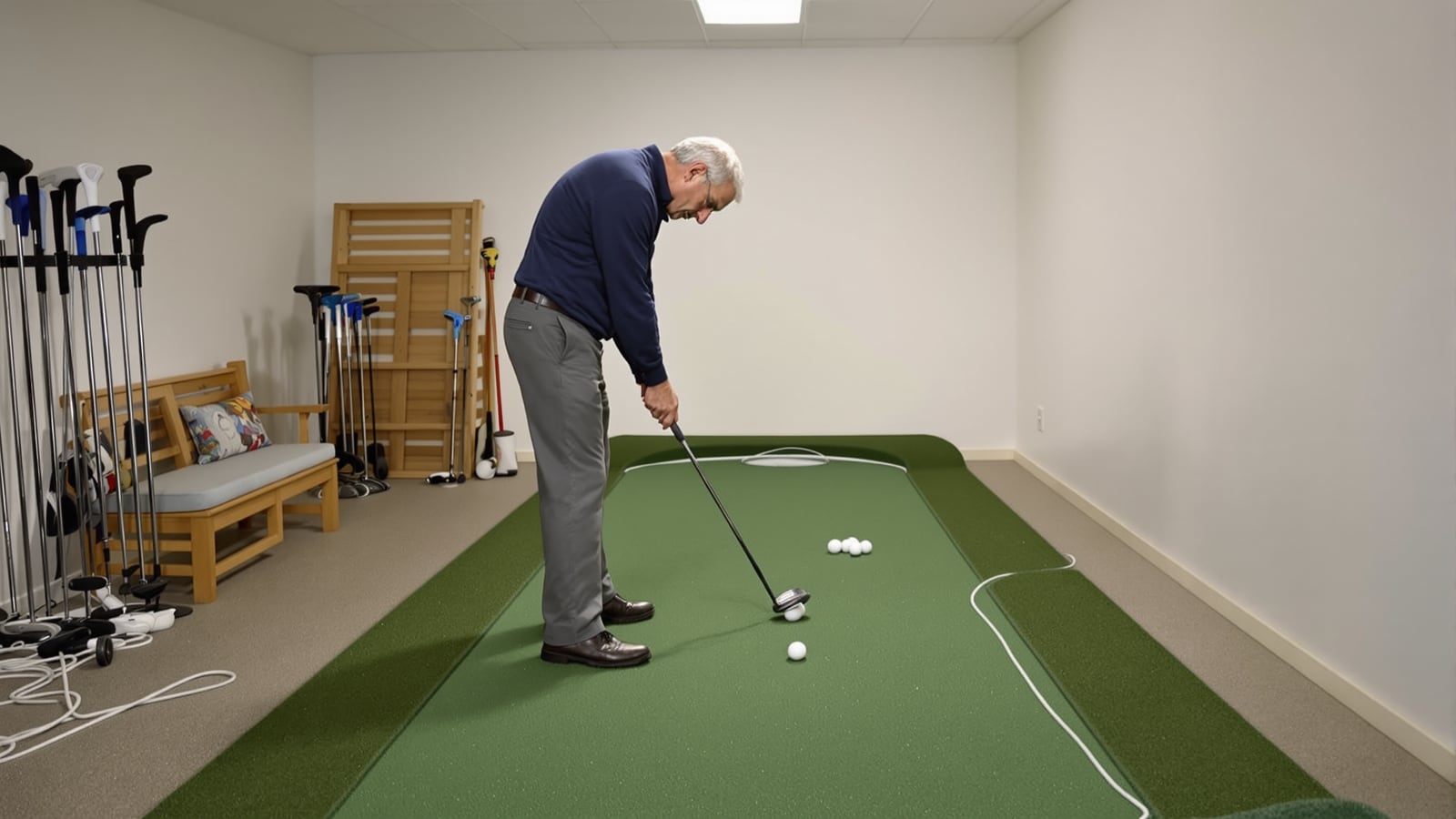
Quick answer: Stop trying to make the stroke pretty. Keep one steady tempo, let the length of the backswing set the distance, and aim at a three-foot circle around the hole instead of the hole itself.
You've seen the putt. Forty feet, a little uphill, the hole sitting way out there like a mailbox on a country road. You take the putter back slowly because you want it smooth. The ball dies twelve feet short. So you jab the next one and it's nine feet past. Now you're putting for bogey, and you haven't hit a bad shot all hole.
That isn't a nerves problem. It's a distance problem, and "be smooth" is the wrong instruction for it.
Smooth usually means timid
When golfers say smooth, they mean slow. Slow on a long putt invites you to quit on the stroke. The putter creeps back, then slows down at the ball. That deceleration is why long putts come up short and why the same stroke goes nowhere twice in a row.
What you want is steady, not slow. Same tempo on every putt. Say "one-two" in your head, "one" at the top of the backswing and "two" at impact. A ten-foot putt and a fifty-foot putt both run on that count. The only thing that changes is how far back the putter goes.
A short backswing is a short putt. A long one is a long putt. The clock stays the same.
That's all distance control is. You don't need a new stroke, just one tempo and a length you can judge.
Look at the hole, not the ball
Your eyes already know how far away the hole is. Your hands don't, unless you let them listen.
Try this on the practice green. Pick a spot 35 feet away, stand over a ball, and take three practice strokes while staring at the hole. Don't look down. Feel the stroke get as long as the distance looks. Then step up, glance at the ball once, and hit it.
You do the same thing when you toss a ball underhand to a friend across the yard. Nobody stares at their hand and calculates. You look at the target and the arm figures it out. Lag putting works the same way.
If it feels silly, roll a ball by hand toward the hole first. You'll be surprisingly good at it. Then putt the same distance with the same feeling.
Aim at a circle, not a cup
Most weekend golfers treat a 40-footer as a chance to make it. You won't. Nobody does. The goal is to leave the next putt so short that it's a formality.
Picture a circle around the hole, roughly one putter length wide. That's about three feet. Your only job is to finish inside it.
A few honest trade-offs:
- Uphill: be bolder. You can send it a foot or two past and the slope will bring it back.
- Downhill and fast: short of the hole is fine, and sometimes smart. A ball that's just past a downhill hole keeps running.
- Wet or slow greens: your eyes will lie to you. Trust the first putt of the day more than your instinct.
And never leave it short on purpose. A ball that doesn't reach the hole has no chance. A ball that gets there at least has a story.
Three drills that earn their ten minutes
You don't need a lab. You need a handful of tees and a practice green.
1. The ladder. Put tees down at roughly 10, 20, 30, 40 and 50 feet from where you stand. A long stride is about three feet, so count strides. Roll one ball at each tee, no hole, and try to stop it at the tee. Within a putter length counts. Do it three times through. You're teaching your body what each length feels like, and it's the fastest feel-builder I know.
2. Eyes on the hole. Ten balls from about 35 feet. Take your practice strokes looking at the hole, then hit. Keep a quiet score: how many finish inside the three-foot circle. If it's two out of ten, fine. Come back next week and make it four.
3. Don't leave until. Pick a 35-footer and a hole. You can't walk off until five of ten balls finish inside the circle. It's a little pressure, which is the point, because the first tee isn't relaxed either.
Notice there's no drill about making the putt. Making comes from the next putt, the short one, and you'll have a lot more of those once you stop leaving them long.
What the practice green hides
The practice green is almost never the same speed as the course. Often it's a touch slower, because it's chewed up by a hundred golfers before you. Hit five or six long putts before you tee off, then spend the first two or three holes recalibrating. If your first lag putt of the day ends up short, believe it. Don't blame yourself.
On gear, you don't need to spend $400. What matters more is that your putter fits you. Stand over the ball with your eyes roughly over it and your arms hanging relaxed. If you're hunched or reaching, the putter's the wrong length, and a stroke built around reaching will never be steady. A shop can adjust the length for a few dollars. A packet of tees is cheaper still.
Etiquette on the green
Long putts mean more time on the green, so how you spend it matters.
- Mark your ball and step out of other players' lines. Don't walk through the path between a ball and its hole.
- Read your putt while someone else is putting, as long as you're quiet and out of their sight line.
- Leave the flagstick alone unless someone asks. If you tend it, hold it still and keep your shadow off the line.
- Putt out the short ones if you're not in anyone's way. It saves a lot of marking and replacing.
- Bags and carts go to the side of the green nearest the next tee, so you're not hunting for the exit while the group behind waits.
The pace, silence and pitch marks piece goes deeper on all of that. If you're chasing a number, the five changes that get you under 100 puts putting in context, and your handicap isn't your average score will keep you honest about the scores you're counting.
The next time you're staring at 40 feet
Don't try to be silky. Look at the hole, hold your count, and let the putter go back as far as the distance says. Stop thinking about the cup and think about the circle.
The first putt doesn't have to be pretty. It has to leave you something you can finish with a tap, and then you can walk to the next tee like a man who just saved a stroke he didn't even know he was losing.
Dean Shaw
Gear & Garage
Reads the warranty, the parts list and the long-term owner reviews before anything else. Trucks, tools, watches, and the cheap version that costs more.

Watch
Worth an hour of your evening
More from Golf.
From channels we rate. Plays on YouTube.