

The slope of your yard is doing more than your sump pump
A sump pump handles water that's already under your house. Grading keeps it from getting there. Here's how to check yours with a level and a hose.
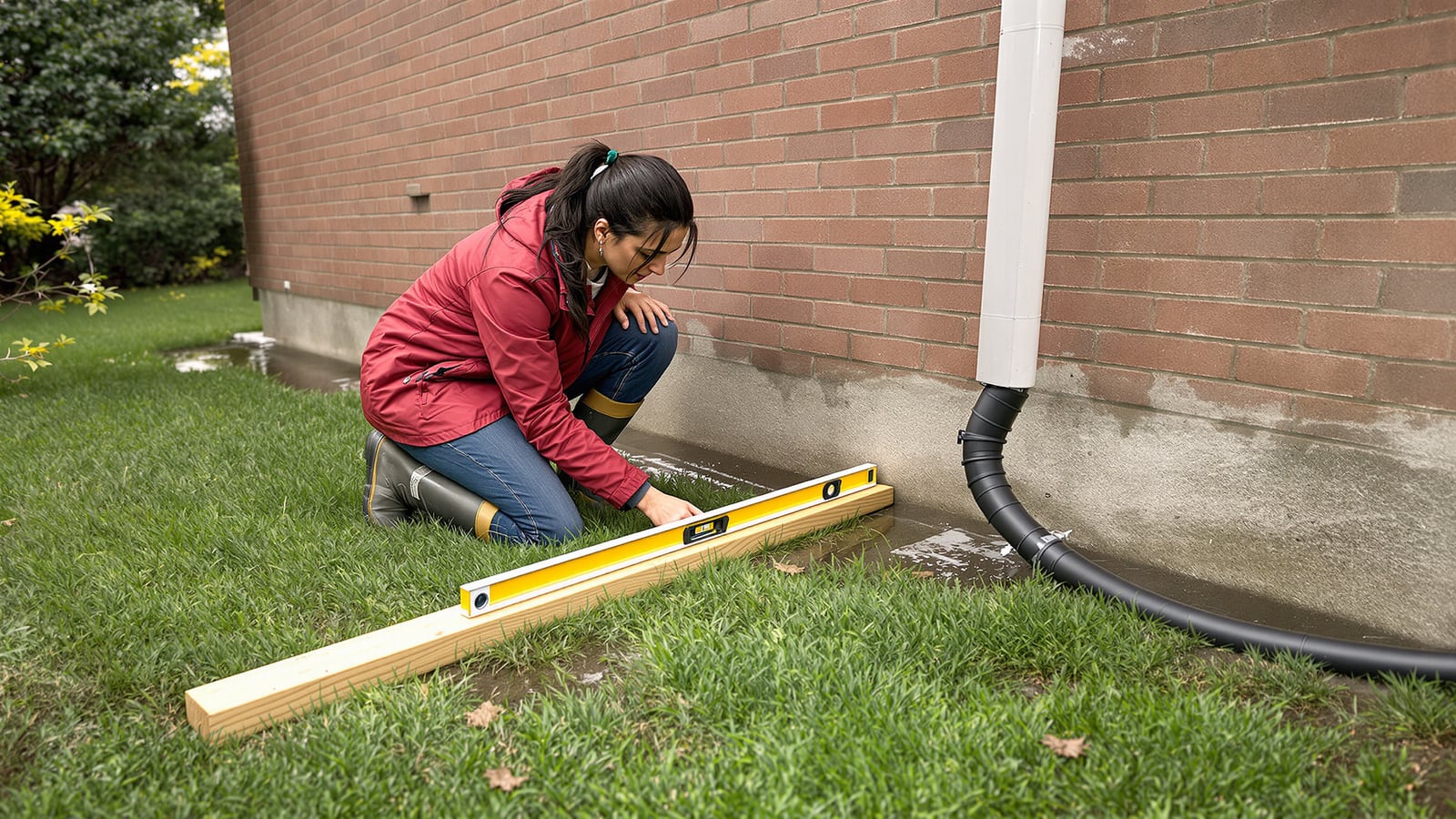
Quick answer: Soil should drop about 6 inches over the first 10 feet away from your foundation, and your downspouts should dump at least 6 to 10 feet out. Check both this weekend with a level, a tape measure and a garden hose.
A sump pump is a good machine. It's also a confession. It means water has already reached the lowest part of your house, and now a motor with a float switch is the only thing between you and a wet basement.
Grading works earlier. It keeps most of that water from ever reaching the footing. It has no moving parts, draws no power and can't fail in the middle of a storm when the grid goes down.
Most homeowners spend more time thinking about the pump. That's backward.
What the pump can't do
Water follows the easiest path down. If your yard slopes toward the house, every rainfall delivers a free supply to the foundation wall. The soil next to the wall is usually the loosest on the property, because it was backfilled after the excavation. It soaks up water like a sponge and sends it straight down along the concrete.
A pump sits in a pit and collects what makes it to the drain tile. It doesn't reduce the pressure on the wall or stop the soil from staying saturated for days. And it depends on three things working at once: power, a float that isn't stuck, and a check valve that isn't clogged.
Grading depends on gravity. It's tough to beat gravity for reliability.
Test it in twenty minutes
You need a 4-foot level, a tape measure, a few stakes or a straight board, and a garden hose. Do this after a rain if you can, because puddles tell you things a dry lawn won't.
- Measure the fall. Lay a straight board on the ground starting at the foundation and running straight out 10 feet. Set the level on top and raise the far end until it's level. Measure the gap between the board and the ground at the house. You want roughly 6 inches of drop. If it's flat, you have work to do. If it tilts toward the house, you have a problem.
- Check the siding line. Soil should sit well below the siding and any untreated wood, and most codes call for at least 6 inches of exposed foundation. Mulch piled up against siding is a termite invitation, so don't ignore it.
- Run the hose. Put the hose at the foundation wall, turn it on at a trickle for ten minutes, and watch. The water should walk away from the house. If it pools or runs along the wall, you've found the low spot.
- Walk the downspouts. Where does each one end? If it drops water at the base of the wall, or into a buried pipe you've never inspected, fix that first. Extensions are cheap and take five minutes.
Do the walk-around at every corner and under every window. Corners and window wells are where the water likes to hide.
The usual culprits
Downspouts cause more wet basements than most people expect. A single roof sheds hundreds of gallons in a hard rain, and all of it comes down a few pipes. Add extensions or splash blocks that carry it at least 6 feet out, and 10 is better. A flexible corrugated extension works. A rigid one that connects tightly works better. Either beats what most houses ship with, which is nothing.
Flower beds are the second offender. A bed edged with stone or a plastic border and filled with mulch can hold water against the wall like a bathtub. If the dirt in your bed is lower than the lawn outside it, you've built a basin.
Settling is the third. Backfill compacts over the first few years, leaving a shallow trench right along the wall. You don't see it until the day of a heavy storm.
Window wells need a look too. If they're full of leaves and the gravel is packed solid, the water has nowhere to go but through the glass or the wall.
Fixing the slope yourself
This one is a legitimate weekend job if the problem is shallow. You're adding soil and tamping it, not performing surgery.
- Use the right dirt. Clay-heavy fill sheds water and compacts hard. Sand and loose topsoil drink it in and send it down to the footing. If you're buying soil, ask the yard for fill dirt, not garden mix, and keep topsoil for the top couple of inches where grass needs to grow.
- Build in lifts. Spread 4 to 6 inches at a time and tamp each layer before adding the next. A single deep pile will settle and leave you right back where you started in a year.
- Keep it off the siding. Sloping soil up to the wall defeats the whole purpose. Stop below the siding line and keep the wood visible.
- Reseed or sod right away. Bare dirt washes out in the first hard rain.
Renting a plate compactor beats a hand tamp for anything bigger than a flower bed. Return it cleaner than it came, with the fuel tank topped off, and the rental guy will remember you next time.
One caution before any digging. Call your state's free utility locate service a few days ahead so they can mark buried lines. It costs nothing and it takes one phone call. Hitting a gas or electric line is a bad way to learn why they ask.
When to stop and call someone
Grading fixes water problems. It doesn't fix structural ones, and you should know which kind you're looking at.
Call a professional if you see:
- A horizontal crack in a block or poured wall, especially one that's bowing inward
- Stair-step cracks in brick or block that keep widening
- Doors or windows that suddenly stick when they never used to
- Floors that slope or gaps opening between the wall and the ceiling
- Water that keeps coming in even after you've corrected the grade and downspouts
For anything structural, call an independent structural engineer first. They charge a fee for an honest assessment, and they don't sell the repair. A foundation company that offers a free estimate also sells piers and wall anchors, so you're asking the barber if you need a haircut. Once you have the engineer's report, you can get quotes with a clear idea of what's needed. This piece on knowing when to stop and getting a quote you can trust covers how to compare them.
If you're buying a house, the grade is one of the first things you should look at on your own, because a home inspector doing a quick walk-around won't always dwell on it. What your home inspector won't check, and what you should goes through the rest of that list.
Keep it up
Grading isn't a one-time fix. Soil settles, mulch builds up, and a downspout extension gets knocked off by the mower. Put it on the calendar for spring and fall with the gutters and the other jobs in the home maintenance calendar that prevents the big repairs.
Keep the pump too. It's a fine backup. But if you've ever stood in a basement at two in the morning listening for it to kick on, you know which problem you'd rather have: one that needs a motor to solve, or one that a shovel already did.
Wes Dunbar
Country & Skills
Grew up on an acreage and never quite left. Covers trucks, trades, land, and how to do the thing yourself.

Watch
Worth an hour of your evening
More from Home.
From channels we rate. Plays on YouTube.
Read next