

How to Document Your Guns So Your Family Isn't Left Guessing
Serial numbers, photos, paperwork and safe locations, kept where your family can find them and a thief can't.
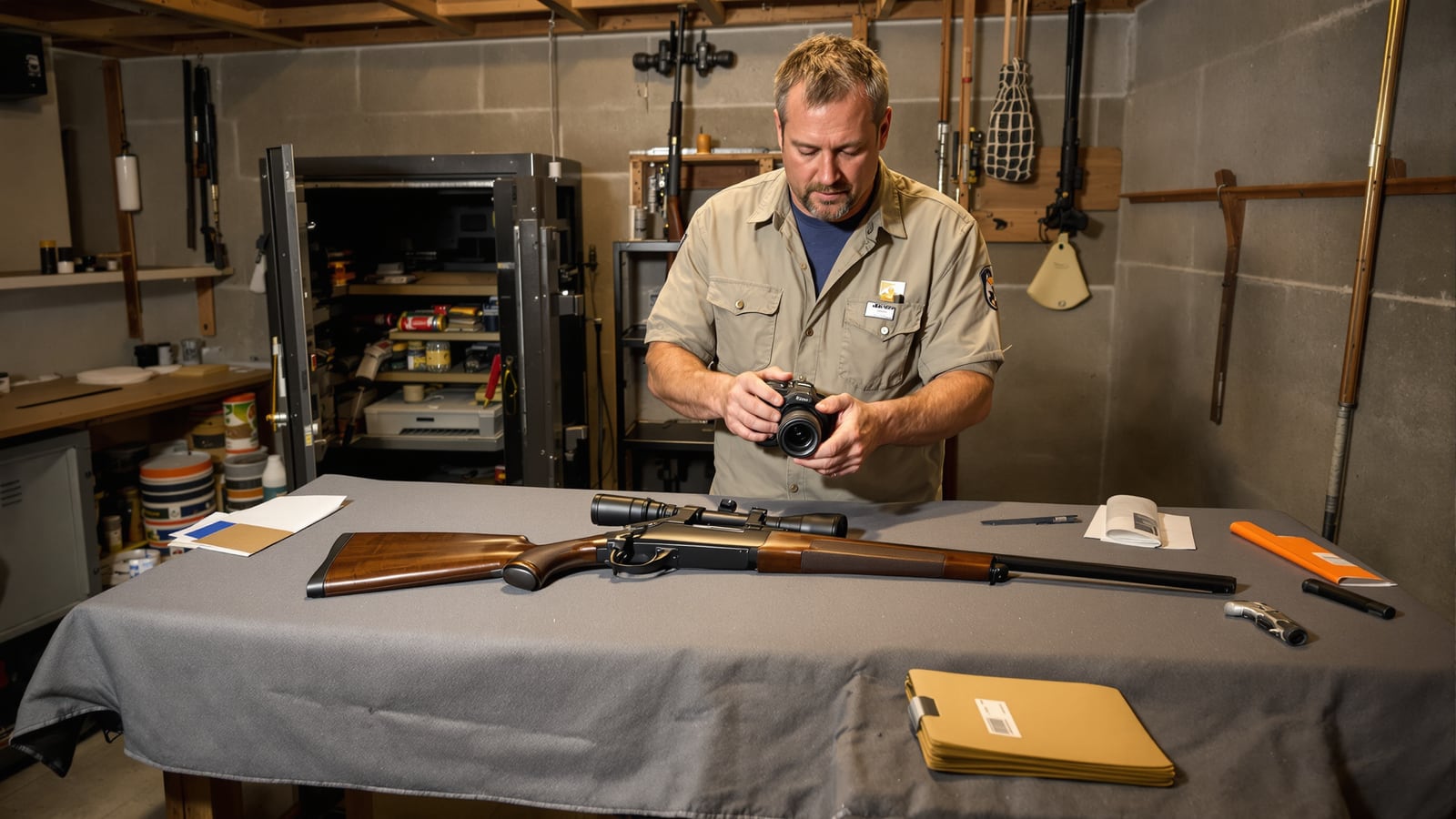
Photograph every gun, write down each serial number, and keep copies in two places away from the guns. Then put the safe locations and access details in a separate document that your spouse and one other trusted adult know how to find. That's the whole job. It takes an afternoon, costs next to nothing, and it's the difference between a recovered rifle and a shrug from the insurance company.
There's no federal registry of what you own, which is exactly how it should be. The flip side is that your records are the only records. If a gun is stolen, or you die and your widow is standing in the garage looking at a safe, nobody has a list but you.
1. Photograph each gun, then the serial number
Do this in decent light, on a plain surface. Take a full shot of each side, then a close-up of the serial number sharp enough to read every digit. Add any proof marks, engraving, scratches or custom work that would let you pick the gun out of a pile. If it wears an optic, light or suppressor, photograph those and their serials too, because they're often worth more than people expect.
Serials usually sit on the frame or receiver. Some guns carry them on the barrel as well, and older guns can be strange. If you can't find it, check the manufacturer's site before you start prying at things.
2. Build the inventory sheet
One line per gun. Use a spreadsheet or a legal pad, your call. Record:
- Make, model, caliber or gauge
- Serial number, typed exactly as stamped
- Where and when you bought it, and the price
- Rough current value
- Accessories with their own serials
Put the value in. When a family sells guns after a death, the buyer who shows up first is rarely the one offering a fair number. A written value, even a rough one checked against a recent edition of the Blue Book of Gun Values, keeps your wife from being lowballed by a friendly stranger. Pair that with the habits in How to Report a Scam Call or Text and Protect Your Parents, because grieving households get targeted.
3. Pull the paperwork
Gather receipts, bills of sale and anything you were handed at the counter. Understand what you won't find. The dealer keeps the ATF Form 4473 from your purchase, not you. You won't get a copy, so your receipt is your record.
If you own anything under the National Firearms Act, such as a suppressor or short-barreled rifle, keep your approved ATF Form 4 or Form 1 with it. The tax on some NFA items changed recently, so confirm the current figure at ATF.gov before you file anything. And know this: those items can't simply be handed to an heir. The executor files ATF Form 5, the tax-exempt transfer for lawful heirs, and until it's approved the item stays put.
Now the part that varies. Hawaii and D.C. require registration. Illinois runs a FOID card system. New York ties handguns to a pistol license. California keeps its own purchase records. If you live in one of those places, add the permit or registration number to your sheet and copy the card. Your state police or attorney general's website will say what applies to you.
4. Write down where each gun lives and how to get in
This goes in its own document, never on the inventory. List which safe holds which gun, where ammunition is kept, where spare keys are, and who's authorized to open what.
Be honest about the family. If the kids know the rules, say so. If a teenager is cleared to access a shotgun, write that down. Safe-storage and child-access laws differ by state, so know yours before you decide who can reach what.
Leave the combination off the page. Seal it in an envelope and give it to your attorney or executor, or keep it in a safe deposit box. Your spouse should hear it from you out loud.
5. Store copies in three places
The inventory and photos need to survive a fire, a burglary and a dead phone. Use:
- At home, in a fire-resistant pouch or box, not inside the gun safe. A decent one runs well under a hundred dollars.
- Off site. A safe deposit box, your attorney's office, or a trusted relative's house.
- Encrypted digital. A password-protected folder or an encrypted USB drive. Don't leave an unprotected photo album called "My Guns" on a cloud account. A hacked account turns your inventory into a shopping list.
6. Call your insurance agent
Many homeowners policies cap theft coverage for firearms at a modest amount, buried in the personal property section. Read yours. Then ask about scheduling the guns individually, which means listing them with make, serial and value so they're covered at that value. Agents handle this every day. They'll want your inventory, and now you have one.
7. Walk your family through it
A document nobody has seen is a document nobody finds. Sit down with your spouse for twenty minutes. Show them the folder, the off-site copy, who holds the sealed envelope, and who to call. That should be a trusted dealer or a gun-savvy friend, not a stranger from an online ad. Tell them what to do first: leave everything where it is, don't sell in a hurry, and call the attorney.
Then tie it to your estate. Your will should name who inherits the firearms, and your executor should know the transfer rules. If you cross state lines, federal law has a carve-out for inheriting a firearm out of state, but the heir's state law still applies. How to Write a Will Without Paying a Fortune covers the basics. Ask an attorney about the firearm specifics.
Put the card next to the one that tells your family where the water main is. If you don't have that one yet, How to Shut Off the Water Main When a Pipe Bursts is a good excuse to make it.
8. Update it once a year
Pick a date. New Year's Day works. Add what you bought, strike what you sold, check the photos still open. Five minutes.
If a gun is stolen
Call your local police right away. Give them the make, model and serial number, get a report number, and send it to your insurer. The serial goes into the national crime database, and that number is the only way a recovered gun finds its way back to you. A number of states also require you to report a loss or theft within a set window, some within days. Check yours now, not after.
The common mistake
Keeping everything in one place, and that place is the safe.
The serial list sits beside the guns it describes. The combination is taped inside the lid. The photos are on the phone that's on the nightstand next to the safe. A thief who takes the safe, or a fire that cooks it, takes your entire record with it. A wife who can't open it is left with a locked steel box and no instructions.
Split it up. Records live away from the guns. Access lives apart from the records. And at least one person besides you knows where both are.
A gun you can prove you owned is a gun you can get back. A family that knows what to do next doesn't have to figure it out on the worst week of their lives.
Ray Okonkwo
Money & Business
Former commercial banker turned small-business owner. Covers salary, credit, margins and the arithmetic nobody does before signing.

Watch
Worth an hour of your evening
More from How To.
From channels we rate. Plays on YouTube.
Read next