

How to Find a Plumber or Electrician Before You Need One
Do the vetting on a dry Tuesday, not at 2 a.m. with water on the floor. Here's how to check a license, read an insurance form, and test a pro on a small job.
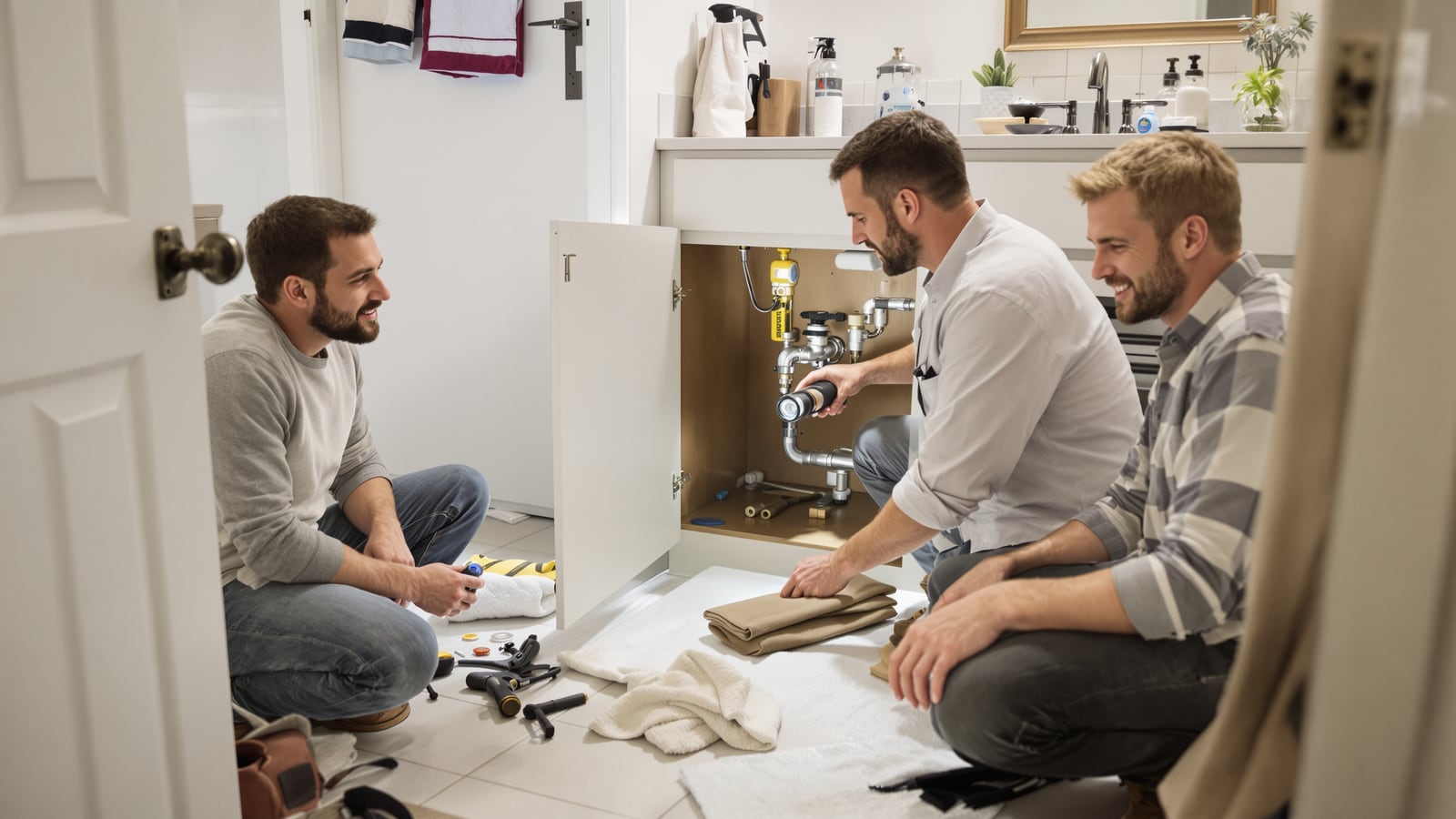
You find a good plumber or electrician the same way you find a good mechanic: before the car won't start. Get three names from people who've used them. Check each license on your state's lookup site. Ask for proof of insurance. Then hire the best one for a small, cheap job and save his number in your phone. That's an hour or two of work, and it's the difference between choosing a pro and taking whoever picks up.
1. Get three names from people with nothing to sell
Skip the search engine for now. The top results are often lead-generation outfits that sell your call to whoever pays them, with a local-sounding name on the ad.
Ask these people instead:
- A neighbor who's owned the same house for ten years or more.
- A home inspector. They see the aftermath of bad work for a living and know who pulls permits.
- The counter staff at a plumbing or electrical supply house. Contractors buy there every morning, and the people behind the counter know who pays his bills and who doesn't.
- A property manager, if you know one. They hire repair crews constantly and don't tolerate no-shows.
Ask one follow-up: "Would you hire him again for something big?" Nobody lies well to that question.
2. Check the license yourself
Don't take a business card's word for it. Rules vary a lot by state. In California, both trades fall under the Contractors State License Board (a C-36 for plumbing, a C-10 for electrical), and the CSLB site lets you look up any license number. In Texas it's split: the State Board of Plumbing Examiners handles plumbers, and the Department of Licensing and Regulation handles electricians. Some states leave licensing to cities and counties, so you'd check with your local building department.
Search "[your state] plumber license lookup" and use the .gov result. You're checking three things: the license is active, the name matches the business, and there's no discipline on file.
Know the tiers. Electricians usually progress from apprentice to journeyman to master. In many places only a master can pull permits, and an apprentice should be working under supervision. Ask who'll be at your house. If it's the owner, great. If it's an employee, ask whether he's licensed or working under someone who is.
3. Ask for the insurance certificate
A license says he's qualified. Insurance says you won't be stuck if something goes wrong. If a pipe fitting lets go and floods your basement, or a worker falls off your ladder, you want his policy paying for it, not yours.
Ask for a certificate of liability insurance. The standard form is called an ACORD 25. Two details matter:
- Have the agent send it to you directly. A photocopy the contractor hands you can be outdated or doctored. A certificate emailed from the insurance agency's office is harder to fake.
- Look for general liability and workers' compensation. Check the policy dates. Ask about the coverage limit. A million dollars per occurrence is a common figure, but some states and cities set their own minimums.
A contractor who gets annoyed by the request has told you what you needed to know.
4. Ask six questions before you ever need him
Make one phone call to each of your finalists and ask:
- Do you charge a trip fee, and does it come off the job if I hire you?
- What's your after-hours rate? Nights and weekends often run at a premium, and you want to hear that number now.
- Do you give written estimates?
- Do you pull permits for work that needs them?
- What's your warranty on labor, separate from the manufacturer's warranty on parts?
- Would you take me on as a regular customer, and do you really answer after hours?
The permit question is the one people skip. Water heater swaps, panel upgrades and new circuits commonly require a permit and an inspection, though it varies by city and county. A contractor who says "we don't bother with that" is putting the risk on you. Unpermitted work can complicate an insurance claim or a home sale years later. Your local building department will tell you what your jurisdiction requires.
5. Hire the best one for a small job first
Don't audition your future emergency plumber in an emergency. Give him something small and real. Swap a failing toilet fill valve. Replace an old outlet near a sink with a GFCI outlet. Have the water heater flushed and checked. Anything under a couple hundred dollars.
Then watch. Did he show up inside the window he gave you? Did he explain what he was doing without making you feel stupid? Did he cover the floor, clean up, and take his trash with him? Did the invoice match the estimate to the dollar?
That's the lesson in leaving a place better than you found it. A pro who does that on a twenty-minute job will do it on a twenty-hour one.
On payment: use a check or card so there's a record. Be wary of a big deposit. California, for one, caps the down payment on a home improvement contract at the lesser of 10 percent or $1,000, and many states set limits of their own. For larger jobs, ask for a lien release at final payment. In many states a plumber's unpaid supplier can put a lien on your house even if you paid the plumber in full. Your state's contractor board or attorney general's consumer page explains the rules where you live.
6. Put it all where you can find it
A name in your head doesn't help at 2 a.m. Do three things the same afternoon:
- Save his cell number in your phone under "Plumber" or "Electrician," with his license number in the notes.
- Write the same number on a piece of masking tape and stick it on the water heater or the electrical panel.
- Make sure every adult in the house knows where the main water shutoff is. This walkthrough on shutting off the water main takes ten minutes, and it buys you the time to make a smart call instead of a panicked one.
If your name and address come up in a robocall or a "free inspection" text, here's how to report a scam call or text. Storm season brings out trucks that knock on doors with a crew from three states away. The FTC's Cooling-Off Rule gives you three days to cancel certain sales made at your home. Treat that as a backstop, not a plan. Your plan is the number already in your phone.
The mistake that costs the most
Waiting. Nearly everyone does it, and it works out the same way every time. The ceiling's dripping or half the outlets are dead, and you're typing "plumber near me" with a towel under your arm. You take the first one who'll come tonight. You don't check a license, you don't ask for a price, and you sign whatever's on the clipboard because the water's still running.
Panic is the contractor's best sales tool. It's why a $150 problem gets quoted at $900.
If you're already in it, stop the damage first. Shut the water off at the main, or flip the breaker for the dead circuit, and then you've bought yourself fifteen minutes. Spend ten of them verifying a license on your phone and asking one question: "What will this cost before you touch anything?"
Better yet, make that call this week. A man who's done his homework doesn't get stampeded.
Ray Okonkwo
Money & Business
Former commercial banker turned small-business owner. Covers salary, credit, margins and the arithmetic nobody does before signing.

Watch
Worth an hour of your evening
More from How To.
From channels we rate. Plays on YouTube.
Read next