Your first whitetail season, start to finish
Licence, land, gear, and the part nobody prepares you for — what happens after you've taken one.
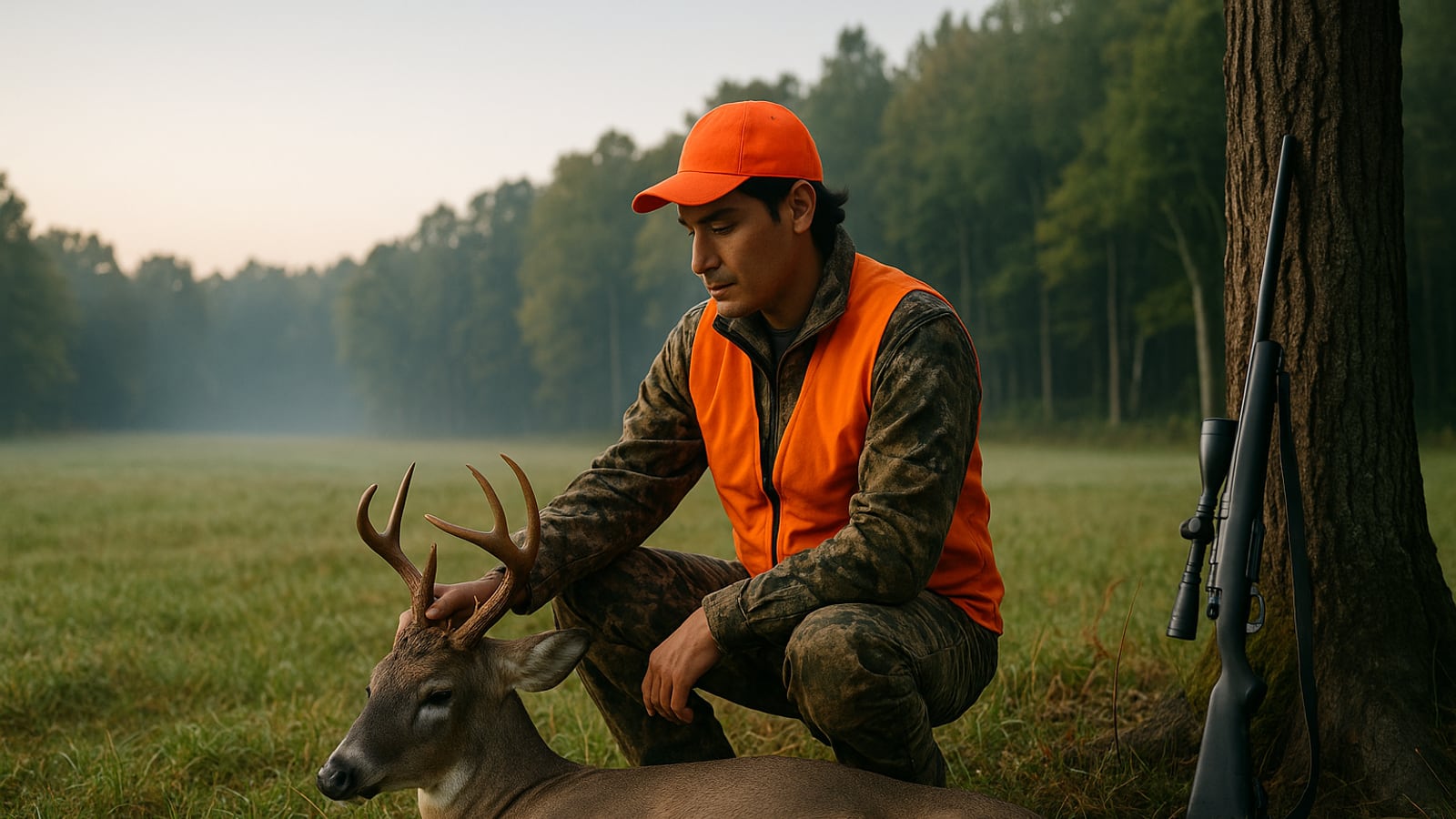
Most people who want to start hunting never do, and it's almost never about the shooting. It's that the first step is genuinely unclear: what you need, in what order, and who to ask.
The order goes like this.
1. Hunter education, first
Nearly everywhere requires it before you can buy a licence, and the course is worth doing even where it doesn't. A day or two, usually a mix of online and in-person, covering safety, law, ethics, wildlife identification and field care.
Do it in spring or summer. Courses fill up as the season approaches and you don't want this to be the thing standing between you and opening day.
2. Licence and tags
A general hunting licence, plus a tag for the specific animal and often the specific unit and season. These aren't the same thing and both are required.
Read the regulations for your actual unit, in the current year, rather than relying on what somebody told you last season. Boundaries move, seasons shift, and antler restrictions change.
3. Land — the real obstacle
This is the genuine barrier for most beginners, and the two routes are very different.
Public land is free to access and crowded on opening weekend. It works. It rewards walking further than the next person and scouting in the off-season when nobody else is out there.
Private land is mostly a question of asking. Knock on doors in late summer, in daylight, on your own, dressed like a person and not like a catalogue. Say who you're, where you're from, what you want to hunt and when. Offer to help with something.
You'll be told no a lot. You'll also, eventually, be told yes by someone who has a deer problem in a soybean field and can't find anyone reliable — and that relationship, if you don't abuse it, lasts decades. Close every gate. Take nothing for granted. Show up with something at Christmas.
4. Gear, honestly
Far less than the catalogue suggests for a first season.
Essential: a suitable rifle or bow you've actually practised with, ammunition it shoots well, warm and quiet layers, decent boots, a blaze orange vest and hat where required, a sharp knife, a headlamp, a pack, and a way to drag or carry an animal out.
Genuinely useful: binoculars — better glass beats a better rifle for a beginner nearly every time — and a rangefinder.
Not yet: a rifle in a fourth calibre, a heated blind, most of the scent products, and anything that makes a noise.
Borrow before you buy. Most hunters have spare gear and will lend it to someone who is starting.
5. Practise until it's boring
From field positions, not from a bench. Sitting, kneeling, off a pack, off sticks — because that's how the shot actually presents itself.
Know your realistic maximum distance and be honest about it. Almost everyone's honest number is shorter than their hopeful one, and shooting past it's how animals are wounded rather than taken.
If you're bowhunting, this is a months-long commitment rather than an afternoon.
6. The shot, and the wait
Broadside or slightly quartering away. Behind the shoulder. Wait for the animal to be still and calm.
Then — and this is the discipline nobody warns you about — wait. Mark exactly where it stood and exactly where it went. Sit down. Give it half an hour. Pushing a wounded animal makes a short recovery into a long one, and frequently into no recovery at all.
7. What happens after
Nobody prepares you for this part.
There's a real emotional weight to killing an animal, and a lot of new hunters are surprised by it. That isn't weakness and it isn't a sign you should stop. It's the correct response to having done something significant, and the hunters worth learning from still feel it after thirty years.
Then the work starts. Field dressing, cooling, getting it out, and either a processor or learning to break it down yourself. Don't skip the cooling — more good meat is lost to a warm carcass than to a bad shot.
The bit that justifies all of it
Licence fees and the excise tax on firearms, ammunition and archery equipment are the largest single funding source for wildlife conservation and habitat across North America. Hunters pay for the land, the surveys and the restoration, including for species nobody hunts.
That's the honest case, and it's worth being able to make it.
Seasons, tags, legal methods, transport and storage vary by state, province and country, and change annually. Check your own current regulations — nothing here substitutes for them.
Wes Dunbar
Country & Skills
Grew up on an acreage and never quite left. Covers trucks, trades, land, and how to do the thing yourself.

Read next